

How to Fix Split Ends:
A Softer, Smarter Routine for Healthier-Looking Hair
You do not need a full salon overhaul to revive damaged-looking hair. With the right mix of moisture, gentle styling, protective habits, and split end maintenance, your ends can look smoother, softer, and more polished.
"Split ends are not just a small detail at the bottom of your hair. They are usually the first place your routine starts telling the truth."
Once a hair fiber has split, a mask can soften the look, but it cannot fully glue the strand back together. Fixing split ends means trimming or maintaining the damaged tips, ideally with targeted maintenance that preserves length, and then protecting the rest of the hair with moisture, less heat, less friction, and gentle detangling.
Table of Contents

Before you treat damaged-looking hair, look closely at what your ends are actually showing: dryness, breakage, split ends, or all three.
Diagnose before you DIY
Before you panic-book a salon appointment, take a closer look at your hair. Dry hair can feel rough, thirsty, or dull, but the strand may still be intact. Split ends often show up as feathered, Y-shaped, forked, or knotty tips. That difference matters: dryness usually needs moisture and better protection, while split ends need maintenance.
Look in natural light
Check the ends near a window so you can see fraying, thinning, forked tips, or uneven texture clearly.
Feel the ends
If the tips feel brittle, rough, or snag easily, your hair may need more targeted repair and maintenance.
Watch for splitting
Forked, feathered, or thin-looking ends usually point to structural damage instead of simple dryness.
If you want a deeper breakdown of what split ends are and how they form, read What Are Split Ends? before choosing your routine.
Ditch the scissors, use a split end trimmer
Fixing split ends is not always a dramatic haircut. Cutting off several inches may remove damage, but it can feel discouraging when you are trying to grow your hair longer. And smoothing products can only improve the appearance of split ends temporarily.
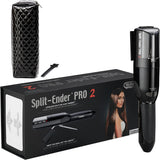
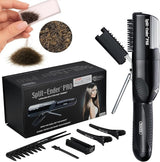
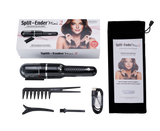
A split end hair trimmer is designed to target damaged tips along the strand while helping preserve length. Tools like the Split Ender Mini2 or the Split Ender Pro2 are made for at-home split end maintenance as part of a healthy hair routine. They do not replace every salon service, but they can help you maintain smoother-looking ends between appointments.
For many people, trimming or maintaining the ends every 6 to 8 weeks helps the hair look healthier long-term and keeps split ends from traveling upward.

A split end trimmer can support smoother-looking ends between salon appointments while keeping the focus on length retention.
Deep condition like it’s your job
A weekly deep conditioning mask can help dry, brittle, or damaged-looking hair feel softer, more flexible, and easier to manage. Look for nourishing ingredients like coconut oil, keratin, banana extract, shea butter, argan oil, or other moisturizing and strengthening ingredients that support softness and elasticity.
Apply from mid-lengths to ends
The ends usually need the most help, so focus your mask where dryness and frizz show first.
Cover and add gentle warmth
Use a shower cap and wrap a warm towel over it to create a simple at-home spa-style treatment.
Oil it up — but wisely
Natural oils like argan, jojoba, and coconut oil can help nourish the ends and reduce roughness. Apply a small amount to the ends, not the roots, where too much oil can create buildup.
Check your labels and toss the sulfates
Sulfates, drying alcohols, and heavy artificial fragrances may be too harsh for damaged-looking hair. Look for sulfate-free, hydrating formulas with nourishing oils, proteins, and botanical extracts.

Deep conditioning helps support softness, hydration, and elasticity so damaged-looking hair feels easier to style.
Pause the heat tools
Heat styling is one of the most common reasons ends start to look dry, dull, and frayed, especially when tools are used too often, too hot, or without protection. Try giving your hot tools a break for at least 30 days. Braid-outs, rollers, overnight twists, heatless curls, and soft buns can create pretty shape without high heat. If you must use heat, apply a heat protectant first. Skipping it is like sunbathing without sunscreen: technically possible, but not exactly a loving choice.
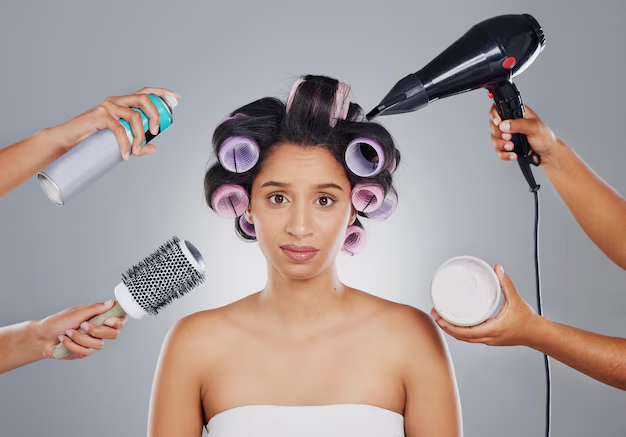
A heat reset can help reduce styling stress while your routine focuses on hydration, protection, and smoother-looking ends.
Gentle detangling is non-negotiable
Tugging through tangles can create tiny tears in the hair fiber that eventually lead to breakage and split ends. Use a wide-tooth comb, your fingers, or a detangling brush made for your hair type. Start at the ends, work upward in small sections, and use a leave-in conditioner or detangling spray so the tool glides instead of catching. Avoid rushing when the hair is wet and most vulnerable.
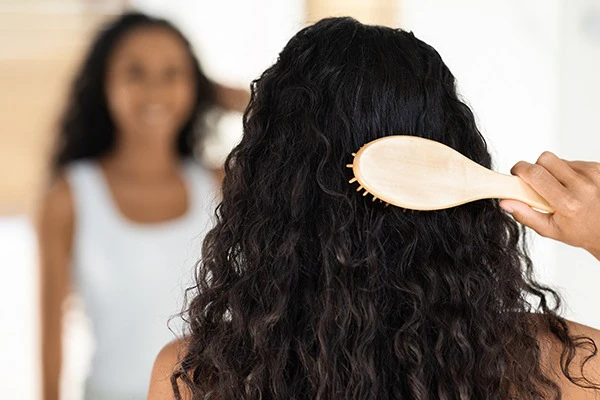
Gentle detangling protects fragile strands from unnecessary pulling, snapping, and breakage.
Upgrade your pillowcase
Cotton pillowcases can create more drag on the hair as you move overnight. Switching to a silk or satin pillowcase allows your strands to glide more smoothly, which can help minimize tangles, dryness, and breakage while helping your style last longer.

Silk and satin pillowcases help reduce friction, which can support smoother hair and stronger-looking ends over time.
Stick to a plan and track it
Hair health is usually the result of small habits repeated consistently. Take photos of your ends every few weeks in similar lighting so you can actually track progress. Sometimes your hair is improving before you notice it day to day.

A healthy hair routine is built on consistency: hydration, gentle styling, protective habits, and regular maintenance.
Support smoother-looking ends at home
At-home maintenance that supports a healthy hair routine.
Split Ender Pro2
Best for a full at-home split end maintenance routine, especially for longer, thicker, or frequently styled hair.
Shop Pro2 →CompactSplit Ender Mini
A compact option for quick touch-ups, travel, or simple split end maintenance between salon visits.
Shop Mini →RechargeableSplit Ender Mini2
Rechargeable, easy to use, and ideal for keeping up with smoother-looking ends as part of your routine.
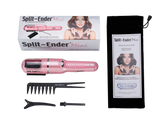
Shop Mini2 →Light PinkSplit Ender Mini Light Pink
A pretty compact option for maintaining ends while keeping your hair care routine simple and length-friendly.
Shop Light Pink →Split ends FAQs
What are the best products for split ends?
Look for leave-ins, nourishing masks, natural oils, and precision tools like a Split Ender trimmer. Avoid harsh ingredients like sulfates. The best product routine for split ends usually combines moisture, strength, protection, and targeted trimming.
What is the best hair care routine for damaged hair?
Hydrate often, reduce heat styling, detangle gently, use the right tools, sleep on silk or satin, and stay consistent with trims or split end maintenance.
How often should I use a split end trimmer?
Every 6 to 8 weeks works for many people. Some prefer light, more frequent maintenance depending on their hair type, styling habits, and visible split end concerns.
What is the difference between dry hair and split ends?
Dry hair feels coarse, rough, or dehydrated but may still be structurally intact. Split ends look forked, frayed, feathered, or thin at the tips and indicate structural breakage.
What is the best way to get rid of split ends?
The best way to get rid of split ends is to trim or maintain the damaged tips. A split end trimmer can help support targeted maintenance, especially when combined with deep conditioning and protective care.
Healthy-looking hair is not about doing everything. It is about doing the right things consistently.
Start by diagnosing the problem. Then build a routine around moisture, protection, gentle handling, and targeted split end maintenance. Your hair does not need a full identity crisis. It needs strategy.
Explore Split Ender Pro2 →