

5 Hair Truths Nobody Told You:
The Science Behind the Myths
Your hair has heard enough rumors. Let's check the science.
The biggest hair-care myth? That one rule works for everyone. Hair color, cleansing frequency, conditioning and chemical treatments behave differently depending on hair history, scalp condition, formulation and technique.
Healthy-looking hair and structurally healthy hair are not always the same thing. A product can improve softness, shine or manageability without reversing every kind of damage.
Some hair myths refuse to retire. They travel from salon chairs to bathroom mirrors, from beauty videos to family advice, collecting confidence along the way.
But sounding convincing doesn't make something scientifically accurate. Can black dye really wash away? Is keratin straightening the same as deep conditioning? Does washing your hair daily make it fall out?
Let's investigate five familiar claims—and separate what hair products can do from what marketing sometimes suggests.
The Black Dye Illusion
Picture this: You dye your hair a dramatic, glossy black. A few months later, you're ready for chocolate brown. No problem, right? Just wash it a few more times.
Not so fast.

Permanent oxidative dyes form colored compounds within the hair fiber. Although a shade may fade, shampooing does not reliably remove all artificial pigment or return the hair to its original untreated color. Repeated coloring can also produce uneven pigment buildup along the lengths, making future changes more complicated.
Fading and color removal are different processes. The pigment that remains can affect how your next shade develops.
Before choosing permanent black, consider how much flexibility you want for future color changes.
The Keratin Confusion
The salon advertisement promises glossy, smooth, manageable hair. It mentions keratin. It mentions nourishment. It might even mention repair. But what exactly is happening?

A conditioner containing proteins or conditioning agents is not the same as a chemical smoothing service. Conditioners can improve lubrication, feel and combability. Smoothing and straightening procedures may involve specialized formulations and high heat, depending on the treatment.
The U.S. Food and Drug Administration warns that many hair-smoothing products release formaldehyde gas during heat processing. Not every product labeled “keratin” has the same ingredients or risks, so the exact formulation matters.
A silky finish can be beautiful. It is not automatic evidence that every form of structural damage has been reversed.
Ask what the treatment contains, how it works and what precautions it requires.
The Salon Price-Tag Myth
Apparently, your hair didn't get the memo that excellent conditioning must come with an expensive appointment. Fortunately, hair science is more practical than that.
Well-formulated conditioners and masks can improve manageability, reduce combing friction and help protect hair against some mechanical damage. Conditioning polymers, fatty alcohols and certain silicones can change how strands feel and interact.
The result depends on the formulation, the condition of your hair and how the product is used—not simply where it was purchased. A peer-reviewed review of hair-care physicochemistry explains how different conditioning agents can reduce friction and improve surface properties.
There is a crucial distinction, however: home conditioning is not the same as performing a complex chemical procedure at home. Bleaching, corrective coloring and chemical straightening can carry risks that call for professional expertise.
Choose products for your actual hair needs. Save professional help for situations that genuinely require it.
The Shower Shedding Scare
You look at the shower drain. There are strands of hair. Your shampoo is immediately placed under investigation. But the evidence may tell a different story.

Hair naturally moves through growth, transition and resting phases. Shedding is part of that cycle, and hairs already ready to detach may become noticeable during washing.
The American Academy of Dermatology recommends adapting washing frequency to hair type and scalp oiliness. Daily shampooing may suit some people, especially those with straight hair and oily scalps.
Harsh cleansing, vigorous rubbing and rough detangling can contribute to dryness or breakage. Persistent excessive shedding or progressive thinning deserves professional evaluation rather than being dismissed as a shampoo problem. Learn more about the difference between shedding and hair loss.
Cleanse according to your scalp's needs, handle wet hair gently and seek dermatological advice for unusual changes.
The Lighter-Box-Dye Trap
You've decided to leave black behind. You purchase a gorgeous medium-brown box dye. The picture looks perfect. The expectations are high. The chemistry, unfortunately, has other plans.
Conventional permanent hair color is not a reliable method for removing previously deposited dark artificial pigment. Applying a lighter shade over dyed black lengths may produce little visible lightening or uneven results, especially when old color has accumulated.
Color correction may require specialized pigment-removal or lightening processes selected according to your hair's history and condition. Those processes can also increase the risk of damage. Always follow hair-dye directions and safety precautions; the FDA's hair-dye guidance is a useful starting point.
For a major color change, a professional assessment can help avoid unnecessary processing and unpredictable results.
Myth vs. Reality
| The myth | What the science supports |
|---|---|
| Permanent black dye washes out completely. | Color can fade while artificial pigment remains. |
| Keratin straightening is simply hydration. | Smoothing services and conditioners may use different mechanisms and carry different risks. |
| Effective hair care must be expensive or salon-only. | Suitable home conditioning can improve cosmetic hair properties. |
| Daily shampooing automatically causes hair loss. | Washing frequency varies by scalp and hair type; shedding has multiple causes. |
| A lighter dye removes previously dyed black color. | Ordinary lighter dye does not reliably remove dark artificial pigment. |
Five Questions to Ask Before Believing a Hair Claim
What is it designed to do?
Condition, cleanse, color, straighten or trim? These are different functions.
Appearance or structural change?
Softer-feeling hair doesn't mean every kind of damage has been reversed.
Does my hair history matter?
Previous coloring, bleaching, heat and chemical services can influence results.
What precautions apply?
Review ingredients and directions, including the manufacturer's recommended allergy-alert test for dye.
Who supports the claim?
Look beyond before-and-after pictures. Check dermatological guidance and scientific research.
Appearance vs. Maintenance
Conditioners can temporarily improve the feel and appearance of weathered ends, but they cannot permanently fuse an existing split hair fiber back into its original structure.
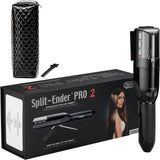
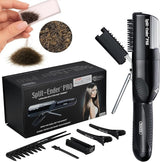
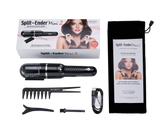
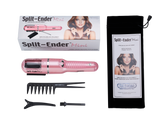
Targeted trimming removes damaged ends through cutting—not biological repair. The Split Ender PRO2 is designed to trim hair ends when used as directed. It does not stimulate follicle growth, treat hair loss or reverse chemical damage.
Different hair problems require different solutions.
Hair Truths FAQ
Does permanent black hair dye ever fade?
Yes. Permanent black dye can lose intensity over time, but fading does not guarantee that all artificial pigment has been removed.
Is every keratin hair product a straightening treatment?
No. Some are ordinary conditioning products; others are formulated for smoothing or straightening procedures. Ingredients and intended uses differ.
Can affordable hair masks work well?
Yes. A suitable, well-formulated mask can improve softness and manageability. Price alone does not determine performance.
Is washing your hair daily unhealthy?
Not necessarily. Some scalp and hair types tolerate or benefit from daily cleansing; others need less frequent washing.
Can I use a lighter dye to change black-dyed hair to brown?
A conventional lighter dye is not a reliable way to remove previously deposited black pigment. Significant changes may require professional color correction.
Science & Safety Sources
- FDA — Formaldehyde in Hair Smoothing Products: What You Should Know
- Fernandes et al. — On Hair Care Physicochemistry: From Structure and Degradation to Novel Biobased Conditioning Agents
- American Academy of Dermatology — Tips for Healthy Hair
- American Academy of Dermatology — Do You Have Hair Loss or Hair Shedding?
- FDA — Cosmetics Safety Q&A: Hair Dyes
- Revlon — Hair Color FAQ (supplementary manufacturer guidance)