

SPLIT ENDER · THE HAIR SCIENCE CHRONICLES
The International Color Edition
Aubergine Hair:
The Dark Purple Color
That Refuses to Be Basic
Dark as midnight. Purple when the light hits.
THE EDITOR'S LETTER
What makes aubergine hair so captivating?
Aubergine hair color is a deep purple-toned shade inspired by eggplant skin. It blends violet, plum, and sometimes red undertones into a dark base that can appear nearly black in subdued lighting and reveal purple reflections in brighter light. Unlike pastel lavender or electric violet, aubergine is about depth. The result depends on starting color, dye formulation, previous treatments, and illumination.
Its appeal? A color that doesn't announce itself across the room. It waits for the light.
“The drama isn't in how loud the color is. It's in what the light reveals.”
CHAPTER 01 · THE COLOR IDENTITY
What Exactly Is Aubergine Hair Color?
Imagine the darkest purple silk catching the afternoon sun. That's aubergine hair: mysterious indoors, dimensional outdoors, and anything but ordinary.
The name describes a color family, not one standardized salon formula. Some shades lean blue-violet; others contain more red and resemble dark wine. On deep brunette hair, the result can be understated. On lighter hair, similar pigments may look significantly brighter.

A colorist might create a nearly black violet, a soft plum brunette, or a visibly purple finish. But darker-looking dye does not automatically mean gentler processing. What matters is the formula, your color history, and whether pigment must be lifted first.
The American Academy of Dermatology recommends staying within three shades of natural hair color when possible; lightening beyond that often calls for stronger peroxide and may cause more damage.
CHAPTER 02 · THE SHADE DEBATE
Aubergine vs. Plum vs. Burgundy: What’s the Difference?
These colors share a dramatic mood, but they aren't interchangeable. The easiest way to distinguish them is by their dominant undertone.

| Shade | Dominant undertone | Overall effect |
|---|---|---|
| Aubergine | Deep violet or red-violet | Dark, mysterious purple |
| Plum | Purple with berry-red | Softer fruit-toned richness |
| Burgundy | Deep red with violet | Wine-inspired warmth |
| Damson brunette | Brown with muted plum | Understated dimension |
| Electric violet | Strong saturated purple | Bold and unmistakable |
These are descriptive beauty terms, not universal technical color codes. Ask your colorist: “How purple should this look in natural daylight?” Bring photographs taken under more than one lighting condition.
For a redder alternative, explore our Cherry Cola Hair guide. If you're moving darker after highlights, read whether dark brunette dye can undo bleach damage.
CHAPTER 03 · THE CHEMISTRY QUESTION
Can You Get Aubergine Hair Without Bleach?
Sometimes, yes. On naturally dark brown or black hair, a deep violet-toned color may create subtle reflections without extensive pre-lightening. But dark natural pigment can limit how visibly purple the result appears. A rich reflection and an electric violet finish are two different goals.
For brighter purple, a colorist may recommend lifting pigment first. That affects both the result and the processing involved. Bleaching can weaken the protective outer structure of hair, making fibers more vulnerable to breakage; the extent depends on the treatment and hair condition.
Your Five-Step Color Consultation
- Identify your starting point. Is your hair natural, previously dyed, highlighted, or bleached?
- Define visibility. Do you want violet reflections or an obviously purple result?
- Discuss lightening. Ask whether your chosen shade requires pigment removal.
- Request a strand test. Evaluate the shade and how your hair responds.
- Plan maintenance. Discuss fading, roots, conditioning, and realistic touch-ups.
Previously dyed dark hair can be especially unpredictable when lightened. A consultation should account for past processing, not just the photograph you bring.
CHAPTER 04 · THE SCIENCE OF SHINE
Why Does Aubergine Hair Look Different in Every Light?
Hair color doesn't exist independently of its lighting. Pigments absorb certain wavelengths, while reflected light and the hair surface influence what your eyes perceive. The same dark aubergine shade may look almost black in a dim restaurant, distinctly violet in daylight, and warmer under indoor bulbs.

The dye isn't literally changing color. The illumination changes how its undertones appear. Hair texture and surface condition also affect reflections. Smoother, aligned fibers often look shinier; rougher surfaces scatter light differently. Shine is an appearance, not proof that internal damage has been repaired.
Our Hair Cuticle Guide explains how the outer hair surface affects appearance and manageability.
Sunlight also matters for color retention. Research on hair photodamage has found differences in protein loss under ultraviolet exposures; one study reported approximately two to five times more protein loss from UVB than UVA plus visible light under its tested conditions, depending on hair type. That laboratory result is not a personal fading forecast. See Nogueira and Joekes’ study.
Studies of artificially colored hair also examine how washing and irradiation contribute to fading. Actual longevity varies with formulation, porosity, care habits, and exposure.
CHAPTER 05 · THE LONG GAME
How Do You Keep Aubergine Hair Rich and Glossy?
The best routine isn't necessarily the most elaborate. It is the one that respects both the artificial pigment and the condition of your hair fiber.
Cleanse gently. Choose products suitable for color-treated hair and wash according to your scalp and lifestyle.
Condition after shampooing. The AAD recommends conditioner to help reduce everyday damage.
Keep heat in check. Use the lowest effective setting and avoid repeated hot-tool passes.
Shield your shade outdoors. A wide-brimmed hat can help protect colored hair from sun exposure.
Watch the ends. Color-treated lengths may become rough, dry, or prone to splitting, particularly after repeated processing.
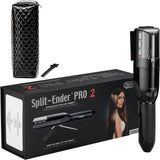
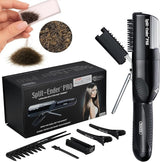
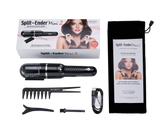
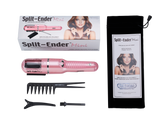
Conditioners can temporarily improve feel and appearance, but they cannot permanently reconnect a physically split hair shaft. When suitable for your hair type and condition, Split Ender PRO2 is designed for cosmetic hair-tip trimming while aiming to preserve overall length. Follow the product's instructions and hair-type guidance.
For additional habits, see How to Prevent Split Ends. A color refresh may restore visible richness, but it cannot reverse structural damage from previous processing.
“Aubergine isn't about being the loudest in the room. It's about the moment the light finds you.”
THE BEAUTY DESK
Frequently Asked Questions
Is aubergine hair purple or burgundy?
Aubergine generally leans deep purple or red-violet, while burgundy leans toward wine-red. Formulas vary, so reference photos help communicate your preferred undertone.
Can you get aubergine hair without bleach?
Sometimes. Dark violet reflections may be achievable without significant lightening, but vivid purple often requires a lighter starting base.
Does aubergine hair work on black hair?
Yes. On naturally black hair, it can create subtle violet dimension. Visibility depends on the formula, lighting, previous treatments, and whether the hair is lightened.
Does aubergine hair fade quickly?
Fading depends on dye chemistry, porosity, washing, sun exposure, and prior processing. There is no single reliable timeline for every aubergine shade.
Can a hair gloss repair damage after coloring?
A gloss can improve shine or refresh color temporarily, but cannot permanently repair a fractured fiber. Read our Hair Gloss Treatments Guide.
SCIENCE & SOURCES
References & Further Reading
American Academy of Dermatology — Hair Coloring Tips
American Academy of Dermatology — Stop Damaging Your Hair
Nogueira & Joekes — Hair Color Changes and Protein Damage Caused by Ultraviolet Radiation
Locke & Jachowicz — Fading of Artificial Hair Color and Its Prevention by Photofilters
Editorial note: Hair-color results depend on hair history, individual characteristics, and professional formulation. This article offers general beauty education, not personalized chemical-service or medical advice.