

CAN A GOOD HAIR DAY REALLY CHANGE YOUR MOOD? 💎
Hair, self-image and the surprisingly powerful feeling of looking like yourself again.
So… can doing your hair actually make you feel better?
Sometimes, yes—but not because hair care is therapy. How we feel about our appearance can interact with self-perception, identity and confidence. Grooming may also be an enjoyable, personally meaningful ritual.
Research involving hair-related conditions and appearance shows that these subjects can matter emotionally, but it does not establish that a good hairstyle treats depression or anxiety.
A GOOD HAIR DAY ISN'T THERAPY. BUT FEELING LIKE YOURSELF MATTERS.
Nothing in your life changed. The bills are still there, your inbox remains disrespectful and Monday continues to be Monday. But your hair? Fabulous. And somehow you walk out of the bathroom feeling a little more put together, maybe even a little more like yourself.
There probably isn't one universal “good hair day effect.” But appearance is one source of information we use when perceiving ourselves, and liking what you see may interact with confidence and social comfort. There's also a simpler possibility: you did something you wanted to do, and you like the result.
And sometimes the most meaningful part of doing your hair isn't thinking, “I look prettier.” It's looking up and thinking: “There I am.”
Why Can Your Hair Feel Like Part of “You”?
Hair isn't your identity. Your personality does not disappear when humidity attacks, and your worth certainly isn't stored inside a curling iron. But hair can still be part of how you recognize and express yourself.
Maybe your curls are one of the first things people associate with you. Maybe going gray became something you chose to embrace. Maybe you change your color every six months because consistency bores you to death.
Sometimes grooming isn't about becoming someone prettier. It's about recognizing yourself again.

That's especially meaningful after periods when you haven't felt quite like yourself—stressful weeks, illness, exhaustion, major life changes or simply days when caring for your appearance wasn't a priority.
Why Can Hair Feel So Personal?
Researchers studying hair loss have found that hair-related changes can have meaningful psychological and quality-of-life effects for some people, including confidence, self-consciousness and emotional well-being.
A systematic review and meta-analysis of studies involving androgenetic alopecia examined its impact on quality of life. Earlier research on women's experiences of hair loss also illustrates the personal significance hair can carry.
Being annoyed because your bangs staged a rebellion is not comparable to living with alopecia or medically significant hair loss.
But this research demonstrates a broader point: hair isn't psychologically meaningless. The mistake is assuming that because appearance matters emotionally, appearance determines our value. And as we explored in Does Healthy-Looking Hair Really Mean Healthy Hair?, how hair looks and what is happening physically are not always the same thing.
Can a Good Hair Day Replace Therapy?
No. Let's put the diamond directly on the table.
BUT FEELING LIKE YOURSELF MATTERS.
| HAIR CARE MAY OFFER | HAIR CARE CANNOT PROMISE |
|---|---|
| A pleasurable ritual | Treatment for depression |
| Self-expression | Treatment for anxiety |
| A visible little win | A cure |
| A feeling of being cared for | A substitute for professional care |
| A moment that feels like “me” | Proof that everything is okay |
A small beauty-care intervention study involving women undergoing breast-cancer treatment reported changes in psychological outcomes. Its specific clinical setting and limited sample mean the findings should not be generalized to ordinary hair styling or used to claim that beauty care treats depression.
Evidence that a blowout treats clinical depression? Absolutely not. Hair care can simply be pleasant, personal, creative, comforting or fun. That's enough.
What if even washing your hair feels like a lot?
When someone is struggling with depression, significant anxiety, exhaustion or another difficult period, everyday routines can become harder, and advice like “Girl, just get up, shower and fix yourself!” can miss the point completely.
SOME DAYS, SELF-CARE LOOKS FABULOUS.
Blowout. Music. Products lined up. Forty-five peaceful minutes. Wonderful.
OTHER DAYS, IT LOOKS LIKE GETTING THE KNOTS OUT.
Also valid.
ALL FOUR ARE ALLOWED.

If persistent sadness, anxiety, hopelessness, loss of interest or difficulty functioning is significantly affecting daily life, hair care isn't the solution. That's the moment for real support—not beauty advice disguised as health care.
Can Hair Be a Form of Self-Expression?
Absolutely. Hair is one of the most adaptable parts of our appearance.
Today: romantic. Tomorrow: sleek. Next month: copper. Tuesday at 10:47 p.m.: “Maybe I need bangs.” Perhaps sleep on that before making an appointment.

You can love long waves and later want a bob, or spend years coloring your gray and one day decide you're finished. The important distinction is choice. Not “What do I need to look like?” but “What do I feel like doing?”
Do you owe the world polished hair?
“I want to do this for me.”
“I have to look polished to deserve being seen.”
No. If doing your hair makes you feel fabulous today, do it. If today you're wearing the emergency bun because nobody is getting forty minutes of unpaid labor from you? Excellent. Beauty is much more enjoyable as an option for self-expression than as an admission fee for womanhood.
Can Taking Care of Your Hair Be a Little Luxury?
Yes, and luxury doesn't necessarily mean expensive. Sometimes it's time, warm water or your favorite conditioner. It also means recognizing that different problems need different solutions: conditioning can improve softness, slip and manageability, and styling changes how the hair looks. When ends are already physically split or damaged, trimming has a different job.
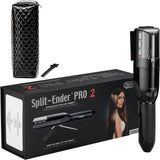
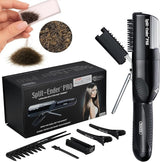
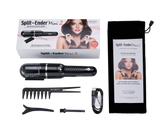
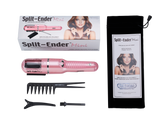
For people who want targeted maintenance of split and damaged ends while helping preserve the appearance of overall length, the Split Ender PRO2 can be one option within a personal hair-care routine, when used as directed. It is not a mental-health tool or confidence in a box. A hair-maintenance tool. Period.
For proper technique, see our guide to using Split Ender correctly. For more guidance on practical strand care, visit our Complete Guide to Healthy Hair.
CARE FOR THE HAIR YOU HAVE TODAY.
Conditioning, styling and trimming all have different jobs. When split or damaged ends are present, targeted trimming may be one small part of your routine.
EXPLORE SPLIT ENDER PRO2 →Frequently Asked Questions About Hair, Mood & Self-Care
Can doing your hair actually improve your mood?
It may feel mood-lifting for some people. Enjoying your appearance, expressing yourself and completing a meaningful grooming ritual can contribute to feeling more confident or put together. Hair care is not a mental-health treatment.
Is there a psychological connection between hair and self-esteem?
Hair can be important to identity and self-image. Research involving hair-loss conditions shows that changes in hair may affect confidence, emotional well-being and quality of life, although experiences vary between individuals.
Can self-care help with depression or anxiety?
Self-care activities may feel supportive or pleasurable, but they are not substitutes for evidence-based treatment. Persistent or severe mental-health symptoms deserve appropriate professional support.
What if I don't have the energy to wash or style my hair?
You can simplify your routine, choose a comfortable hairstyle, ask for help or leave your hair alone that day. If difficulty with everyday activities persists alongside significant emotional symptoms, consider seeking professional support.
Do I need to look good to feel good?
No. Appearance can influence feelings for some people, but personal worth does not depend on looking polished. Hair care should remain an optional form of self-expression and personal care.
Research & Further Reading
This article discusses the relationship between appearance, self-perception and personal rituals. Research involving hair-loss disorders or specific beauty-care interventions cannot establish that an ordinary good hair day treats a mental-health condition.
- Systematic review and meta-analysis: androgenetic alopecia and quality of life.
- Research on women's psychological experiences of hair loss.
- Beauty-care intervention in women undergoing breast-cancer treatment.
- Research examining appearance orientation, makeup use, body image and self-esteem.
Educational information only. This article does not provide mental-health diagnosis or treatment advice.