

Can the Sun Change Your Hair Color Without Dye?
The Photochemistry Behind Sun-Lightened Hair
Imagine spending a few weeks outdoors, enjoying warm afternoons, long walks, and bright summer sunshine.
One day, you catch your reflection and notice something unexpected.
Your hair looks a little lighter.
Perhaps a few golden strands have appeared near your face. Maybe your brown hair has developed warmer highlights, or your naturally blonde hair looks brighter than it did at the beginning of the season.
You haven't colored it. You haven't used bleach.
So what happened? Did sunlight somehow add new color to your hair?
The explanation is far more fascinating. Sunlight can change the chemistry of the pigments already inside your hair, gradually altering how the fiber absorbs and reflects light.
Scientists call this phenomenon hair photobleaching. And behind those seemingly effortless summer highlights lies a complex interaction between light, melanin, oxygen, and the molecular structure of human hair.
Let's follow a ray of sunshine into the hair fiber.
Why Does Hair Sometimes Look Lighter After Spending Time in the Sun?
Hair color may appear remarkably stable, but the molecules responsible for its natural shade can undergo chemical changes.
When sunlight reaches a hair strand, some of its energy is absorbed by pigments and other components within the fiber. Under certain conditions, this absorbed energy can initiate photochemical reactions.
These reactions may change the molecular structures that contribute to the hair's original color. As a result, the fiber may absorb and reflect visible light differently.
To our eyes, that difference can appear as lighter hair, warmer highlights, or a shift in tone.
What Is Hair Photobleaching?
Photobleaching describes a reduction or alteration in color caused by exposure to light. It is not exclusive to hair. Light-induced changes can also occur in dyes, fabrics, artworks, and other pigmented materials.
In human hair, photobleaching involves complex interactions between light and the fiber's natural pigments. The process may be gradual, and the visible results can vary considerably.
One person's hair may develop noticeable golden highlights, while another person's hair shows only subtle changes. Some fibers may undergo molecular alterations without producing an obvious visible difference.
What Gives Human Hair Its Natural Color?
The natural color of human hair is determined largely by melanin, a family of biological pigments produced during hair formation. Two major types contribute to the wide range of natural hair shades.
Eumelanin: The Brown and Black Pigment Family
Eumelanin contributes strongly to brown and black hair colors. Its concentration, distribution, and chemical characteristics influence how dark a fiber appears. Hair with relatively abundant eumelanin generally absorbs more visible light, producing deeper shades.
Pheomelanin: The Red and Yellow Pigment Family
Pheomelanin contributes reddish and yellowish tones. It is particularly important in naturally red hair, although it can also be present in other hair colors.
Most natural hair colors are not created by a single pigment operating alone. Instead, they reflect the combined influence of different melanin types, their relative amounts, and how they are distributed within the hair fiber.

Where Does the Melanin Come From?
Melanin is produced by specialized cells called melanocytes associated with the hair follicle. During active hair growth, pigment is transferred into the developing fiber.
As the hair shaft forms and emerges from the scalp, its color-bearing structures become part of a keratinized material. The visible strand is no longer living tissue capable of producing new pigment.
This distinction becomes especially important when sunlight begins to alter the melanin already present.
How Does Sunlight Chemically Change Hair Pigment?
To understand sun-lightened hair, imagine sunlight as a stream of energy arriving in different wavelengths. Some wavelengths are visible to the human eye. Others, including ultraviolet radiation, are invisible.
When certain molecules absorb light energy, they may enter excited states or participate in reactions that alter their chemical structure. In hair, these reactions can involve melanin and other components of the fiber.
The Role of Photooxidation
One important mechanism is photooxidation: oxidative chemical changes associated with light exposure. Depending on the conditions, light can contribute to reactions involving oxygen and reactive chemical species.
Such reactions may alter the structures of melanin molecules, changing their optical properties, including how they absorb visible light. In some cases, pigment degradation may also occur.
The outcome is not necessarily the complete disappearance of melanin. A pigment can undergo chemical modification without being entirely removed from the hair fiber.

Is Ultraviolet Light the Only Cause?
Surprisingly, no. Research has demonstrated that visible light can also contribute to hair photobleaching.
Studies comparing different wavelengths have found that the response varies among hair types. Experimental investigations of red and blonde hair have identified differences in the effects of visible and ultraviolet irradiation.
This means the familiar explanation that “UV rays bleach your hair” is incomplete. Sunlight contains a range of wavelengths, and more than one part of that spectrum can influence the chemistry of hair color.
Does Melanin Protect Hair From Light?
Melanin can absorb light energy and provide some protection to other components of the fiber. However, that protective role does not make the pigment immune to chemical change. Under sustained exposure, melanin itself may undergo photodegradation.
It is a fascinating paradox: a pigment that helps absorb potentially damaging light can also be altered by that light.
Why Does the Sun Create Golden Highlights in Some People but Barely Change Others?
Not all hair responds to sunlight in the same way. The amount of visible lightening depends on a combination of pigment chemistry, fiber characteristics, and exposure conditions.
1. Natural Pigment Composition
Different hair colors contain different amounts and combinations of eumelanin and pheomelanin. Because these pigments do not necessarily respond identically to every wavelength, their composition can influence the final color change.
2. Initial Hair Color
Naturally blonde, red, brown, and black hair may show different patterns of photobleaching. Dark hair can also undergo sunlight-induced color changes, but the result may be less visually obvious or may appear as a change in warmth rather than dramatic lightening.
There is no universal rule that every brown strand becomes copper-colored or every blonde strand becomes golden.
3. Duration and Conditions of Exposure
The effects of light depend on factors such as exposure duration, intensity, and spectral composition. However, these variables do not translate into a reliable formula for creating a particular shade. Sunlight is not a controlled coloring system.
4. The Hair Fiber's History
Chemical treatments, previous light exposure, and accumulated wear may influence how a strand responds to additional environmental stress. Two fibers with similar visible colors may not have identical internal chemistry.
5. Uneven Exposure
Some sections of hair receive more direct sunlight than others. The outer layers, ends, and strands near the face may experience different exposure patterns depending on hairstyle and daily activities. This can contribute to the uneven, naturally highlighted appearance sometimes associated with time spent outdoors.
Why Do Some Highlights Look Warm?
A visible color shift can occur when the balance of light absorption changes as pigment molecules are modified. Depending on the original pigmentation, the resulting shade may appear more golden, reddish, or copper-toned. But sunlight does not follow a predictable salon color chart.
Can Sun-Lightened Hair Return to Its Original Color Naturally?
This question reveals one of the most important differences between hair and skin. Living skin contains cells capable of responding to sunlight by changing pigment production. The visible hair shaft is different.
Once a strand has emerged from the follicle, it cannot manufacture fresh melanin to replace pigment altered by light.
Why the Hair Shaft Cannot Repigment Itself
Hair is formed through biological processes occurring within the follicle. The emerging fiber consists of keratinized cells that no longer perform the metabolic activities required for pigment production.
As a result, photochemically altered melanin inside the visible strand cannot be biologically replenished by that strand. A sun-lightened section may retain its changed pigmentation as it grows farther away from the scalp.

What Happens When New Hair Grows?
New hair forms within the follicle. If the follicle continues producing its usual pigment composition, the newly emerging hair may have its original natural color. Over time, this can create a difference between newer growth and older, sun-exposed lengths.
The exact appearance depends on the person's hair growth and pigmentation.
Can Products Restore the Original Melanin?
Cosmetic products may change the appearance of hair through deposited color, surface effects, or other mechanisms. But changing how a strand looks is not the same as recreating the original melanin molecules that underwent photochemical alteration.
A conditioner cannot instruct the already-formed hair shaft to manufacture new pigment.
Is Sun-Lightening the Same as Chemical Bleaching?
Both sunlight and chemical bleaching can produce lighter-looking hair, but they do not operate under identical conditions.
Sunlight involves photochemical reactions triggered by absorbed light energy. Conventional chemical lightening generally uses oxidizing agents under controlled formulation and processing conditions.
Both can affect hair pigments, and both may influence other components of the fiber. But the degree, speed, and pattern of change can be very different.
| Sun Photobleaching | Chemical Bleaching |
|---|---|
| Initiated by light exposure | Initiated by chemical lightening agents |
| Depends on wavelength and exposure | Depends on formulation and processing conditions |
| Often gradual and uneven | Can produce more pronounced, targeted lightening |
| Can affect pigment and fiber components | Can affect pigment and fiber components |
| Does not offer predictable shade control | Allows greater control, though results still vary |
Does Natural Lightening Mean Damage-Free Lightening?
No. A process does not become harmless simply because it occurs outdoors.
Studies have documented sunlight-related changes not only in hair pigments but also in proteins, lipids, and other components of the fiber.
This does not mean every visibly lightened strand has experienced the same amount of structural damage. Nor does it mean that hair without visible lightening has remained chemically unchanged.
Color change is not a reliable measurement of total photodamage.
What Can This Teach Us About Hair Care?
Understanding photobleaching encourages realistic expectations about the relationship between appearance and fiber condition. Hair that looks beautifully sun-kissed may still benefit from thoughtful handling and protection against unnecessary environmental stress.
Reducing avoidable friction, handling fragile ends gently, and maintaining an appropriate hair-care routine can help limit additional wear.
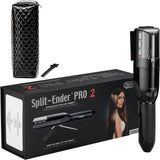
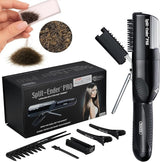
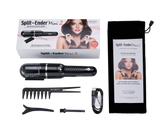
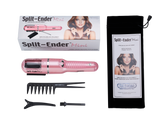
For individuals who wish to maintain their length while trimming protruding ends, tools such as the Split Ender PRO2 offer a specialized trimming option.
However, trimming tools do not restore altered melanin, reverse photobleaching, or rebuild every molecular structure affected by sunlight. Their role is hair-end maintenance—not pigment chemistry.
Five Surprising Truths About Sun-Lightened Hair
| The Myth | What Science Actually Shows |
|---|---|
| The sun adds golden pigment to hair. | Sunlight can chemically alter pigments already present. |
| Only UV rays can lighten hair. | Visible light can also contribute to photobleaching. |
| Dark hair cannot lighten naturally. | Dark hair can undergo sunlight-induced color changes. |
| Sun-lightened strands replace their lost pigment. | The hair shaft cannot biologically synthesize new melanin. |
| No visible lightening means no sun damage. | Molecular changes can occur without obvious color change. |
What Readers Want to Know
1. Can the sun really lighten hair without bleach?
Yes. Sunlight can cause photochemical changes to the natural pigments in hair, resulting in visible lightening under some conditions. The effect varies with hair pigmentation and exposure.
2. Does sunlight lighten brown or black hair?
It can. Dark hair may experience pigment changes that produce subtle lightening or warmer tones. However, the outcome is not predictable, and not every person will notice a visible change.
3. Is UV radiation responsible for all sun-lightening?
No. Research has shown that visible light can also contribute to photobleaching. Different wavelengths may influence different hair pigments and fiber components.
4. Why does hair sometimes develop golden or reddish highlights?
Light-induced changes to melanin can alter how the hair absorbs and reflects visible light. Depending on its original pigment composition, the resulting shade may appear warmer or lighter.
5. Can sun-lightened hair become dark again naturally?
The existing hair shaft cannot produce new melanin to replace pigment altered by sunlight. New hair growing from the follicle may retain the person's original shade if follicular pigmentation remains unchanged.
6. Does sun-lightened hair mean the hair is damaged?
Photobleaching is a chemical change, and sunlight can also affect proteins and lipids. However, visible lightening alone does not reveal the severity of structural damage.
7. Is it safe to use sunlight as a natural hair-lightening treatment?
Deliberately increasing sun exposure to lighten hair is not a damage-free alternative to chemical coloring. Sunlight can affect the hair fiber, and excessive UV exposure also presents risks to skin and eyes. Hair-color changes should not be pursued through unprotected sun exposure.
Scientific References
The following publications inform the scientific discussion. Research conditions and hair types differ across studies.
- Nogueira, A. C. S., Dicelio, L. E., & Joekes, I. (2006). About photo-damage of human hair. PubMed.
- Takahashi, T., & Nakamura, K. (2005). A study of the photolightening mechanism of red hair with visible and ultraviolet light: comparison with blond hair. PubMed.
- A Study of the Photolightening Mechanism of Blond Hair With Visible and Ultraviolet Light. PubMed.
- Wakamatsu, K., et al. (2012). Research on UVA-induced oxidative degradation of melanins. PubMed.
- Research on hair melanin content and photodamage (2007). PubMed.
- Research on hair color changes and protein damage caused by ultraviolet radiation (2004). PubMed.
- Photoaggravation of Hair Aging. (2010). Full-text scientific review.
Educational editorial content; not a recommendation to increase UV exposure or use sunlight as a hair-lightening treatment.