

Can Too Many Scalp Serums and Oils Cause Buildup?
When your scalp-care routine starts looking like a skincare laboratory, more products aren’t always the answer.
Yes, using too many scalp serums, oils, and leave-in treatments can make your roots feel greasier, heavier, or more uncomfortable. Layering products can leave cosmetic residue on the scalp and hair, while certain ingredients may trigger irritation or allergic reactions in susceptible people. However, product buildup, dandruff, and contact dermatitis are different problems, and they should not be treated as interchangeable.
The solution isn’t necessarily to stop using scalp treatments. It’s to understand what each product does, whether it belongs on your scalp or your hair lengths, and how your skin responds. A simpler routine can make it easier to identify which products are helping and which may be causing trouble.
Can Too Many Scalp Serums Cause Product Buildup?
Scalp serum buildup occurs when residues from applied products accumulate on the scalp or around the hair roots between cleansing sessions.
Oils, silicone-containing formulas, styling creams, and leave-in treatments can contribute to a coated feeling, depending on their ingredients, quantities, and how often you cleanse.
Your scalp also produces sebum naturally. Add several leave-in products, and it becomes difficult to distinguish natural oiliness from what you’ve applied.
That doesn’t mean every serum causes buildup. Lightweight formulas used according to their directions may fit comfortably into a routine.
The real question is whether you’re layering products with different purposes—or applying three versions of essentially the same thing.
For example, a moisturizing scalp serum, a botanical oil, and a leave-in conditioning treatment may all be marketed as nourishing. Yet the conditioner might be intended for your lengths rather than direct scalp application.
Your roots don’t need a seven-course tasting menu every morning.
The American Academy of Dermatology (AAD) explains that oils in hair-care products can contribute to clogged pores and acne-like breakouts along the hairline and forehead. Read the AAD guidance.
That is one reason to pay attention to where products are applied—not just what their packaging promises.

How Can You Tell Buildup From Scalp Irritation or Dandruff?
Product buildup describes accumulated residue; scalp irritation describes a skin reaction; dandruff is a scalp condition associated with flaking. They can overlap, but one does not automatically cause the others.
A scalp that feels oily isn’t necessarily unhealthy. Likewise, flakes do not prove that you need a stronger clarifying shampoo.
| What you notice | Possible explanation | Sensible next step |
|---|---|---|
| Roots feel coated or unusually heavy | Product residue or excess oil | Review quantities and cleansing routine |
| Tiny bumps near the hairline | Possible product-related acne | Review oily products touching the skin |
| Itching or burning after a new serum | Possible irritation or contact dermatitis | Stop the suspected product |
| Persistent flakes and itching | Dandruff or another scalp condition | Consider appropriate treatment and professional advice |
| Redness, swelling, or painful patches | Possible inflammatory skin condition | Consult a dermatologist |
These clues aren’t a home diagnostic test.
In an analysis of 38,775 patch-tested patients, researchers found that 3,481 patients (9.0%) had positive patch-test reactions associated with hair-care products. The study population consisted of patients referred for patch testing, so this percentage does not represent the general population’s allergy rate. See the study.
If symptoms persist, a dermatologist can help distinguish cosmetic residue from a condition requiring treatment.
For a broader explanation of scalp routines, explore Scalp Skinification: Should You Treat Your Scalp Like Your Face?

Are Natural Scalp Oils Always Better Than Synthetic Serums?
Natural ingredients aren’t automatically gentler, safer, or more effective than laboratory-formulated ingredients. What matters is the specific formulation, your scalp’s condition, and how the product is used.
Some oils help lubricate hair fibers and reduce friction. That benefit doesn’t mean every oil should be applied directly to every scalp.
A published dermatology commentary raised concerns that certain commonly used oils might worsen seborrheic dermatitis in susceptible individuals. The authors discussed laboratory findings involving Malassezia yeast, but those findings do not establish that every oil causes dandruff or that everyone should avoid scalp oils. Read the commentary.
Fragrance and botanical extracts can also cause reactions in sensitive people.
According to the AAD, allergic contact dermatitis may develop hours or days after exposure to a triggering ingredient. See possible causes.
So if your scalp becomes itchy after introducing a beautifully packaged rosemary blend, don’t assume the tingling means it’s working.
Sometimes your skin is simply asking you to stop.
A good scalp product should serve a clear purpose—not win an ingredient popularity contest.
Can Overusing Scalp Treatments Make Hair Look Greasy Faster?
Applying excessive leave-in products can make roots look greasy sooner because the formulas themselves may leave an oily or coated finish. This appearance doesn’t necessarily mean your sebaceous glands have increased their oil production.
The distinction is important.
If your hair looks flat immediately after applying several products, you may be seeing cosmetic weight rather than a biological change in scalp oil production.
Fine hair can show this effect quickly because even a small amount of heavy product may reduce volume near the roots.
Curly and coily hair may tolerate different quantities and application methods, but texture alone doesn’t determine whether a scalp treatment is appropriate.
Also consider your cleansing schedule.
A treatment designed for occasional use may become uncomfortable when applied daily without adequate cleansing.
If you regularly rely on dry shampoo between washes, adding oils and serums can make it harder to evaluate how much residue remains.
Our articles on why hair stops looking fresh between wash days and whether dry shampoo damages hair explore those related concerns.
The lesson? More shine at the roots isn’t always the kind of glow you were hoping for.
How Can You Simplify Your Scalp-Care Routine Without Losing Its Benefits?
The best scalp-care routine is one that addresses your actual needs while minimizing unnecessary products and potential irritants.
Try this practical reset:
- Identify your main concern. Is it dryness, oiliness, flaking, or simply a desire to maintain a comfortable scalp? Different concerns need different approaches.
- Separate scalp products from hair-length products. Apply conditioners and finishing treatments where their directions specify, rather than automatically coating your roots.
- Review every leave-in treatment. Check whether multiple products perform essentially the same function.
- Temporarily simplify optional products. If you suspect irritation, stop the likely culprit. Don’t discontinue prescribed treatments without discussing the change with your clinician.
- Cleanse according to your scalp and hair type. Use an appropriate shampoo and rinse thoroughly. Clarifying products aren’t a substitute for treating an underlying scalp condition.
- Introduce products individually. This makes it easier to notice changes. Follow the manufacturer’s instructions, and consider testing new cosmetic products on a small area first.
- Watch for recurring symptoms. If discomfort returns after a particular product, stop using it and seek advice when needed.
The AAD recommends testing certain new skincare products on a small area twice daily for seven to ten days before routine use. This can help identify some reactions, although it cannot guarantee that a product will never cause irritation. Review the AAD instructions.
For more guidance on choosing cleansing products, read Does Your Hair Get Used to Shampoo?

When Should You Stop Experimenting and See a Dermatologist?
Persistent itching, burning, swelling, painful bumps, significant flaking, or unexplained hair loss deserves professional evaluation rather than another round of product experimentation.
A dermatologist can assess whether symptoms relate to contact dermatitis, dandruff, psoriasis, infection, or another condition.
The AAD identifies ten potential causes of scalp itching, including reactions to hair products, dandruff, eczema, psoriasis, and fungal infections. Read the AAD overview.
That variety is precisely why a clarifying shampoo cannot solve every uncomfortable scalp.
If you have diagnosed seborrheic dermatitis, follow your dermatologist’s treatment recommendations rather than replacing medicated products with cosmetic oils.
And remember: scalp care and hair-end maintenance are separate responsibilities.
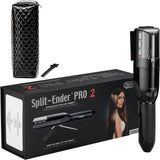
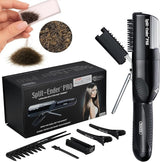
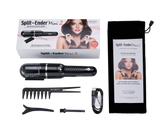
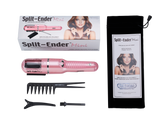
While scalp treatments address concerns at the roots, damaged lengths may need conditioning, gentler styling, and appropriate trimming. The Split Ender Pro2 is designed to trim protruding hair ends along the lengths; it does not treat scalp irritation, dandruff, or hair loss.
A well-balanced routine doesn’t need an impressive product count. It needs products that make sense for your hair.
Frequently Asked Questions
Can scalp serum buildup cause hair loss?
Product residue alone does not prove that hair loss is occurring. However, some hair products can trigger irritation or allergic contact dermatitis, and certain scalp conditions may affect hair health. If you notice persistent shedding, thinning, inflammation, or patches of missing hair, seek a dermatologist’s evaluation rather than assuming buildup is the cause.
How often should I use scalp serum?
There is no universal schedule because scalp serums have different ingredients and purposes. Some are intended for daily application, while others require less frequent use. Follow the product instructions, consider your scalp’s tolerance, and use prescribed treatments according to your clinician’s directions.
Can I use rosemary oil and a scalp serum together?
It depends on the formulations and your skin’s sensitivity. Combining products can increase exposure to ingredients that may irritate the scalp, especially when essential oils are not appropriately diluted. Avoid applying concentrated essential oils directly to the skin, and discontinue products that cause burning or a rash.
Will clarifying shampoo remove all scalp buildup?
Clarifying shampoo can help remove certain cosmetic residues, but its effectiveness depends on the formula and the substances present. It does not automatically treat dandruff, contact dermatitis, or other scalp disorders. Excessively aggressive cleansing may also leave some scalps feeling dry or irritated.
Is it better to apply hair oil to the scalp or the ends?
That depends on the oil and your goal. Some products are formulated for scalp application, while others are better suited to lubricating the hair lengths. If your scalp is oily, acne-prone, or sensitive, avoid assuming that adding oil will improve its condition.
References
- American Academy of Dermatology — Are Your Hair Care Products Causing Breakouts?
- American Academy of Dermatology — 10 Reasons Your Scalp Itches
- American Academy of Dermatology — How to Test Skin Care Products
- American Academy of Dermatology — Contact Dermatitis Causes
- Contact Dermatitis Associated With Hair Care Products — North American Contact Dermatitis Group Study
- Hair Oils May Worsen Seborrheic Dermatitis in Black Patients — Dermatology Commentary