



Can Your Hair Reveal Your Past? The Science of a Strand’s Timeline
How a Single Hair Fiber Can Preserve Clues About Time, Chemistry, and Exposure
Your Hair Has Been Keeping a Timeline
What if a single strand of hair could reveal something about your past?
Not your childhood memories. Not the places you have visited. And certainly not every secret you have ever kept.
But something far more scientific.
A strand of hair can preserve chemical clues associated with certain exposures that occurred while it was growing. Under carefully controlled laboratory conditions, scientists can examine those clues to investigate patterns across time.
It sounds almost like forensic fiction. Yet the science is real.
The extraordinary part is not that hair remembers everything. It is that a seemingly ordinary fiber can become a valuable biological sample.
And the most fascinating question is not simply what hair can reveal. It is how scientists distinguish a genuine clue from a misleading one.
Human hair grows progressively from follicles in the scalp. Certain substances can become associated with the developing hair fiber, while others may be deposited from the environment after the hair emerges.
Scientists can sometimes analyze different sections of a strand to investigate patterns of exposure over time. However, hair analysis cannot reconstruct a person's complete history, establish precise dates in every case, or automatically determine health effects.
Can a Single Strand of Hair Preserve Evidence of the Past?
Every visible hair strand began forming beneath the surface of your scalp.
Inside the follicle, specialized cells produce the proteins that eventually become the hair shaft. As the strand grows, newly formed material pushes older portions farther away from the scalp.
This creates a remarkable physical arrangement. The section closest to the scalp generally represents more recent growth. Sections farther toward the tip were formed earlier.
Unlike living skin, the visible hair shaft consists primarily of nonliving, keratinized material. It does not continually rebuild itself through active cellular metabolism.
That stability helps make hair useful for certain kinds of scientific investigation.
During formation, some substances circulating in the body may become incorporated into the developing fiber. After emergence, hair can also interact with substances in the surrounding environment.
The result is a biological material that may preserve measurable chemical information.
But there is an important distinction. Preserving chemical information is not the same as preserving an accurate record of everything that happened.
Scientists must identify which substances are present, how they might have reached the hair, and whether the findings support a meaningful interpretation.
A strand may contain clues. The laboratory must determine what those clues mean.
Why Are the Ends of Your Hair Older Than the Roots?
Imagine two points on the same strand. One is located just above your scalp. The other is several inches farther down.
Although they belong to the same continuous fiber, they were not produced at the same time.
Human scalp hair grows at an average rate often approximated as one centimeter per month in forensic calculations. That makes length potentially useful for estimating periods of growth.
For example, a strand measuring approximately 12 centimeters could represent roughly one year of growth under a simplified model. But that estimate is not a personal calendar.
Growth rates vary between individuals and can change with biological and physiological factors. Hair follicles also move through growth and resting phases.
Furthermore, the relationship between distance and time becomes more complicated when growth is interrupted, when strands are cut, or when the sample contains hairs in different phases.

An Illustrative Hair Timeline
| Distance from scalp | Approximate growth period |
|---|---|
| 0–3 cm | Most recent three months |
| 3–6 cm | Approximately three to six months earlier |
| 6–9 cm | Approximately six to nine months earlier |
| 9–12 cm | Approximately nine to twelve months earlier |
This table assumes a constant growth rate of 1 cm per month. It is an educational illustration, not a precise method for dating exposure.
This is why scientists sometimes examine hair in separate segments. Rather than treating an entire strand as a single sample, they may investigate whether measurable concentrations differ between sections.
Such patterns can provide useful information. They also require careful interpretation.
What Can Scientists Actually Detect in Human Hair?
Hair analysis has applications in forensic toxicology, environmental research, and certain areas of biomedical investigation.
But the phrase hair analysis covers many different techniques and scientific questions. There is no universal test that reveals every exposure a person has experienced.
Researchers must first decide what they are looking for.

Certain Drugs and Their Metabolites
In forensic toxicology, laboratories can test hair for selected drugs and, in some cases, their metabolites.
A metabolite is a substance produced when the body processes another chemical. The presence of an appropriate metabolite may sometimes help investigators interpret whether a compound was taken into the body rather than merely deposited on the hair's surface.
Even then, results must be evaluated using validated procedures and appropriate scientific standards. Detection alone does not necessarily establish the exact dose, frequency, or date of exposure.
Environmental Substances
Researchers may also investigate certain metals and other environmental substances. However, a measured concentration in hair does not always reflect the amount that entered the body.
Dust, water, workplace conditions, and external contamination can influence findings. For that reason, hair testing is not a universal substitute for established medical or environmental exposure assessments.
Hormones and Research Biomarkers
Scientists have also studied cortisol concentrations in hair as a possible way to investigate longer-term patterns of hormone exposure.
This is an active research area with important methodological limitations. Hair cortisol should not be interpreted as a simple personal stress score, and a single result cannot reliably reconstruct someone's emotional experiences.
What a Hair Sample May—and May Not—Tell Us
| Scientific question | What hair analysis may contribute | What it cannot automatically establish |
|---|---|---|
| Was a selected substance detected? | Laboratory evidence of its presence | Exact dose or timing |
| Did concentrations differ across segments? | A possible pattern along the strand | A precise exposure calendar |
| Was there environmental contact? | Evidence relevant to exposure research | Whether the substance entered the bloodstream |
| Can a hormone be measured? | A research measurement under defined conditions | A complete history of stress or health |
A chemical measurement is evidence to interpret—not a story that explains itself.
How Do Scientists Read the Timeline of a Hair Strand?
The process begins long before a laboratory instrument produces a result. Reliable analysis depends on how a sample is collected, handled, prepared, and interpreted.

Step 1 — Collecting the Sample
For many scalp-hair investigations, a sample is cut as close to the scalp as practical. The collection location, sample length, and orientation may be documented.
The end nearest the scalp must be identifiable when segmental interpretation is intended. Without that information, the relationship between position and estimated growth period becomes less reliable.
Step 2 — Dividing the Hair Into Segments
The sample may be divided into measured sections. A laboratory might analyze consecutive one-centimeter or longer segments, depending on the question being investigated and the applicable method.
Each segment represents a portion of the fiber formed during a different approximate period. This technique is known as segmental hair analysis.
Step 3 — Preparing the Sample
Laboratories may use washing and extraction procedures appropriate to the target substances. These steps are designed to support accurate measurement, but no preparation procedure can eliminate every possible source of uncertainty.
Some substances may be incorporated during growth, while others may reach the hair externally. Distinguishing these possibilities can be difficult.
Step 4 — Measuring the Chemical Evidence
Depending on the target compound, laboratories may use advanced analytical techniques such as chromatography combined with mass spectrometry.
These methods can help separate and identify specific chemicals. A scientifically meaningful result requires appropriate validation, quality controls, and interpretation.
Step 5 — Reconstructing a Possible Pattern
Finally, scientists examine the results in context. They consider factors such as hair growth, sample collection, cosmetic treatment, environmental exposure, analytical limitations, and the purpose of the investigation.
The result may support a particular interpretation. But responsible scientists recognize the difference between a plausible timeline and a proven chronology.
Can a Strand of Hair Tell the Wrong Story?
Here is where the science becomes especially interesting.
Imagine that a laboratory detects a substance in a section of hair. What does that result actually mean?
Was the substance incorporated while the hair was forming? Did it reach the strand through sweat or other bodily secretions? Was it deposited from dust, water, smoke, or another environmental source? Could cosmetic treatment have changed the concentration?
These questions matter because hair is exposed to the world continuously.
External Contamination
Hair can collect material from its surroundings. Some compounds may bind to the surface or penetrate portions of the fiber.
Laboratories use established procedures to help address contamination, but the distinction between external deposition and internal incorporation is not always straightforward.
Bleaching and Chemical Treatments
Coloring, bleaching, straightening, and other treatments can alter the hair fiber. Depending on the substance being measured and the treatment involved, these changes may influence analytical findings.
This does not mean every cosmetic treatment invalidates every hair test. It means treatment history can matter.
Individual Growth Differences
The familiar one-centimeter-per-month estimate is useful for illustration, but it is not an exact biological clock.
Two people with strands of identical length may have grown that hair over different periods. Even hairs from the same scalp may not share identical growth histories.
The Limits of Interpretation
A positive analytical result does not automatically establish when an exposure occurred, how much substance entered the body, or whether it caused harm.
Likewise, a negative result does not necessarily prove that an exposure never happened. Detection windows, analytical sensitivity, the substances tested, and sample characteristics all influence what can reasonably be concluded.
What Does This Science Teach Us About Everyday Hair Care?
The forensic story of hair reveals another fascinating truth. A single strand has both a chemical history and a physical history.
The section closest to your scalp is relatively new. The older lengths have spent more time exposed to washing, brushing, friction, sunlight, styling tools, and environmental conditions.
Those experiences do not affect every strand in the same way. Hair type, length, grooming habits, chemical processing, and environmental exposure all contribute to how a fiber looks and feels.
This helps explain why long hair may appear smooth near the roots while its older ends feel rougher, more fragile, or more prone to tangling.
The difference is not simply that the ends are farther away. They have generally experienced a longer period of physical wear.
The Importance of Gentle Length Maintenance
Thoughtful hair care can help reduce avoidable mechanical stress. That may include gentler detangling, appropriate conditioning, limiting excessive heat, and managing friction.
When split or damaged ends are present, trimming can be part of maintaining the appearance and manageability of longer hair.
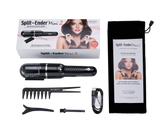
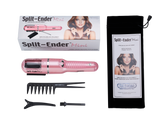
The Split Ender PRO2 is designed to trim protruding ends as part of a hair-maintenance routine.
It is not a scientific instrument for measuring chemical exposure, and trimming cannot reverse the history of a hair fiber or guarantee a change in laboratory findings.
The real connection is simpler—and more useful. Understanding how hair grows and ages can help us make more informed decisions about caring for its older lengths.
The Hair Timeline Checklist
Five Things to Remember About a Strand's Past
| Scientific fact | What it means |
|---|---|
| Hair grows progressively | Different positions along a strand formed at different times |
| Hair can retain chemical information | Certain exposures may leave measurable clues |
| Segmental analysis compares sections | Researchers can investigate patterns across approximate growth periods |
| External factors matter | Contamination and cosmetic treatments may influence findings |
| Interpretation has limits | A strand cannot provide a complete or perfectly dated personal history |
Frequently Asked Questions
1. Can a single strand of hair reveal your past?
A strand may preserve chemical information relevant to certain past exposures. However, the usefulness of that information depends on the substance, laboratory method, sample quality, and scientific interpretation. It cannot reveal someone's complete personal history.
2. How far back can a hair test detect something?
The possible period depends partly on the length of hair analyzed, its growth characteristics, the target substance, and the test's sensitivity. A rough growth estimate is sometimes used to relate scalp-hair segments to previous months, but it does not establish exact dates.
3. Are hair ends really older than hair roots?
Yes. Along a continuously growing strand, the hair near the scalp was generally formed more recently than the material farther toward the tip. The visible hair shaft does not regenerate itself like living tissue.
4. Can scientists determine exactly when a substance entered your body?
Not reliably from hair position alone. Segmental analysis may help estimate periods associated with a finding, but variations in growth, incorporation, external deposition, and laboratory factors limit dating precision.
5. Can hair dye or bleach affect laboratory results?
Yes. Some cosmetic treatments can alter hair structure or affect concentrations of certain substances. The effect depends on the treatment and the analyte being measured, so laboratories should consider relevant treatment history.
6. Can hair analysis diagnose a medical condition?
Hair analysis has specialized scientific and forensic applications, but it is not a universal diagnostic tool. Results should not be used to diagnose medical conditions without appropriate clinical evaluation and validated testing.
7. Does damaged hair contain a more accurate record of the past?
No. Older or damaged hair is not automatically a better scientific sample. Damage, environmental exposure, and chemical processing can complicate analysis and interpretation.
Scientific References
- Society of Hair Testing. General Consensus on Hair Testing (2022). Guidance concerning sample collection, preparation, analytical procedures, and interpretation.
- Journal of Applied Laboratory Medicine. Review on Toxicology Testing in Hair (2025). Discussion of hair toxicology applications and interpretive limitations.
- Agency for Toxic Substances and Disease Registry (ATSDR). Hair Analysis Panel Discussion: Executive Summary. Scientific limitations of using hair to evaluate environmental exposures.
- The Multifaceted Role of Hair as a Biospecimen. Review of hair as a biological sample, including research applications and analytical challenges.
Scientific note: Hair-analysis methods and their interpretation depend on the target substance and testing context. This article is educational and does not provide individual toxicological or medical conclusions.