

Do Hair Products Expire? The Hidden Science Inside Your Shampoo Bottle
That forgotten conditioner in the back of your shower may have a story to tell.
A science-led guide to cosmetic stability, expiration labels, and smarter storage.
You know that expensive hair mask you bought, used twice, and carefully placed in the bathroom cabinet? The one you rediscovered approximately three hairstyles, two vacations, and one major life decision later?
It still looks beautiful. But is it actually safe to use?
What Really Happens Inside an Aging Shampoo Bottle?
A shampoo bottle may look simple, but its contents are a carefully balanced formulation. Depending on the product, that mixture can include cleansing agents, water, conditioning ingredients, fragrances, thickeners, stabilizers, and preservatives. Each ingredient helps the product perform as intended.
As time passes, the balance can change. Physical stability concerns texture and separation; chemical stability concerns reactions that change ingredients; and microbiological stability concerns whether unwanted microorganisms can grow. These are related questions, but they are not the same.

Heat, oxygen, light, packaging, and ingredient compatibility may influence how quickly a particular formula changes. Two shampoos purchased on the same day may have different useful lives. The U.S. Food and Drug Administration (FDA) describes shelf life as the period during which a cosmetic is expected to remain safe and work as intended.
The Preservative Paradox: The Ingredient Nobody Brags About
Preservatives rarely receive glamorous advertising. Nobody walks into a beauty store announcing, “I need a breathtaking preservative system.” Yet they can be essential to the safety of water-containing products.
Many shampoos and conditioners contain water, so controlling microbial growth matters. An effective preservation system helps limit bacteria, yeasts, and molds during expected storage and use. Its performance depends on the whole formula, not just one ingredient on the label.
The FDA identifies inadequate preservation, contaminated ingredients, packaging problems, and consumer handling as possible sources of cosmetic contamination. A preserved formula is not guaranteed to remain safe forever, and a product described as “preservative-free” is not automatically unsafe. Some formulations rely on their composition or packaging rather than conventional preservatives.
What matters is whether the finished product has been properly evaluated for safety and stability. A beautiful botanical label is not a substitute for that work.
The Expiration-Date Mystery: What Does 12M Mean?
Have you spotted a tiny open-jar symbol labeled 6M, 12M, or 24M? That is the Period After Opening (PAO) symbol. Where used, it indicates the recommended period of use after a product is first opened—not after it is purchased.

| Marking | What It Means |
|---|---|
| 6M | Six months after opening |
| 12M | Twelve months after opening |
| 24M | Twenty-four months after opening |
| Best before | Minimum durability under specified conditions |
| Batch or lot code | Identifies a production batch; not necessarily an expiration date |
Rules differ by market. In the United States, cosmetic expiration dates are generally not required on labels, although companies are responsible for product safety. In the European Union, products with minimum durability of 30 months or less generally require a minimum-durability date; products with longer durability generally require PAO information when applicable, subject to exceptions.
Do not assume every shampoo lasts twelve months or every mask lasts six. Follow the specific manufacturer guidance. An unopened bottle is not immortal either: its ingredients may still deteriorate during storage.
Is Your Bathroom Aging Your Hair Products Faster?
Imagine two identical conditioners. One stays tightly closed in a cool cabinet. The other lives beside a steamy shower, is opened with wet hands, and occasionally spends the afternoon without its cap. They may not age in the same way.
Heat, moisture, direct sunlight, and repeated handling can affect cosmetic stability or increase opportunities for contamination. A shower shelf is not automatically unsafe—many products are designed for bathroom use—but reasonable habits make a difference.
Keep the Formula in Its Comfort Zone
- Close the lid. Keep bottles and jars sealed between uses.
- Skip the water top-up. Diluting shampoo can change the formulation and introduce contamination.
- Avoid excessive heat and sun. Do not leave products for prolonged periods in a hot car or sunny window.
- Use clean hands or applicators. Especially when scooping product from a jar.
Do not assume refrigerating a cosmetic improves its shelf life; follow the product’s stated storage instructions instead.
Five Warning Signs Your Hair Product May Have Gone Bad
Some changes are visible; others are not. The following clues are reasons to stop and investigate, not laboratory tests that can prove a product is safe.
| Warning Sign | What to Notice |
|---|---|
| Unusual odor | A sour, rancid, or noticeably changed smell |
| Texture change | Unexpected lumps, thinning, thickening, or graininess |
| Separation | Layers that do not behave as the manufacturer describes |
| Color change | Unexpected discoloration or darkening |
| Visible contamination | Unusual growth, foreign matter, or suspicious residue |
Some products are intentionally designed to separate and be shaken before use; others should stay uniform. A naturally unusual scent is not automatically spoilage. Conversely, a contaminated product may have no obvious warning sign.
Do not try to rescue a suspicious conditioner by adding water or mixing in another product. If the change is unexpected, follow manufacturer instructions, contact the brand, or discard it. If use causes burning, a rash, or another concerning reaction, stop using it and seek appropriate medical advice.
The Hair-Care Shelf-Life Reset: A Smarter Beauty Routine
You do not need to throw away every bottle whose purchase date you have forgotten. You need a routine that makes your products easier to manage.

A Quick Shelf-Life Reset
- Read the packaging. Check for PAO, dates, and storage instructions.
- Record when you open it. Mark the month on the bottle or in your phone.
- Inspect it. Look for unexpected changes in odor, color, or texture.
- Consider its history. Was it overheated, diluted, or exposed to contamination?
- Decide sensibly. Follow brand guidance and discard compromised products.
Buying for your actual routine can help too. An oversized treatment jar is not necessarily a bargain if you use it so slowly that its recommended period passes before you finish.
And What About Split Ends?
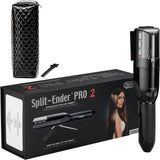
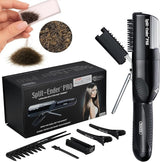
Product freshness and split-end maintenance are separate concerns. Conditioner can improve softness and manageability, but it cannot permanently reconnect a physically split hair shaft. For routine end maintenance, the Split Ender PRO2 is designed to trim hair ends when used as directed on completely dry, detangled hair.
It does not preserve cosmetics, treat scalp infections, or reverse the deterioration of a product inside its bottle.
Frequently Asked Questions
Can expired shampoo cause hair loss?
Expired shampoo does not automatically cause hair loss. A deteriorated or contaminated product may cause irritation or other adverse reactions. Persistent shedding, inflammation, or patchy loss warrants medical evaluation.
Is shampoo still good after two years?
Possibly, but there is no universal two-year rule. The answer depends on the formulation, whether it has been opened, storage conditions, and manufacturer guidance.
Do unopened hair products expire?
Yes. Unopened formulas can deteriorate, especially after prolonged storage or exposure to unsuitable conditions.
What does 12M mean on conditioner?
It generally indicates a twelve-month recommended period of use after opening, under the applicable PAO labeling convention.
Does natural shampoo expire faster?
Not necessarily. Shelf life depends on the complete formulation, protective system, packaging, and testing—not simply a “natural” marketing claim.
Can I add water to old shampoo?
Avoid doing so. Added water can change the formulation and introduce contamination. Follow the manufacturer's directions.
Scientific Sources & Further Reading
- FDA — Shelf Life and Expiration Dating of Cosmetics.
- FDA — Microbiological Safety and Cosmetics.
- FDA — Do Cosmetics Need Expiration Dates?.
- European Union — Regulation (EC) No 1223/2009, Article 19.
Educational content only. For product-specific shelf life, follow the manufacturer's instructions.