

Hair Jewelry Is the New Statement: Metal, Braids and Movement
The new luxury isn't simply worn around the neck. It's woven into the hair.
Hair jewelry describes decorative cuffs, rings, chains, pins, and other ornaments styled into braids, ponytails, curls, and updos. Unlike a basic elastic or clip, these pieces can become the visual centerpiece of a hairstyle. One brushed-gold cuff changes the mood of a low ponytail; a fine silver chain traces the line of a braid; a sculptural pin transforms an everyday twist.
Beautiful styling, however, is about more than shine. A well-chosen piece should sit comfortably, move naturally, and avoid unnecessary pulling or snagging. Here is how to make metallic hair accessories look intentional while treating your strands with care.
01 / Why Is Hair Jewelry Becoming a Fashion Statement?
When an accessory becomes part of the silhouette.
Think of a hair cuff as the equivalent of a striking bracelet: it works because of its placement, proportion, and finish. Contemporary fashion styling uses metal accents to echo the hardware on clothing and bags or to contrast with soft, flowing hair. Recent fashion coverage from Who What Wear and Marie Claire has discussed the renewed visibility of decorative hair pieces.
Hair adornment itself is far older than any runway cycle. Ornamental hairpins, decorated braids, and other culturally specific traditions have long been meaningful across communities. Modern editorial styling should acknowledge those histories rather than claim to have invented them.
A single polished accent can command attention precisely because the surrounding hairstyle remains simple.
02 / Gold, Silver and Sculptural Metal: Which Hair Jewelry Works Best?
Choose the piece for its function as well as its finish.
Gold lends warmth to brunette, black, auburn, and highlighted hair; silver creates crisp contrast and a more futuristic mood. Mixed metals can work when one finish leads and the other appears as a small accent. But shape and fastening matter as much as color.
| Piece | Best for | Practical consideration |
|---|---|---|
| Hair cuffs | Ponytails, braids, twists | Look for smooth edges and an appropriate fit |
| Hair rings | Defined braids or sections | Check openings for snagging |
| Hair chains | Long braids and updos | Keep them light and securely anchored |
| Sculptural pins | Twists and buns | Use a shape suited to the hair density |
| Metallic clips | Half-up styles and side parts | Inspect hinges and clasps |
For understated luxury, place a single brushed-gold cuff at the base of a sleek ponytail. It should complement the hairstyle, not hold the entire weight of the hair by itself.

03 / How Do Braids Transform Hair Jewelry Into Wearable Art?
Geometry, repetition, and movement.
Braids create natural lines for metal accents to follow. Small rings can emphasize repeating sections; a short chain can trace a curve; one cuff can finish the end of a long braid. The visual effect changes with the braid pattern, hair texture, and spacing between ornaments.
A five-step approach to braid jewelry
- Build the hairstyle first. Choose a comfortable braid or updo that can hold its shape without relying on jewelry.
- Check tension. If the scalp feels tender or pulled, loosen the style before adding anything.
- Pick one focal point. Begin with a cuff, a short chain, or a small set of rings.
- Attach without dragging. Open cuffs when possible; never force a metal edge along individual strands.
- Test movement. Turn your head and move naturally. Reposition anything that slides, catches, or tugs.
Curly and coily hair can look striking with metal accents, particularly around defined sections or braids. The goal is to celebrate the natural texture, not flatten it to accommodate an ornament.

04 / Can Metal Hair Accessories Cause Breakage?
Consider friction, tension, and weight.
Friction and snagging
Rough joins, sharp edges, and tight clasps can catch strands during styling or removal. Repeated rough handling adds mechanical stress, especially to fragile or chemically treated hair. The American Academy of Dermatology (AAD) recommends gentler styling habits to limit damage. Before wearing a new piece, feel its edges and check whether it catches on a soft cloth.
Tension at the scalp
A hairstyle that continually pulls can contribute to breakage and traction alopecia. Dermatology guidance cautions against repeatedly wearing tight braids, ponytails, and similar styles. Adding jewelry should never make a braid tighter or create pain at the hairline. Clinical literature on traction alopecia also identifies sustained pulling as a key concern.
Weight and placement
Large ornaments can tug on a small section of hair. Choose lighter pieces, distribute their weight sensibly, and avoid hanging a heavy chain from a few delicate strands. There is no single safe weight for every hairstyle: comfort, density, attachment, and wear time all matter.
05 / How Can You Wear Hair Jewelry Without Sacrificing Hair Health?
Let the hairstyle support the jewelry—not the other way around.
Start with manageable hair. Conditioner and gentle detangling can reduce unnecessary tugging, while a comfortable base style keeps ornaments from sliding. The AAD's hair-care advice emphasizes gentle handling and conditioning for fragile hair.
Choose accessories with smooth finishes and reliable fastenings. If a cuff is too loose, try a better-fitting design rather than squeezing it tightly. If a chain catches in a braid, stop and release the strands one section at a time. Remove rigid pieces before sleeping so they do not press against the scalp or become tangled overnight.
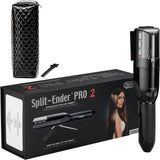
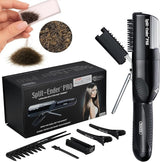
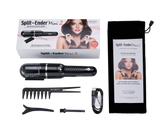
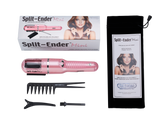
Pay attention to the ends, too. Shine products can improve appearance, but they cannot permanently reconnect a split hair shaft. Trimming removes damaged tips. For people who prefer targeted maintenance between regular cuts, the Split Ender PRO2 is designed to trim protruding hair ends; it does not repair existing damage or replace careful styling.
Finish with restraint. A sculptural silver pin in a softly secured twist can be as memorable as an elaborate chain arrangement. A beautiful accessory should draw attention to the hair while leaving it comfortable and free to move.

Frequently Asked Questions
What is hair jewelry?
Hair jewelry includes decorative cuffs, rings, chains, ornamental pins, and sculptural pieces styled into braids, ponytails, curls, and updos. Some also help secure hair, while others are primarily decorative.
Can you wear hair jewelry with curly hair?
Yes. Smooth, lightweight pieces can complement curly and coily textures when attached to defined sections, braids, or comfortable updos without pulling or snagging.
Are metal hair cuffs damaging?
Not necessarily. Risk depends on their finish, fit, weight, placement, and removal. Rough edges, tight attachment, and repeated pulling can increase mechanical stress.
How do you keep hair chains from tangling?
Choose lightweight chains, secure them at suitable points, limit loose length, and detach them slowly section by section rather than pulling them through the hair.
Can tight braids cause hair loss?
Yes. Repeated tension from tight hairstyles can contribute to traction alopecia. Loosen styles that cause tenderness or pulling, and seek professional advice for persistent hairline changes.
References & Further Reading
- American Academy of Dermatology — Hair styling without damage
- American Academy of Dermatology — Hair loss: Tips for managing
- NCBI Bookshelf — Traction Alopecia
- Who What Wear — Hair Jewelry Trends
- Marie Claire — Heirloom Accessory Trend
Editorial note: General styling and hair-care information, not individualized medical advice. Seek qualified care for persistent scalp pain or hair loss.