

Hot Showers and Winter Hair: Does Hot Water Actually Cause Damage?
Your shower may be the coziest five minutes of winter. Your hair, however, might prefer a slightly less tropical experience.
October 2026 · Hair-care science & practical tipsHot water does not automatically cause permanent hair damage, but very hot showers can leave hair feeling rougher, drier, and harder to manage. Water temperature is only one part of the picture: shampoo choice, washing frequency, friction, hair porosity, and conditioning habits also affect how your strands behave.
When the weather turns chilly, a steaming shower feels like a luxury.
Before blaming your shower for every split end, let's examine what the science actually supports—and which small changes are worth making.
1. What Does Hot Water Actually Do to Your Hair?
Hair is made primarily of keratin proteins, protected by overlapping cuticle cells. That outer surface influences how smoothly strands slide against one another, how light reflects off them, and how easily hair tangles.
Water wets the fiber and can cause temporary swelling. Washing also removes some surface oils, while shampoos use cleansing agents to lift away sebum, dirt, and product residue.
Temperature can influence this process, but hot water is not the same as a 400°F styling iron. Their exposure conditions and mechanisms differ.

A very hot shower may make the scalp feel uncomfortable and leave some hair types feeling less soft after washing, particularly when combined with frequent shampooing or insufficient conditioning. However, there is limited direct clinical evidence establishing that ordinary hot showers, by themselves, routinely cause permanent structural damage to healthy hair.
2. Hot Water vs. Warm Water vs. Cool Water: Which Is Better?
You do not need an icy shower to earn healthier-looking hair. A comfortable, lukewarm temperature is a practical starting point, especially when your scalp is sensitive or your lengths already feel dry.

| Water temperature | What to expect | Practical advice |
|---|---|---|
| Very hot | May irritate sensitive skin and make an already drying wash routine less comfortable. | Turn the temperature down. |
| Comfortably warm | Allows normal cleansing without unnecessary heat discomfort. | A sensible default for shampooing. |
| Cool | May feel refreshing but is not a proven method for permanently sealing cuticles. | Optional, not essential. |
| Cold | Not required for healthy hair and may be unpleasant in winter. | Skip it if you dislike it. |
Surface smoothness depends on the hair's condition, its chemical history, conditioning ingredients, and mechanical wear—not simply the temperature of the final rinse.
The better rule: choose a temperature that feels comfortable on your scalp and avoid extremes.
3. Why Can Hair Feel Drier After a Hot Winter Shower?
Cold outdoor conditions, dry indoor air, repeated washing, hair coloring, and heat styling may all influence how your hair feels. A hot shower can be part of that routine without necessarily being the main cause of dryness.
Your shampoo may be doing more than you need
A strong cleanser used too frequently can leave some hair types feeling stripped or difficult to detangle. If your scalp needs frequent cleansing, that does not automatically mean your ends need equally intensive washing.
Your hair's history matters
Bleached, chemically treated, weathered, or highly porous lengths may behave differently from newer hair near the roots. They may absorb water readily, tangle more easily, or require more conditioning.
Your after-shower routine can add friction
Wet hair can be vulnerable to stretching and mechanical stress. Vigorous towel rubbing, rough detangling, and pulling through knots may create more trouble than the shower temperature itself.
Learn more about how weather affects your hair.
4. How to Wash Your Hair in Winter Without Overdoing It
Try these six practical steps:
- Start with comfortably warm water. Avoid water that makes your scalp sting, flush, or feel uncomfortably hot.
- Shampoo the scalp, not the entire length. Massage gently with your fingertips. Let the rinse carry cleanser through the ends rather than scrubbing them together.
- Condition after shampooing. Apply conditioner where your hair needs it, especially the mid-lengths and ends. Fine hair may prefer a lighter formula; coily or highly textured hair may benefit from richer conditioning.
- Rinse thoroughly. A cool finishing rinse is optional. There is no need to endure an icy finale.
- Remove excess water gently. Use a soft towel or T-shirt to blot or wrap the hair instead of rubbing it vigorously.
- Detangle according to your texture. Straight hair often benefits from partial drying before gentle combing. Tightly curled or textured hair is often easier to detangle while damp and conditioned.

These steps align with the American Academy of Dermatology's hair-damage prevention guidance, which emphasizes scalp-focused shampooing, conditioning, gentle drying, and texture-appropriate detangling.
Winter bonus: If you use a blow dryer afterward, keep the heat moderate and avoid concentrating hot air on one section for too long. The dryer is a separate heat exposure, and its settings matter.
5. Three Hot-Shower Hair Myths That Need to Cool Down
Hot opens cuticles; cold seals them forever
Reality: Hair responds to water through wetting and swelling, but the familiar open-and-close explanation oversimplifies cuticle behavior. A cold rinse is not permanent repair.
Every hot shower causes split ends
Reality: Split ends generally reflect accumulated wear from grooming, friction, chemical treatments, and heat styling—not a single hot shower.
Colder water always means shinier hair
Reality: Shine depends on surface condition, alignment, grooming, and conditioning. An icy rinse is not a proven shortcut.
The useful takeaway? Comfortable water, gentle cleansing, and consistent conditioning beat dramatic temperature tricks.
6. When Dry Ends Need More Than a Temperature Change
Suppose you turn down the shower temperature, improve your conditioner routine, and stop rough towel-drying. Your hair feels softer—but a few ends still look forked or frayed.
That is a different problem. Conditioners can improve slip and temporarily smooth the surface. They cannot permanently rejoin a hair fiber that has already split.
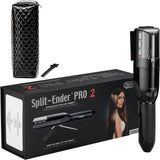
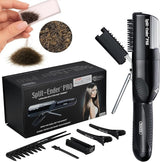
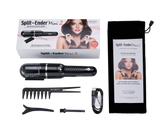
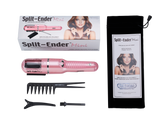
This is where careful end maintenance may help. The Split Ender Pro2 by Talavera is designed to trim split ends while helping preserve overall length. It does not treat scalp irritation or dryness.
Explore Split Ender Pro2 →Explore why split ends form and how to recognize hair damage. For at-home end care, see how to use Split Ender correctly.
The goal is to recognize which part of your routine needs attention.
Frequently Asked Questions
Does hot water damage hair follicles?
Ordinary hot showers are not established as a cause of follicle damage. However, excessively hot water can irritate or burn skin, including the scalp. If your scalp becomes painful, persistently red, or inflamed, avoid the heat and seek medical advice when appropriate. Hair-fiber care and scalp health are related, but they are not interchangeable.
Should I wash my hair with cold water in winter?
No. Cold water is not necessary for healthy hair. Comfortably warm water is a reasonable choice for cleansing, especially during colder months. What matters more is avoiding uncomfortable heat, using a suitable shampoo, conditioning consistently, and handling wet hair gently. Choose a rinse temperature you can comfortably tolerate.
Can hot showers make color-treated hair fade faster?
Color fading depends on dye chemistry, hair porosity, cleansing products, washing frequency, and other exposures. It is reasonable to avoid excessively hot water and follow your colorist's care instructions, but shower temperature alone does not determine how long color lasts. Gentle cleansing and appropriate conditioning are useful starting points.
How long should a winter shower last?
For people dealing with dry or sensitive skin, the American Academy of Dermatology recommends limiting showers to approximately 5–10 minutes and using warm rather than hot water. This is skin-care guidance, not a proven maximum hair-washing time. You can still wash your hair thoroughly while avoiding prolonged exposure to uncomfortable heat.
Can changing shower temperature repair split ends?
No. Changing shower temperature may make your washing routine more comfortable and reduce an avoidable source of scalp irritation, but it cannot reconnect an already split hair fiber. Conditioning can improve appearance and manageability temporarily. Visibly split ends require trimming if the goal is to remove the split portion.
Your winter shower does not need to become a polar plunge. Your hair deserves a good routine—not a dramatic relationship with the showerhead.
- American Academy of Dermatology — How to Stop Damaging Your Hair
- American Academy of Dermatology — Dermatologists' Top Tips for Relieving Dry Skin
- American Academy of Dermatology — Hair Styling Without Damage
- On Hair Care Physicochemistry: From Structure and Degradation to Novel Biobased Conditioning Agents
- Hair Breakage During Combing: Impact Loading and Hair Breakage