

WHAT'S THE BEST WAY TO SLEEP WITH LONG HAIR? 🌙
Your nighttime hair survival guide: loose braids, bonnets, pillowcases, and fewer morning tangles.
How should you sleep with long hair?
The best way to sleep with long hair is to keep it gently detangled and avoid tight pulling. A loose braid, comfortable satin or silk bonnet, or smooth pillowcase may help manage overnight tangles and friction. Choose based on your hair texture, length, and sleeping habits.
The goal is not to freeze every strand in place. It is to reduce unnecessary rubbing, snagging, and tension. And no, a braid cannot magically repair split ends.
Your hair deserves a bedtime routine. A 14-step ceremony? Absolutely not. 😂
What actually happens to long hair while you sleep? 🌙
You're asleep. Your hair may be having a completely different evening.
As you change positions, strands slide against bedding, rub together, or become trapped beneath your shoulders. More length means more opportunity for twisting and knots. A 2025 scientific review of hair friction describes how cuticle condition, weathering, and surface chemistry influence how hair fibers interact. That supports reducing mechanical stress—not promising that one pillowcase prevents a precise percentage of damage.

Pillow contact and strand-on-strand movement can contribute to overnight tangles.
A knot isn't automatically broken hair. But yanking through one can increase stress. For related signs, see Hair Loss or Breakage? How to Tell What You're Actually Seeing.
Loose braid, bonnet, or pillowcase: which wins? 👑
There is no universal nighttime champion. The winner is whichever option keeps your hair comfortable, contained when needed, and free from pulling.

Different textures and sleep preferences call for different approaches.
| OPTION | GOOD STARTING POINT FOR | WATCH OUT FOR |
|---|---|---|
| Loose braid | Long straight or wavy hair | Pulling at roots or a tight elastic |
| Loose high bun | Some long or curly styles | Pressure, tight wrapping, or discomfort |
| Satin/silk bonnet | Many curly, coily, or long styles | Elastic bands that dig in |
| Smooth pillowcase | Anyone who dislikes tying hair up | Doesn't stop every knot |
| Hair worn loose | Hair that tangles minimally | More movement during sleep |
A loose braid gathers lengths without requiring a tight ponytail. A bonnet can help contain curls and coils, provided its band is comfortable. A smooth pillowcase is the simplest no-hairstyle option. Remember: satin describes a weave; silk is a fiber.
Repeated tight buns, ponytails, or braids can contribute to traction alopecia, according to the American Academy of Dermatology. Beauty sleep should not come with a sore hairline.
The five-minute bedtime hair routine ✨
No expensive ritual. No midnight serum alarm. Your hair is not expecting room service.
The AAD's styling guidance emphasizes gentle handling; it also notes that detangling recommendations differ for tightly curled or textured hair. The goal is less force, not a one-size-fits-all rule.
Sleeping with wet hair: how risky is it? 💧
It's 11:47 p.m. Your pillow is calling. Your hair is still damp enough to qualify as a small weather event.
One wet-haired night does not automatically destroy your hair. But damp strands can be more vulnerable to mechanical stress, especially when rubbed against bedding or held tightly. Cleveland Clinic's dermatologist guidance explains why going to bed with wet hair is not ideal as a regular habit.
BETTER PLAN
Wash earlier when practical; air-dry or finish with cool or low heat if needed.
SKIP THIS
Wrapping damp hair into a tight bun or blasting it with extreme heat to beat bedtime.
Repeatedly keeping the scalp damp can also be unhelpful for some scalp conditions. But don't confuse that possibility with a guarantee of infection from one shower. Your scalp does not need a greenhouse. 😂
Does your hair texture change the best sleep routine?
Absolutely. The style that keeps straight hair organized may flatten waves or disturb coils. Start with your texture, then adjust based on what actually happens overnight.
STRAIGHT
A loose braid or smooth pillowcase may reduce morning tangles.
WAVY
Try a very loose braid or bonnet; tight braiding can reshape waves.
CURLY / COILY
A comfortable bonnet or loose, low-tension arrangement may help preserve definition.
FINE / FRAGILE
Favor soft ties, minimal pulling, and especially gentle detangling.
Wake up comfortable with manageable tangles? Good sign. Wake with a sore hairline or tightly wrapped knots? That's useful feedback, not a challenge to endure.
Nighttime protection vs. split end maintenance ✂️
A gentle sleep routine can reduce avoidable mechanical stress. It cannot fuse an already split hair shaft back together. Hair grows from follicles beneath the scalp; the visible fiber accumulates wear through grooming, heat, and daily exposure.

Protecting lengths overnight and trimming existing split ends are two different jobs.
🌙 NIGHTTIME CARE
Focuses on friction, pulling, and tangles.
Prevention-oriented habits.✂️ END MAINTENANCE
Addresses visibly split or damaged ends already present.
Trimming—not biological repair.Explore The Science of Split Ends and How to Grow Long Hair Without Split Ends for the bigger picture.
Where Split Ender fits—not in your sleep routine.
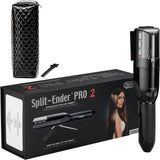
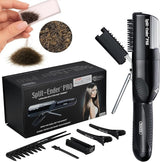
When ends are already split or visibly damaged, Split Ender tools offer targeted trimming while helping preserve the appearance of overall length when used as directed.
Nighttime hair FAQ 🌙
Is it better to sleep with long hair up or down?
Neither is universally better. A loose braid or comfortable bonnet can contain long hair, while a smooth pillowcase may work if you prefer wearing it down. Avoid styles that pull at the scalp.
Does a silk pillowcase prevent split ends?
A smooth pillowcase may help reduce friction, but it cannot guarantee that split ends will not develop. Heat, chemical treatments, grooming, and accumulated wear also matter.
Can sleeping in a braid damage your hair?
A loose, comfortable braid is a reasonable option. Repeatedly sleeping in a tight braid that pulls on the hairline can create unnecessary tension.
Should I sleep with wet long hair?
It is generally preferable to let hair dry before bed when practical. Wet hair can be more vulnerable to mechanical damage, particularly with rubbing or tight styling.
Will a bonnet make my hair grow faster?
No. A bonnet may help manage friction, tangling, or curl preservation, but it does not directly stimulate hair-follicle growth.
THE RECEIPTS 🧾🔬
- Understanding and Controlling the Friction of Human Hair (2025) — scientific review of fiber friction and weathering.
- American Academy of Dermatology: Hairstyles That Pull Can Lead to Hair Loss — traction from tight styles.
- Cleveland Clinic: Should You Avoid Going to Bed With Wet Hair? (2025) — dermatologist discussion of wet-hair risks.
- American Academy of Dermatology: Hair Styling Without Damage — gentle grooming advice.
These sources support practical risk-reduction advice; they do not establish that any single sleeping method works best for everyone.