

LOW-TENSION HAIRSTYLES FOR WORK: LOOK POLISHED WITHOUT PULLING YOUR HAIR
Professional style. Comfortable roots. Less unnecessary pulling.
The best low-tension hairstyles for work include loose low ponytails, relaxed buns, soft half-up styles, gently installed twists, and hair worn naturally down. They can look professional without the firm pulling often used to create a slicked-back finish. Choose lightweight accessories, keep the roots comfortable, and vary the places where you secure your hair throughout the week.
Low tension means avoiding repeated force at the hairline and follicles; it does not mean a hairstyle is guaranteed to prevent damage. If your scalp feels stretched, sore, or tender, loosen the style. Your calendar can be demanding. Your ponytail does not have to be.
Why can everyday work hairstyles damage your hair?
Hair tension is the pulling force placed on strands and follicles when hair is tightly secured or held in position. Repeated pulling can contribute to traction alopecia, a form of hair loss associated with prolonged tension. A 2018 clinical review explains that both the strength and duration of pulling matter.
The American Academy of Dermatology (AAD) identifies pain, stinging, and skin visibly pulled upward by a hairstyle as warning signs. Broken hairs around the forehead and a receding hairline can also signal trouble. Those are specific signs worth noticing—not an invitation to panic over every ponytail.
For a closer look at tension from tightly installed styles, see our guide to braids, breakage, and protective hairstyles.
Which low-tension hairstyles look professional?
The most useful gentle work hairstyles look intentional without requiring every strand to be stretched into place. Consider these four starting points:
RELAXED LOW PONYTAIL
Gather hair near the nape with a soft fabric tie. Leave the front slightly loose and avoid repeated tightening.
SOFT LOW BUN
Twist gently and secure with smooth pins or a comfortable clip. A bun should not pull when you turn your head.
HALF-UP STYLE
Clip back only the front or upper section, letting the remaining hair move naturally.
LOOSE TWISTS
For textured hair, comfortably installed two-strand twists can reduce the need for daily restyling.

Wearing your natural texture down is an option, too. Professional hair does not have one required texture—or one required hairstyle.
Which work hairstyles create the least pulling?
A hairstyle's name is not a clinical risk score. How tightly you install it, its weight, and how often you repeat it make the difference. A 2016 dermatology review evaluated hairstyles by traction-related risk, emphasizing that styles are not equally gentle.

| STYLE | POTENTIAL CONCERN | GENTLER ADJUSTMENT |
|---|---|---|
| Tight high ponytail | Pulling around the hairline | Lower and loosen the tie |
| Tightly wrapped bun | Concentrated twisting | Use a loose low bun |
| Half-up clip | Pinching at temples | Choose a light, well-sized clip |
| Loose twists | Root tension if over-tightened | Start each twist gently |
| Hair worn down | Snagging or tangling | Handle according to texture |
If a style causes a headache, scalp soreness, or visible pulling, loosen it. Our article on when healthy hair habits cause damage explores how repeated handling can become counterproductive.
How can you create a gentle work hairstyle in five minutes?
Think of this as a comfort-first checklist, not a complicated salon appointment before your first email.

The AAD's styling guidance distinguishes between hair textures: straight hair is often best combed after some drying, while tightly curled or textured hair may be easier to detangle while damp. For more practical help, see how to prevent breakage while brushing.
How should you adjust low-tension styles for your hair type?
FINE OR FRAGILE
Favor lightweight accessories and avoid tight elastics that concentrate pressure on a small section.
THICK OR LONG
Heavy buns can feel uncomfortable even when loose. Try a lower position or divide the weight.
WAVY
Use a soft ponytail or clip that respects natural movement instead of repeatedly brushing waves flat.
CURLY OR COILY
Consider loose twists or naturally worn styles. Avoid tightly stretching the hairline for a sleek finish.
For color-treated or weathered lengths, avoid snagging accessories and unnecessary heat. The AAD recommends reducing excessive heat and tugging to limit additional damage. Our hair-type-specific split end routine goes deeper.
Can low-tension hairstyles help maintain healthy-looking ends?
Low-tension styling mainly reduces pulling at the roots and hairline. Split ends involve damage to the hair fiber itself. Less snagging and rough handling may help limit avoidable wear, but no hairstyle can reconnect an already split strand.
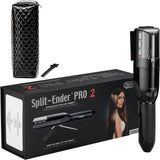
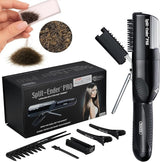
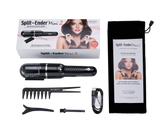
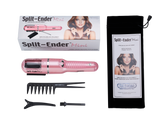
For appropriate end maintenance, the Split Ender Pro2 and Split Ender Mini2 are designed to trim hair ends. They do not treat traction alopecia or repair hair follicles. Follow the Split Ender treatment guide and your device instructions.
For more on maintaining length, explore how to grow long hair without split ends.
Frequently asked questions
Are low ponytails better than high ponytails?
A loosely secured low ponytail may feel more comfortable than a tightly pulled high ponytail, but position alone does not guarantee low tension. Leave the roots relaxed, choose a soft tie, and change the securing point during the week to avoid repeatedly pulling the same hairs.
Can I wear a bun to work every day without damaging my hair?
You can wear buns regularly if they are comfortable and loosely secured. Change the position, avoid heavy or tightly twisted buns, and give your scalp a break when possible. Soreness, broken hairs near the hairline, or thinning are reasons to change your styling routine.
Are claw clips gentler than hair ties?
A lightweight, smooth claw clip can be comfortable, but it is not automatically gentler. An undersized clip can pinch or snag hair just as a tight elastic can. Match the accessory to your hair density and choose one that holds without scraping, tugging, or pulling.
Can low-tension hairstyles prevent hair loss?
Reducing repeated pulling can lower the risk of traction-related hair loss. It does not prevent hair loss caused by genetics, illness, medications, or other conditions. If you notice persistent thinning, scalp inflammation, or a changing hairline, consult a dermatologist rather than relying on a hairstyle change alone.
How do I keep a loose hairstyle looking professional all day?
Work with your natural texture and use an accessory that holds without requiring constant tightening. A soft low bun, relaxed ponytail, or half-up clip can look intentionally polished. If sections loosen, adjust them gently rather than pulling the entire style tighter each time.
References
- American Academy of Dermatology — Hairstyles that pull can lead to hair loss.
- Billero V, Miteva M (2018) — Traction alopecia: the root of the problem.
- Haskin A, Aguh C (2016) — All hairstyles are not created equal.
- American Academy of Dermatology — Hair styling without damage.