

THE HAIR SCIENCE CHRONICLES
Midnight Brunette
The Art of Going Almost Black
Not quite black. Never ordinary.
Midnight brunette is an exceptionally deep brown hair color that looks almost black in low light but reveals subtle brunette undertones under brighter illumination. Unlike an intentionally jet-black finish, it preserves a hint of espresso, cocoa, or neutral brown.
Getting the effect is not simply a matter of buying the darkest dye. Your starting shade, previous coloring, chosen undertone, and future plans all matter. The real question is how much visible brunette you want to preserve.
What Exactly Is Midnight Brunette?
THE DIFFERENCE IS IN THE UNDERTONE
Midnight brunette describes the visual space between very dark brown and black. In shadow, it may look black; in stronger light, brown becomes easier to see.
It is an editorial shade name, not a universal salon formula. Color brands use their own numbering and naming systems, so a “darkest brown” in one line may differ from another.
Three interpretations: Neutral midnight balances warmth and coolness; espresso midnight carries a restrained coffee-brown reflection; cool midnight appears more muted. The best formulation depends on the existing hair.

Almost Black, Soft Black or Espresso: What’s the Difference?
FOUR SHADES, FOUR DIFFERENT COMMITMENTS
Online photographs can make deep browns and blacks appear identical. In person, the difference is often whether brown remains visible in ordinary daylight.
| Color | Visual effect | What to consider |
|---|---|---|
| Midnight brunette | Brown that reads nearly black | Preserve a visible brown reflection |
| Espresso brunette | Deep but recognizable brown | Usually shows more coffee or cocoa |
| Soft black | Predominantly black, softer-looking | Can still be difficult to lighten |
| Jet black | Unmistakably black | Greater commitment with lasting dark dye |
These are descriptive categories, not standardized dye codes. Ask yourself: “In natural daylight, do I want my hair to look brown—or black?” That answer is more useful than a trend name alone.
Why Does Almost-Black Hair Change in Different Light?
MIDNIGHT IS SHAPED BY ILLUMINATION
Natural hair color depends partly on melanin. Eumelanin contributes brown and black pigmentation, while pheomelanin contributes red and yellow tones. Cosmetic color interacts with the starting fiber and formulation.
Lighting also changes how we perceive the same hair color. This is not the dye physically transforming throughout the day.
Indirect daylight: brown reflections may be easier to detect.
Warm interior light: some shades appear more cocoa-toned.
Cool artificial light: the finish may look muted or neutral.
Low light: subtle brown distinctions can disappear.
Studio exposure, backgrounds, and photo editing can further alter the impression. Bring your colorist references taken in multiple lighting conditions, not just one dramatic portrait.

How Dark Should You Go Without Regretting It?
THINK ABOUT YOUR NEXT COLOR DECISION
Dark permanent color can complicate a later return to copper, highlights, or blonde, particularly when pigment has accumulated. Previously bleached hair may also absorb or display new color unevenly.
Five steps before going midnight
- Identify your starting point. Tell your stylist about previous dye, highlights, bleach, and uneven porosity.
- Define the depth. Decide whether you want dark brown in daylight or black in almost every setting.
- Choose the undertone. Discuss neutral, warm, or cool reflections in relation to your existing hair.
- Request a strand test when appropriate. Especially helpful for previously processed or unpredictable lengths.
- Protect future flexibility. Mention if you may want to lighten your hair again soon.
Very lightened hair may need professional pigment balancing before being taken dark. An unsuitable cool formula can create an unexpected cast on porous lengths.
Going darker does not automatically mean zero damage: oxidative dyes still involve chemical processing. The American Academy of Dermatology recommends staying relatively close to your natural shade when possible to limit chemical stress.
How Do You Maintain Midnight Brunette Without Overprocessing?
KEEP THE COLOR, RESPECT THE FIBER
Color fading and physical hair damage are different issues. Washing and environmental exposure can alter artificial pigment, while breakage and split ends involve the hair fiber itself.
Keep care simple: cleanse for your scalp’s needs, condition after shampooing, avoid unnecessary high heat, and discuss root touch-ups rather than repeatedly applying permanent dye through previously colored lengths. Sun protection also matters for treated hair.
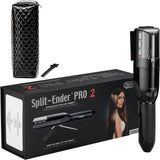
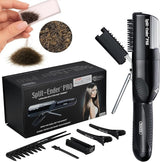
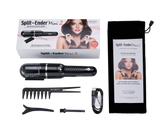
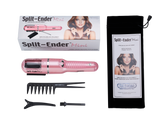
For length-focused maintenance, the Split Ender PRO2 is designed to trim protruding ends. It does not restore split shafts, remove unwanted dye, or correct an undertone.
Midnight brunette succeeds through restraint: a carefully chosen depth, realistic expectations, and a color plan that leaves room for your future self.

THE FINAL WORD
Not quite black.True luxury is knowing exactly how dark you want to go.
Never ordinary.
Frequently Asked Questions
Is midnight brunette black or brown?
It is a very dark brown intended to look almost black in some lighting while retaining brunette undertones.
Is midnight brunette the same as espresso brunette?
Not exactly. Espresso generally appears more recognizably brown, while midnight brunette sits closer to black. Formulas vary.
Will midnight brunette look black indoors?
Often, especially in dim lighting. Brown reflections may become more visible under stronger light.
Is it difficult to go blonde afterward?
It can be, particularly after repeated permanent dark dye. Professional color correction and multiple sessions may be necessary.
Can midnight brunette work on bleached hair?
Yes, but porous, lightened hair may need customized pigment balancing and a strand test.
Scientific Sources & Further Reading
- Cleveland Clinic — Body Hair and Pigmentation
- American Academy of Dermatology — Coloring and Perming Tips
- American Academy of Dermatology — How to Stop Damaging Your Hair
- Journal of Cosmetic Science — Oxidative Dyeing, Shampooing and Hair Damage
Explore More Hair Color Science
Read our guide to dark chocolate brunette and bleach damage, or explore the hair cuticle and damage prevention.
Editorial information only. Results vary with natural color, dye formulation, prior processing, and hair condition. Seek professional guidance for major color changes.