

THE HAIR SCIENCE CHRONICLES · COLOR EDITION
The Hidden Color Issue
PEEKABOO HAIR:
THE SECRET COLOR TREND
That Only Shows When You Move
One hairstyle. Two moods. A little color with impeccable timing.
THE EDITOR'S LETTER
What Is Peekaboo Hair?
Peekaboo hair is hidden hair color placed beneath the outer layers, so contrasting shades appear when you turn your head, tuck hair behind an ear, part it differently, or pull it into a ponytail. The effect can be subtle—a wine-red panel under brunette hair—or bold, like electric violet under black. Placement, texture, and styling determine how much color shows.
The appeal is simple: your everyday look can stay understated while a secret shade waits for its moment. But hidden does not mean damage-free or maintenance-free. Here is how to choose a placement, understand the chemistry, and keep the reveal looking intentional.
“The surprise is in the placement—not in how loudly you color.”
CHAPTER 01 · THE REVEAL
Why Does Peekaboo Hair Disappear Until You Move?
Think of the top layer as a curtain. When hair hangs in its usual position, that curtain partly covers the dyed section. Movement separates strands and lets the color flash through. A loose wave reveals different flashes than a sleek blowout; a high ponytail may expose almost the entire nape panel.

Ask your stylist to photograph the placement with your hair both down and up. The same color can feel discreet at work and dramatic at dinner without changing the dye itself. For more context on how a strand's outer surface responds to processing, see our hair cuticle guide.
CHAPTER 02 · THE PLACEMENT MAP
Where Should Hidden Hair Color Be Placed?
There is no universal “correct” panel. Your haircut, density, curl pattern, part, and preferred hairstyles matter more than a trending photograph. A stylist can test visibility by clipping sections before applying any color.

| Placement | When it shows | Best consideration |
|---|---|---|
| Nape underlayer | Ponytails and updos | How often you wear hair up |
| Behind the ear | Tucks and side parts | Face-framing visibility |
| Broad inner panel | Movement and layered cuts | Higher color commitment |
On curls and coils, shrinkage and the way curls cluster can change the reveal. A narrow section may vanish in one style and shine in another. Placement should be assessed on your actual texture—not just on straightened reference hair.
CHAPTER 03 · THE COLOR LANGUAGE
Is Peekaboo Hair the Same as Halo Hair?
Not necessarily. Peekaboo hair is a broad description of concealed color sections; halo hair may refer to a more continuous band of color around an inner perimeter. Stylists do not use these labels identically, so a photo and a clear placement plan beat terminology alone.
For the distinction between strategic lightening and the condition of the hair fiber, read our halo hair and strategic bleaching guide. A peekaboo design can be a tiny accent, several scattered panels, or a full underlayer. The shared idea is controlled visibility.
“Bring a photo of your hair down—and another of the reveal you want when it is up.”
CHAPTER 04 · THE COLOR CHEMISTRY
Can You Get Peekaboo Hair Without Bleach?
Sometimes. Dark burgundy, auburn, or a subtle blue-black shift may be achievable on some bases without dramatic pre-lightening. Pastel pink, vivid lavender, and bright turquoise on naturally dark hair generally need a much lighter canvas. Your current dye history matters: applying a brighter dye over dark artificial color will not reliably create a bright result.

The American Academy of Dermatology recommends spacing color touch-ups and using conditioner after shampooing. In separate dermatologist guidance, the AAD advises choosing a shade within three shades of your natural color when possible because greater lightening can require stronger peroxide.
Hair-fiber research explains why: a 2018 microscopy and proteomics study found that protein loss increased as bleaching severity increased. A 2023 scientific review describes how oxidative coloring can affect the cuticle and cortex. Neither finding means every color appointment causes the same damage; it means the starting condition and chemical plan deserve respect.
Your Five-Step Salon Conversation
- Show the hidden color with your hair down and up.
- Choose the exact panel location and width.
- Discuss existing dye, lightener history, and strand condition.
- Ask whether your desired shade needs pre-lightening or a test strand.
- Agree on fade expectations, home care, and touch-up timing.
For a darker alternative, our dark chocolate brunette guide explains why going darker changes appearance without reversing past bleach damage.
CHAPTER 05 · THE LONG GAME
How Do You Keep Peekaboo Color Beautiful Without Unnecessary Damage?
Hidden color may make roots less obvious, but pigment can still fade and lightened sections can still become dry. Use a gentle wash routine suited to your hair, condition consistently, detangle without tugging, and limit unnecessary hot-tool passes. The AAD recommends conditioner after every shampoo and suggests extending intervals between color touch-ups when possible.
Sun exposure matters too. Cleveland Clinic notes that UV exposure can contribute to fading and cuticle damage, especially in colored or bleached hair. A hat is a surprisingly chic part of the maintenance kit.
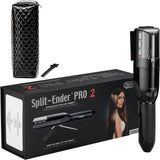
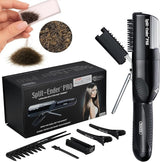
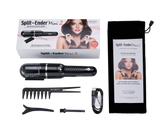
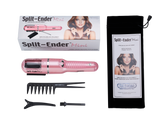
Before at-home dyeing, follow the FDA's safety guidance, including a skin patch test according to product directions and avoiding dye on irritated or damaged scalps. If your ends are already frayed, color cannot fuse split fibers back together. Gentle trims remove compromised tips; a cosmetic hair-tip tool such as Split Ender PRO2 may be an option for suitable hair types when used as directed, but it does not repair hair internally or replace a colorist's assessment.
“Keep the color playful. Keep the care routine practical.”
For everyday prevention, explore our guide to preventing split ends.
THE COLOR DESK
Frequently Asked Questions
What is peekaboo hair?
Peekaboo hair uses contrasting color beneath the outer hair layers. It becomes more visible when you move, part, tuck, or tie up your hair.
Where should peekaboo highlights be placed?
Popular placements include the nape, behind the ears, and broader inner panels. Your haircut, texture, and everyday styling habits should guide the choice.
Is peekaboo hair the same as halo hair?
Not exactly. Peekaboo describes hidden color generally; halo can describe a more continuous concealed band. Terminology varies between salons.
Can you get peekaboo hair without bleach?
Sometimes, especially for subtle or deeper tones. Bright or pastel shades on dark hair typically need pre-lightening; consult a colorist about your hair history.
Is peekaboo hair low maintenance?
It may hide regrowth better than visible highlights, but fading, dryness, and lightened ends still need care.
SCIENCE & SOURCES
References
American Academy of Dermatology — How to Stop Damaging Your Hair
American Academy of Dermatology — Color-Treated Hair Guidance (2013)
International Journal of Cosmetic Science — Hair Bleaching and Fiber Damage (2018)
Frontiers in Medicine — Hair Dyeing and Hair-Fiber Impairment (2023)
Editorial note: This article provides general cosmetic education, not individualized medical advice. Chemical color and lightening outcomes vary with hair history, texture, condition, and product use. Consult a qualified colorist for personalized decisions.