

SPLIT ENDER PRO / THE HAIR SCIENCE CHRONICLES
MICROBIOME NOIR · SCIENCE EDITION
Can Your Scalp Microbiome Influence Hair Growth?
What Science Actually Knows
An invisible ecosystem lives around your hair follicles. Scientists are investigating whether it influences hair growth, inflammation, and certain forms of hair loss. But the most important question remains unanswered: does the microbiome change hair growth, or does hair loss change the microbiome?
The scalp is a living environment where microorganisms interact with skin cells, oils, and immune defenses. Researchers sometimes call these interactions the scalp microbiome–hair axis. A biological connection, however, is not proof that a treatment can restore hair.
FIELD NOTES / 01
What Is the Scalp Microbiome—and Where Does It Live?
The scalp microbiome includes bacteria, fungi, and other microorganisms living on the scalp and in areas associated with hair follicles. Common residents include Cutibacterium, Staphylococcus, and the yeast Malassezia. Their presence is not automatically harmful.
Follicles create distinctive environments, with sebum, protected spaces, and specialized immune activity. Research suggests communities inside follicles may differ from those on surrounding skin.
Dysbiosis describes changes in microbial community structure or function that may accompany disease. It does not, by itself, establish that microbes caused a condition. Genetics, hormones, immunity, and microbial activity can all interact.

FIELD NOTES / 02
How Could Microbes Communicate With Hair Follicles?
A hair follicle is a miniature biological organ. Scientists are exploring three possible communication routes:
01 / Immune signaling. Microbial products may interact with the skin’s immune receptors. Researchers are testing whether persistent inflammation could alter the follicular environment.
02 / Sebum metabolism. Certain microbes process components of scalp oils. The resulting compounds may affect nearby skin, although their precise role in hair loss remains uncertain.
03 / Growth-cycle signaling. Follicles move through anagen (growth), catagen (transition), and telogen (rest). Scientists are investigating whether microbial and inflammatory signals indirectly affect these phases.
A plausible mechanism is not a proven treatment. Molecular pathways discussed in follicular research cannot establish that changing scalp bacteria will regrow hair.

FIELD NOTES / 03
What Do Hair-Loss Studies Actually Show?
Studies have found differences in microbial populations in several scalp and hair-loss conditions. Results depend on the population, sampling site, and laboratory method.
| Condition | Observed associations | Unanswered question |
|---|---|---|
| Androgenetic alopecia | Changes in some bacterial populations and scalp oils | Cause, consequence, or both? |
| Alopecia areata | Microbial differences reported in small studies | Relationship to autoimmune activity? |
| Seborrheic dermatitis | Malassezia and altered inflammatory environment | Does treating scalp disease independently improve growth? |
| Scarring alopecias | Microbial alterations in some inflamed tissues | Do changes precede or follow tissue injury? |
These associations do not override established biology: pattern hair loss has strong genetic and hormonal components; alopecia areata involves immune-mediated follicle attack; and scarring alopecias can destroy follicles.
Correlation is not causation. That principle is essential when interpreting microbiome research.
FIELD NOTES / 04
Can Probiotics or Microbiome Treatments Regrow Hair?
Researchers are studying probiotics, postbiotics, microbial metabolites, and more targeted ways to influence the follicular environment. Some early results are intriguing, but laboratory activity is not equivalent to clinical hair regrowth.
Probiotics are live microorganisms that may provide benefits in specific circumstances. Postbiotics are preparations of inanimate microorganisms or their components that may confer benefits. Neither category automatically qualifies as a hair-growth treatment.
A convincing claim would require well-controlled human studies measuring meaningful outcomes such as hair density, with adequate follow-up and safety evaluation.
Promising Does Not Mean Proven
“Changes inflammatory signaling in a lab” describes a mechanism.
“People with hair loss have different microbes” describes an association.
“Regrows human hair” requires clinical evidence.
As of 2026, microbiome-directed approaches remain investigational for routine treatment of androgenetic alopecia. Experimental products should not replace evidence-based evaluation and care.

FIELD NOTES / 05
What Does This Science Mean for Your Hair Today?
Before trusting a microbiome or hair-growth claim, ask:
- Was it tested in people? Laboratory findings cannot establish clinical effectiveness.
- What was measured? Reduced irritation, microbial changes, and increased hair density are different outcomes.
- Was there a control group? Without comparison, improvement can have multiple explanations.
- Does it apply to my condition? Dandruff, pattern hair loss, and alopecia areata differ.
- Are findings reproducible? Ingredient stories are not substitutes for consistent clinical evidence.
Persistent shedding, patchy loss, pain, or scalp inflammation warrants professional assessment.
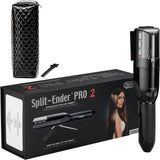
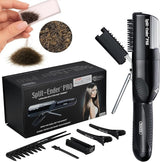
Also distinguish follicular growth from hair-fiber maintenance. The visible shaft is not living follicular tissue. Tools such as Split Ender PRO2 are designed to trim protruding ends; they do not modify the microbiome or stimulate growth.
The most accurate conclusion: the microscopic environment around follicles may matter more than previously understood, but its causal influence on human hair growth remains unresolved.
QUESTIONS / ANSWERS
Frequently Asked Questions
Can the scalp microbiome affect hair growth?
Possibly. Researchers are studying interactions involving microbes, inflammation, and follicles. Direct clinical evidence that changing the microbiome increases hair growth remains insufficient.
Does an unhealthy scalp microbiome cause hair loss?
Not necessarily. Observed microbial differences do not prove causation; hair-loss conditions have multiple established biological drivers.
Can probiotics make hair grow faster?
There is insufficient high-quality clinical evidence to recommend probiotics specifically for faster hair growth.
Are scalp microbiome tests useful for diagnosing hair loss?
Microbial profiling is mainly a research approach, not a standard standalone diagnostic test for common hair-loss conditions.
Is scalp health the same as hair growth?
No. Scalp health concerns the skin environment; follicular growth also depends on genetics, hormones, immunity, and other factors.