


Hair Architecture:
When Braids Become Wearable Art
Geometry. Heritage. Movement. The extraordinary art of sculptural braiding.
When Does a Braid Become Architecture?

A braid becomes architectural when its shape, direction, volume, and placement define the silhouette. Sculptural braids transform hair into deliberate three-dimensional forms: elevated loops, geometric patterns, braided crowns, and striking profiles.
An ordinary braid may gather hair efficiently. Architectural braiding takes that familiar technique further, using proportion and positioning to build a visual composition. The result can be minimalist, dramatic, or surprisingly wearable.
Four principles of sculptural braiding
Geometry creates rhythm through partings, angles, and curves. Volume determines the hairstyle’s height and width. Balance connects bold elements to quieter sections. Movement keeps a design expressive rather than rigid.
Imagine one elevated braid tracing a graceful curve above the head. Its impact comes not from complexity alone, but from thoughtful placement. Like a well-designed sculpture, the shape communicates from every angle.
What Can Contemporary Hair Architecture Learn From Braiding Traditions?
Long before contemporary fashion editorials, braiding carried practical, artistic, and cultural significance across many communities. Its meanings vary by place and tradition; there is no single universal history of braids.
The Smithsonian National Museum of African American History and Culture explores how Black hairstyles communicate identity and cultural expression. A Library of Congress research guide likewise examines African and African American hair traditions and their historical significance.
These histories matter when fashion media calls a braided runway look a new invention. The particular silhouette may be innovative, while its techniques may draw on generations of skilled braiding artistry.
Contemporary stylists can experiment with shape and scale while recognizing the craftsmanship, community knowledge, and cultural roots behind their inspiration. The most compelling innovation does not erase what came before it.
“True innovation acknowledges the hands and histories that came before it.”
How Do Stylists Build Sculptural Braids?

Successful hair architecture begins before the first section is crossed. A stylist considers hair texture, density, length, elasticity, and the support required for the intended shape. Some styles hold their form naturally; elaborate designs may need discreet, lightweight anchors.
Five architectural braid structures
| Style | Defining feature | Visual effect | Comfort consideration |
|---|---|---|---|
| Braided crown | Braids circle the head | Regal and balanced | Avoid pulling at the hairline |
| Sculptural updo | Raised loops and curves | Dramatic, couture-inspired | Distribute support and weight |
| Geometric cornrows | Precise scalp-level partings | Graphic and directional | Keep tension comfortable |
| Braided halo | Soft curved framing | Romantic and dimensional | Secure gently |
| Asymmetrical sculpture | Uneven height and direction | Avant-garde | Balance anchor points |
Build a wearable architectural braid in five steps
- Choose the silhouette. Decide whether the design emphasizes height, width, symmetry, or movement.
- Assess the hair. Work with its natural texture, density, length, and condition.
- Map the sections. Plan partings and comfortable anchor points before braiding.
- Build gently. Shape the braid without painful pulling or heavy attachments.
- Refine from every angle. Check the profile, balance, security, and comfort.
Complex editorial constructions are best created with an experienced stylist. A striking shape should never depend on scalp pain.
Can Architectural Braids Damage Your Hair?
Complexity alone does not make a braid damaging. Repeated pulling, excessive weight, rough handling, and unsuitable attachment methods can, however, increase the risk of breakage and hair loss.
The American Academy of Dermatology warns that regularly wearing tight braids, cornrows, ponytails, or updos can contribute to traction alopecia, hair loss caused by sustained pulling. Clinical literature also notes that prolonged traction can eventually lead to permanent loss in some cases.
Support is not the same as tension
A style can feel secure without stinging or pulling. Scalp tenderness, pain, and visible strain around the edges are reasons to loosen or remove it. The AAD recommends avoiding repeated tension at the hairline and varying hairstyles.
Extensions, ornaments, and elevated structures add another consideration: weight. Lightweight design and distributed anchors are preferable to concentrating stress on one small section.
Removal deserves the same care as installation. Release pins and attachments slowly, undo braids patiently, and detangle gently. For additional everyday care, explore the guide to preventing split ends.
“The most sophisticated hair architecture is designed for both appearance and comfort.”
How Can You Turn Runway Braids Into Wearable Art?

Not every sculptural hairstyle needs a runway. A low braided crown can elevate eveningwear; a gently raised side braid adds dimension to a half-up style; an asymmetrical parting creates movement without an elaborate structure.
Choose one focal point. Let a curved braid, graphic section, or elevated element carry the design. Keep the foundation comfortable. A relaxed base often looks more effortless than a tight one. Edit accessories. The braid itself can be the jewelry.
Preparation matters, too. Conditioner and gentle detangling can reduce avoidable friction during styling. Hair ends already showing wear deserve realistic care: a trim removes damaged tips, but no cosmetic product can permanently fuse a split shaft back together.
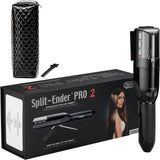
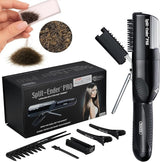
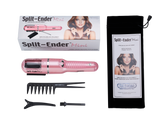
For maintaining hair ends between traditional haircuts, the Split Ender PRO2 is designed to trim protruding ends. It does not repair existing splits or prevent traction-related hair loss.
Ultimately, hair architecture is not about making every hairstyle bigger or more complicated. It is about transforming technique into thoughtful design.
The hair is the medium. The silhouette is the statement.
Frequently Asked Questions
What are sculptural braids?
Sculptural braids use braided sections to create intentional three-dimensional shapes, geometric patterns, elevated forms, or architectural silhouettes.
Are architectural braids suitable for natural hair?
Yes. They can be adapted to many textures, including curly and coily hair, while respecting density, length, condition, and scalp comfort.
Can sculptural braids damage your edges?
Yes, if they repeatedly pull tightly at the hairline. Sustained tension can contribute to breakage and traction alopecia.
Do you need extensions for architectural braids?
Not always. Many designs use natural hair alone. Extensions can add length or volume, but their weight requires careful consideration.
How long should you keep sculptural braids in?
It depends on the style, tension, scalp condition, and extensions. Elaborate editorial designs may be temporary; loosen or remove any painful style.
References
- Smithsonian National Museum of African American History and Culture — Strands of Inspiration
- Library of Congress — Heavy Is the Head: Evolution of African Hair in America
- American Academy of Dermatology — Hairstyles That Pull Can Lead to Hair Loss
- American Academy of Dermatology — Hair Styling Without Damage
- American Academy of Dermatology — Hair Loss: Tips for Managing
This article provides general styling information, not individualized medical advice. Seek professional assessment for persistent scalp discomfort or hair loss.