

THE HAIR SCIENCE CHRONICLES
VOL. 04 · THE BEAUTY INVESTIGATION
THE HAIR GROWTH
OBSESSION
Rosemary Oil, Rice Water, Scalp Serums & the Billion-Dollar Dream of Longer Hair
AN EDITORIAL INVESTIGATION
The Most Expensive Promise in Beauty Might Be the One We Want to Believe Most.
Rosemary oil has limited preliminary clinical evidence; homemade rice water has insufficient evidence for faster growth. Certain medical treatments have substantially stronger evidence for specific forms of hair loss, and many "growth" products actually work on the hair shaft, not the follicle. The secret to longer-looking hair may be understanding why it never seems to get longer.
THE EDITOR'S EVIDENCE GUIDE
What Does the Evidence Really Support?
| Trend | Evidence Perspective |
|---|---|
| Rosemary oil | Limited preliminary clinical evidence; more robust research needed. |
| Homemade rice water | Insufficient clinical evidence for accelerating hair growth. |
| Cosmetic scalp serums | Evidence varies greatly by ingredient, formula, and claim. |
| Biotin without deficiency | Limited evidence of hair-growth benefit; high doses may affect laboratory tests. |
| Collagen supplements | Limited direct evidence for faster scalp hair growth. |
| Gentle hair maintenance | Useful for reducing avoidable fiber damage and supporting length retention. |
| Medical hair-loss treatment | Evidence-based options exist, depending on diagnosis and individual suitability. |
This overview is educational and does not replace a personalized medical evaluation.
CHAPTER 01 · THE BOTANICAL PHENOMENON
The Rosemary Oil Revolution
The Viral Drop That Promised Everything

Rosemary oil became a symbol of the modern hair-growth movement, and at the center of many conversations is a small clinical trial published in 2015.
What Did the Rosemary Study Actually Find?
It compared rosemary oil with 2% minoxidil in people with androgenetic alopecia. Both groups showed increased hair counts at six months, with no statistically significant difference between them, and no significant improvement at three months. But:
- It was one relatively small study, not a body of replicated trials.
- It examined a specific hair-loss condition, not ordinary cosmetic length goals.
- It does not establish that homemade mixtures or every rosemary product, including rosemary water, gives the same results.
THE SCIENCE VERDICT
Rosemary oil has preliminary clinical evidence worth studying, but current evidence is too limited to support sweeping claims that it reliably regrows hair or replaces established medical treatment.
Practical caution: Essential oils can cause irritation or allergic reactions and should not be assumed safe undiluted.
CHAPTER 02 · THE ANCIENT BEAUTY NARRATIVE
The Rice Water Ritual
Ancient Beauty Secret or Modern Internet Myth?

Rice-based haircare is often linked to Asian beauty traditions, but cultural history and clinical evidence answer different questions. Rice water's starch and water-soluble compounds may change how hair feels temporarily; the leap from “contains nutrients” to “makes hair grow” is not justified. Homemade, uncontrolled ferments also raise hygiene concerns.
THE SCIENCE VERDICT
Rice water may have cosmetic appeal, but reliable clinical evidence that homemade rice-water rinses accelerate human hair growth is lacking.
CHAPTER 03 · THE LUXURY FORMULA ECONOMY
The Scalp Serum Gold Rush
When Hope Comes in a Luxury Bottle

Scientific-sounding serums fall into three very different categories:
- Cosmetic scalp care moisturizes or soothes, which is not increased hair production.
- Ingredients with preliminary research, such as caffeine and selected peptides, where small or manufacturer-sponsored studies are not equivalent to large controlled trials.
- Evidence-based hair-loss treatments, including minoxidil for appropriate indications, have substantially stronger clinical evidence, and other options depend on the diagnosis.
Before buying, ask what exactly is claimed and whether evidence supports the finished formula, not just one ingredient.
THE SCIENCE VERDICT
A sophisticated formula may offer useful cosmetic benefits, but premium packaging, ingredient popularity, and scientific terminology do not establish clinically meaningful hair regrowth.
CHAPTER 04 · THE BIOLOGY OF BEAUTY
What Actually Controls Hair Growth?
Inside the Biology of Beautiful Hair

The follicle produces the hair fiber, so products on the lengths do not change how fast new hair emerges. Follicles cycle through anagen (growth, lasting years on the scalp), catagen (transition), and telogen (rest). Scalp hair grows about 1 centimeter per month on average, and genetics and hormones cannot be reliably overridden by a random oil. Sudden, patchy, or progressive hair loss deserves a dermatologist.
The Supplement Illusion

Correcting a diagnosed nutritional deficiency may matter, but extra vitamins do not speed growth in well-nourished people. Evidence for high-dose biotin without deficiency is limited, and high doses can interfere with laboratory tests. Excessive vitamin A or selenium can even be associated with hair loss.
THE SCIENCE VERDICT
Adequate nutrition supports normal hair biology, but supplements are not universal growth accelerators. Correcting a genuine deficiency is different from taking unnecessary high-dose products.
CHAPTER 05 · THE OVERLOOKED SECRET
The Length Retention Secret
Your Hair May Be Growing. Your Ends May Be Breaking.

If enough hair breaks along the lengths, visible gain shrinks even when the follicle works normally. Growth rate is how fast new hair is produced; length retention is how much remains after breakage and trimming. The ends, the oldest part of a strand, wear and split, and conditioners do not permanently rebuild a split fiber.
The Practical Length-Retention Strategy
- Detangle gently using a technique suited to your texture.
- Use conditioning products that reduce friction.
- Limit unnecessary high heat, repeated processing, and tight hairstyles.
- Monitor the ends and consider appropriate cosmetic trimming when needed.
Where Split Ender Fits Into the Conversation
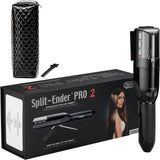
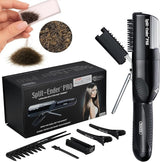
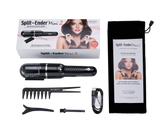
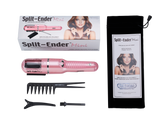
Split Ender devices are designed for cosmetic hair-tip trimming of suitable hair, used as instructed. They do not stimulate follicles, speed up growth, or treat hair loss, and trimming does not guarantee that length is preserved or future breakage prevented.
Hair growth begins at the follicle. Length retention depends on what happens to the hair after it grows.
THE SPLIT ENDER EDIT
Long-Hair Goals Deserve Thoughtful Maintenance.
Explore Split Ender hair-tip trimming tools as one possible part of a cosmetic maintenance routine—not as a treatment for hair growth or hair loss.
Split Ender PRO
Discover the salon-professional cordless split end hair trimmer.
EXPLORE SPLIT ENDER PRO →Split Ender Mini
Discover a compact option in the Split Ender collection.
EXPLORE SPLIT ENDER MINI →Product suitability and results vary. Follow the instructions for the specific device. Cosmetic trimming tools are not medical treatments.
THE HAIR SCIENCE DESK
The Hair Growth Questions Everyone Asks
Does rosemary oil really grow hair?
A small clinical trial reported promising findings in a specific form of hair loss, but the evidence remains limited. It does not establish that every rosemary preparation reliably produces hair regrowth. Scalp massage may be relaxing but is not a proven hair-loss treatment.
Does rice water make hair grow faster?
There is insufficient reliable clinical evidence that homemade rice-water rinses accelerate human scalp hair growth. Scalp hair grows approximately 1 centimeter per month on average, although individual rates vary.
Do hair-growth serums actually work?
Some products have stronger evidence than others. Cosmetic scalp care, temporary thickening effects, and clinically demonstrated regrowth are different outcomes. Seek professional advice for sudden or patchy loss, persistent scalp symptoms, progressive thinning, or shedding that concerns you.
Can biotin or collagen make hair grow faster?
Biotin is important for normal health, but evidence that supplementation improves hair growth in people without deficiency is limited. Direct clinical evidence that collagen supplements speed scalp hair growth in otherwise healthy adults is also limited.
Why does my hair grow but never look longer?
Breakage, trimming, curl shrinkage, and styling differences can all affect visible length. Hair growth and length retention are not identical. Trimming split ends does not make hair grow faster, and Split Ender devices are cosmetic hair-tip trimming tools, not follicle-growth treatments, but trimming may help manage damaged ends.
RESEARCH & FURTHER READING
Beyond the Beauty Headlines
These resources provide background on hair biology, cosmetic fiber care, nutritional concerns, and selected hair-loss research.
1. Panahi et al. (2015). Rosemary oil versus minoxidil 2% for the treatment of androgenetic alopecia: a randomized comparative trial.
Read the published abstract →
2. Gavazzoni Dias (2015). Hair cosmetics: an overview.
Read the review →
3. American Academy of Dermatology. Hair and scalp care information.
Explore dermatology guidance →
4. National Institutes of Health, Office of Dietary Supplements. Biotin: fact sheet for health professionals.
Read the NIH fact sheet →
5. U.S. Food and Drug Administration. Biotin interference with laboratory tests.
Read the FDA safety communication →
6. National Institutes of Health, Office of Dietary Supplements. Vitamin A: fact sheet for health professionals.
Read the NIH fact sheet →
7. National Institutes of Health, Office of Dietary Supplements. Selenium: fact sheet for health professionals.
Read the NIH fact sheet →
The strength and applicability of evidence vary by topic. The inclusion of scientific resources does not imply that these sources validate any particular Split Ender product.
Editorial disclaimer: This article is intended for general educational and cosmetic information and does not constitute medical advice, diagnosis, or treatment. Hair growth, shedding, and hair loss vary by individual and underlying condition. Consult a qualified healthcare professional for persistent hair loss, scalp symptoms, or concerns about supplements or topical treatments. Split Ender products are cosmetic hair-tip trimming tools and do not stimulate hair follicles, treat hair loss, or permanently repair damaged hair fibers.