

THE HAIR SCIENCE CHRONICLES
VOL. 08 · THE TRANSFORMATION ISSUE
THE HAIR
TRANSFORMATION
ILLUSION
Why a New Hairstyle Can Make You Look Like a Completely Different Woman.
The Science of Face Shape, Hair Architecture, Color Psychology & the Power of Reinvention.
THE EDITOR'S LETTER
Same Woman. Different Hair. An Entirely Different Impression.
A woman walks into the salon with long brunette hair and walks out with a sharp blonde bob. Her eyes, nose and cheekbones have not relocated, yet she looks completely different. Why? Because hair surrounds the face, changes its apparent outline, introduces color near the skin, creates shadows, and sets a silhouette that influences how the entire look is perceived. The face doesn't change; the frame does.
“I ONLY ASKED FOR A LITTLE CHANGE. WHY DO I LOOK LIKE I HAVE AN ENTIRELY NEW LIFE?”
CHAPTER 01 · THE MIRROR MOMENT
The Woman in the Mirror
Why a Haircut Can Change Everything

You've worn your hair long for years. Then one afternoon you ask for A BOB, and when the chair turns toward the mirror you feel excitement mixed with mild identity confusion.
Hair Is Part of the Visual Frame
We never see a face in isolation; we also see the hairstyle, clothing, lighting, and expression. Hair creates a visible boundary around the face, and changing it alters the silhouette and which features attract attention. Long, straight hair may direct attention vertically, while a short geometric cut may emphasize the jawline or neckline. These are visual effects, not changes to facial anatomy.
The Power of Expectation
Our brains get used to how people usually look, so a major change conflicts with expectations, like new glasses or eyebrows, only bigger, because hair occupies so much area around the face.
The face didn't change. The frame did. And sometimes that's enough to make the mirror feel brand-new.
CHAPTER 02 · THE PINTEREST INVESTIGATION
The Face Shape Myth
Does Your Face Really Have One Perfect Haircut?

Round face? Wear this. Square face? Avoid that. Oval face? Congratulations, apparently you've won the hairstyle lottery. Since when did our faces need permission from a geometry worksheet?
Face-shape categories are simplified descriptions of visible proportions, such as the width of the forehead, cheekbones, and jaw. They can help a stylist discuss framing, but real faces overlap several categories, and a hairstyle's effect also depends on length, volume, texture, parting, and styling.
Length, Layers and Volume Shape the Silhouette
Volume near the cheeks and height at the crown create different outlines; side-swept bangs add diagonal lines, a blunt fringe a horizontal one. Layers redistribute weight but do not create more density, and on fine hair excessive layering can make the ends look less substantial. Density, strand thickness, curl pattern, and head shape are why the same bob looks different on two women.
The better question: "What silhouette do I love, and how can it be adapted to my hair and preferences?"
Your face is not a mathematical problem that needs correcting. A haircut is a design choice, not a geometry exam.
CHAPTER 03 · THE COLOR EXPERIMENT
The Color Transformation Effect
Brunette, Blonde, Redhead—or Rainbow?

"I THINK I WANT TO GO BLONDE." Thirty seconds of scrolling later: "Actually… what about copper?" Hair color alters the visual contrast between hair, skin, eyebrows, and surrounding features. But there is no scientifically established rule that one hair color makes every person more attractive, youthful, or confident; those judgments are subjective and culturally influenced.
Why Going Lighter Can Be Complicated
Going significantly lighter may require chemical lightening, which oxidizes pigment but can also affect other components of the fiber. Previously dyed dark hair may not become pale blonde in one safe, predictable session, and vivid fantasy colors often need a light base first.
Changing your hair color can transform the entire mood of a look. Just remember: the chemistry deserves as much attention as the inspiration photo.
CHAPTER 04 · THE FIBER SCIENCE
The Texture Transformation
Why the Same Cut Behaves Differently

Three women request the same shoulder-length cut: one with fine straight hair, one with waves, one with dense springy curls. Three completely different results, and the stylist did not necessarily make a mistake. Hair behavior depends on fiber diameter, density, curvature, length, and condition, and two people with the same curl category can still differ in all of them.
Why Curly Hair Can Look Shorter After Cutting
Curved fibers do not travel in a straight line from root to tip, so the visible hanging length can be shorter than the actual fiber length. A measurement taken while hair is stretched may not predict how it looks once it dries back into its curl pattern.
Humidity and the Hairstyle Surprise
Humidity can influence hydrogen bonding and the temporary shape of styled hair. You leave the salon looking like a shampoo advertisement; then the humidity introduces itself. HELLO, UNINVITED VOLUME.
CHAPTER 05 · THE BEAUTY REALITY CHECK
The Beauty Makeover Hangover
When the Transformation Comes at a Cost

The transformation was magnificent. Several washes later, the ends feel rougher and detangling takes longer. Not every makeover causes significant damage, but ambitious ones can. Lightening reduces the appearance of pigment and, depending on formulation and processing, can also affect hair proteins, lipids, and structural integrity, leading to roughness, tangling, reduced strength, and breakage.
The Cuticle Is Not Just Decoration
The cuticle's overlapping outer cells protect the fiber, and grooming, friction, and chemical processing can weather it until hair splits and breaks. Because the hair shaft is nonliving, products cannot biologically regenerate it; conditioners improve manageability and feel, which is valuable but not the same as rebuilding the original structure. Heat protection helps, but it does not make unlimited heat exposure harmless. And hair dye products can cause allergic reactions, so follow product directions and allergy precautions.
A dramatic transformation should come with a realistic maintenance plan. The reveal lasts a moment; the haircare routine continues afterward.
THE SPLIT ENDER BEAUTY EDIT
Change the Look. Remember the Ends.
A new haircut, a bold color, or a dramatic blowout can completely change the appearance of your hair.
Mechanical friction, repeated styling, and chemical processing may contribute to surface damage and split ends over time.
Split Ender hair-tip trimming devices are designed to cosmetically trim hair tips as part of a maintenance routine.
They do not restore lost pigment, reverse bleaching, permanently repair the internal structure of damaged fibers, or accelerate biological hair growth.
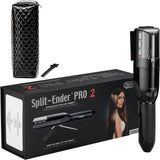
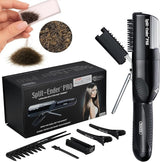
Split Ender PRO
EXPLORE SPLIT ENDER PRO →Split Ender PRO2
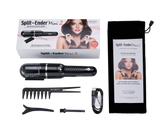
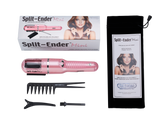
EXPLORE SPLIT ENDER PRO2 →Split Ender Mini
EXPLORE SPLIT ENDER MINI →Split Ender Mini 2
EXPLORE SPLIT ENDER MINI 2 →Always follow the instructions and suitability guidance for the specific device. Results and the amount of hair trimmed vary.
THE BEAUTY SCIENCE DESK
Frequently Asked Questions
Why does a haircut make my face look different?
A haircut changes the visible frame around the face. Length, volume, bangs, and silhouette may influence the overall impression without altering facial anatomy. Color can also alter contrast and visual framing, although the effect is subjective.
Is there one perfect haircut for every face shape?
No. Face-shape categories can help guide styling discussions, but they do not establish a universal best haircut for every individual. Short hairstyles, for example, can be adapted to different facial proportions, hair textures, and personal preferences.
Why does the same bob look different on different people?
Differences in hair density, fiber diameter, curvature, head shape, and styling can influence the finished silhouette. Layers do not increase the number of hair fibers; they redistribute length and may change the appearance of volume or movement.
Does bleaching always ruin hair?
No, but bleaching can cause structural changes and may contribute to damage. The degree of risk depends on formulation, processing, repetition, and existing hair condition. Blonde hair can also require more maintenance when substantial lightening, toning, or root upkeep is involved.
Can split ends be permanently repaired with a product?
Cosmetic products may temporarily improve appearance or manageability, but they do not biologically regenerate a split hair shaft. Split Ender devices are designed for cosmetic hair-tip trimming; they are not substitutes for professional haircut design or major length changes.
SCIENCE & FURTHER READING
The Science Behind the Transformation
1. Gavazzoni Dias, M. F. R. (2015). Hair cosmetics: An overview. International Journal of Trichology.
Read the scientific review →
2. American Academy of Dermatology Association. How to stop damaging your hair.
Read the dermatologist guidance →
3. U.S. Food and Drug Administration. Hair dyes.
Read the FDA safety information →
4. Mechanisms of Impairment in Hair and Scalp Induced by Hair Dyeing and Perming and Potential Interventions (2023).
Read the scientific review →
5. American Academy of Dermatology Association. Hair-care guidance and patient education.
Explore dermatologist resources →
Scientific references support the discussion of hair structure, cosmetics, chemical processing, and damage prevention. The descriptions of face-framing effects and personal style are editorial interpretations of visual design, not validated formulas for ranking facial attractiveness. Illustrations are conceptual artistic representations, not clinical images.
Editorial disclaimer: This article provides general educational and cosmetic information, not personalized medical or professional hair-color advice. Hair condition, chemical-treatment risks, and styling results vary. Consult qualified professionals about significant color changes, chemical services, scalp concerns, or unusual hair changes. Follow all product directions and allergy precautions. Split Ender devices are cosmetic hair-tip trimming tools and do not reverse chemical damage, regenerate hair fibers, restore pigmentation, or accelerate hair growth.