

THE HAIR SCIENCE CHRONICLES · SPECIAL EDITION
Where Endocrinology Meets Beautiful Hair
THE HORMONAL
HAIR CODE
Cortisol, Thyroid & Androgens: The Invisible Chemistry Behind Your Hair
Three hormonal systems. Millions of follicles. One extraordinary biological conversation.
THE EDITOR'S LETTER
Hair follicles are living mini-organs that respond to genetics, nutrition, health conditions, and the hormonal environment. Cortisol, thyroid hormones, and androgens each act differently: significant stress can precede a diffuse shedding called telogen effluvium, both low and high thyroid function can be associated with diffuse thinning, and androgens can contribute to miniaturization of genetically susceptible scalp follicles.
They do not explain every case of hair loss, and none of them is the same as breakage or split ends on the visible hair shaft.
"Your hormones can influence your follicles. But your hair cannot diagnose your hormones."
THE LABORATORY INDEX
Inside the Hormonal Hair Code
01 / Cortisol: The Stress Connection
02 / Thyroid: The Growth Regulators
03 / Androgens: The Follicle Whisperers
04 / Hair Loss vs. Hair Breakage
CHAPTER 01 · THE STRESS CONNECTION
Cortisol: When Stress Enters the Hair Conversation
Cortisol is a glucocorticoid hormone produced by the adrenal glands above the kidneys. It is not inherently harmful: it plays important roles in metabolism, immune regulation, and the stress response.

Conceptual anatomical illustration. Signaling effects are artistic, not directly visible structures.
Can Stress Cause Hair Shedding?
Major stressors such as illness, surgery, or childbirth can sometimes precede telogen effluvium, with shedding noticeable weeks to months later. Cortisol is only one part of a broader network of nervous-system, immune, and endocrine signals, so it would be inaccurate to claim that every episode of stress-related shedding is simply caused by "high cortisol."
Some findings on chronic stress and follicle stem cells come from animal or laboratory models. Stress management supports well-being but is not a substitute for investigating persistent or unusual hair loss.
The Hair Growth Cycle: Timing Is Everything
Each scalp follicle follows a repeating cycle, which is why a biological event today may not become visible in the mirror until later.

Conceptual illustration of hair-cycle phases. Not actual microscopic histology.
Anagen (active growth) can last for years on the scalp, catagen is a brief transition, and telogen is a resting phase before the hair is released. Normal shedding is part of hair biology; a noticeable increase must be evaluated in context.
CHAPTER 02 · THE METABOLIC MESSENGERS
Thyroid Hormones: The Growth Regulators
The butterfly-shaped thyroid gland in the front of the neck produces hormones, including thyroxine (T4) and triiodothyronine (T3), that influence metabolism throughout the body. Hair follicles are among the tissues affected by thyroid-hormone signaling.

Conceptual medical illustration of thyroid anatomy.
When Thyroid Function Is Too Low
In hypothyroidism, possible hair-related findings include diffuse thinning or shedding and changes in hair texture. Other symptoms may include fatigue, cold intolerance, constipation, and dry skin.
When Thyroid Function Is Too High
Hyperthyroidism can also be associated with diffuse thinning or shedding, along with heat intolerance, palpitations, tremor, and unexplained weight changes.
"Your hair can offer a clue. A blood test and clinical evaluation help tell the actual thyroid story."
A cosmetic shampoo cannot correct a thyroid-hormone disorder; medical evaluation and treatment of the underlying condition are important, and recovery may take time.
CHAPTER 03 · THE FOLLICLE SIGNAL
Androgens: The Follicle Whisperers
Androgens include testosterone and dihydrotestosterone (DHT) and matter in people of different sexes. Their effects depend on body region, genetics, and follicular sensitivity, which is why they can encourage certain body-hair growth while contributing to miniaturization in susceptible scalp follicles.

Conceptual scientific illustration of follicular miniaturization, not actual histology.
What Is Follicular Miniaturization?
In androgenetic alopecia, susceptible follicles progressively produce shorter, finer hairs, which may show up as a widening part or a receding hairline. Normal circulating androgen levels do not rule out androgenetic alopecia. Follicular sensitivity and genetics matter.
Androgens and Women's Hair
When thinning comes with acne, increased facial or body hair, or menstrual irregularities, a clinician may consider androgen excess, including polycystic ovary syndrome (PCOS). But not every woman with patterned thinning has PCOS, and diagnosis requires individualized evaluation.
CHAPTER 04 · THE GREAT CONFUSION
Hair Loss vs. Hair Breakage: They Are Not the Same
Not every loose hair in the shower drain represents hormonal shedding. A hair released through the follicular cycle is different from a shaft that physically breaks.

Conceptual hair-fiber comparison, not a diagnostic microscopic image.
Hair Shedding
A naturally shed telogen hair may have a small pale club-shaped end. Increased shedding may be associated with hair-cycle changes, illness, nutritional issues, medications, hormonal conditions, and other factors.
Hair Breakage
Breakage occurs when the existing shaft fractures along its length, which may be associated with mechanical stress, chemical processing, excessive heat, friction, or weathering.
Follicular hair loss may need medical assessment; damaged ends may benefit from gentler grooming, conditioning, and trimming. A split end is a fiber problem, and both can occur at the same time.
CHAPTER 05 · LISTEN TO THE SIGNALS
When Your Hair Is Sending a Signal
Hair changes are not a reliable do-it-yourself hormone test, but certain patterns make a medical conversation worthwhile.
Changes Worth Discussing With a Clinician
- Persistent or unusually heavy shedding.
- Progressive widening of the part or visible thinning.
- Sudden patches of hair loss.
- Scalp pain, inflammation, redness, or scaling.
- Hair changes with fatigue, temperature intolerance, palpitations, weight changes, menstrual irregularities, new acne, or increased facial hair.
Do you need hormone tests? Not everyone with shedding needs a broad hormone panel; testing should be individualized by a healthcare professional. Postpartum shedding is common and often temporary, and menopause may coincide with density changes, but significant or prolonged changes deserve medical guidance.
CHAPTER 06 · THE BEAUTY FINALE
Protecting the Lengths You Have
Hormones may influence the living follicle, but the visible hair shaft is made of nonliving keratinized cells shaped by grooming, friction, chemical processing, and heat. That is where cosmetic care matters.

The Length-Preservation Ritual
01 / Cleanse and condition consistently with products that suit your scalp and reduce friction.
02 / Detangle gently, using techniques appropriate for your curl pattern.
03 / Manage heat and mechanical wear, including tight styles and rough handling.
04 / Inspect the ends and trim when appropriate. Removing damaged tips is different from treating follicular hair loss.
THE SPLIT ENDER LENGTH EDIT
Care for the Hair You Have.
Respect the Biology Beneath It.
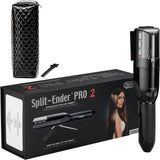
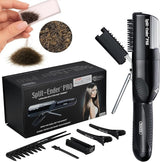
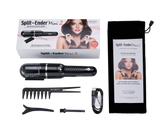
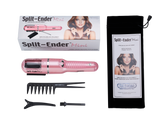
Split Ender hair-trimming tools are designed to trim hair tips, including some split or damaged ends, while aiming to maintain the appearance of overall length.
They are cosmetic hair-maintenance devices, not treatments for thyroid disorders, androgenetic alopecia, telogen effluvium, or other causes of follicular hair loss.
Always follow each device's instructions and hair-type compatibility guidance. Do not force trimming devices through tangled, fragile, or tightly curled hair. If hair is actively shedding or the scalp is inflamed, seek appropriate professional advice before introducing new mechanical treatments.
THE HORMONAL HAIR SCIENCE DESK
Frequently Asked Questions
Can cortisol cause hair loss?
Stress-related biological pathways can influence hair cycling, and significant stressors may precede telogen effluvium. However, an elevated cortisol level is not the established explanation for every case of stress-associated shedding.
Can thyroid problems make hair thin?
Yes. Both hypothyroidism and hyperthyroidism can be associated with diffuse hair changes. A clinical evaluation is needed to determine whether thyroid dysfunction is involved.
Does high testosterone always cause hair loss?
No. Androgenetic alopecia involves genetic susceptibility and follicular response to androgen signaling. It can occur even when circulating androgen levels are within the usual reference range.
How long after stress can shedding begin?
In telogen effluvium, increased shedding often becomes apparent approximately two to three months after a triggering event, although timing varies.
BEHIND THE SCIENCE
Medical & Scientific Further Reading
These resources provide additional background on endocrine function, hair biology, and hair-loss conditions. PubMed links are topic searches rather than citations to individual studies.
PubMed — Stress Signaling and the Hair Follicle
PubMed — Thyroid Hormones and Hair Growth
PubMed — DHT and Follicular Miniaturization
PubMed — Telogen Effluvium Reviews
PubMed — Hair-Shaft Weathering and Breakage
The anatomical and microscopic-style illustrations used in this editorial are conceptual scientific artwork, not diagnostic images, clinical scans, or actual histology.
Medical and editorial disclaimer: This article is intended for general educational purposes and does not diagnose hormonal disorders, prescribe treatment, or replace professional medical advice. Hair loss can have multiple causes, and hormone testing or treatment should be individualized by a qualified healthcare professional. Never start, stop, or change hormone medication based on cosmetic hair changes alone. Split Ender products are cosmetic hair-tip trimming tools, not medical treatments for hair loss.
SPLIT ENDER · THE HAIR SCIENCE CHRONICLES
The Hormonal Hair Code
Obsidian Black · Burgundy Wine · Champagne Gold