

THE HAIR SCIENCE CHRONICLES
THE BILLION-DOLLAR HAIR EDITION · VOL. 02
THE MILLION-DOLLAR
HAIR EFFECT
Inside the Celebrity Hair Economy: Extensions, Expensive Brunette & the Price of Perfection
THE EDITOR'S LETTER
The Hair That Looks Like a Fortune
The secret behind most celebrity hair is not one miraculous product or one extraordinary genetic advantage. It is a coordinated visual production: a colorist creates depth, an extension specialist adds strategic fullness or length, a hairstylist shapes the silhouette, conditioning products refine the surface, and professional lighting and photography capture the finished effect. The result looks like one magnificent head of hair, but it can be the product of many separate decisions.
None of this is inherently deceptive; fashion has always involved artistry. The problem begins when the finished image becomes the standard for ordinary, unstyled hair. Extensions change perceived fullness instantly, but added hair does not increase the number of follicles producing natural hair, and a photograph cannot show the appointments and styling hours behind it.
The most expensive-looking hair is not always the most naturally abundant. Sometimes, it is simply the most expertly constructed.
CHAPTER 01 · THE EXTENSION INDUSTRY
The Invisible Extension Empire

The most convincing extensions are often the ones nobody notices. The right method depends on the client's natural hair, scalp condition, lifestyle, and ability to maintain it.
- Tape-in: thin adhesive panels that can be discreet when properly positioned, but improper handling or excessive tension stresses natural hair.
- Keratin-bond: individual strands attached with specialized bonding materials, some using heat. Attachment size, distribution, and removal technique matter.
- Sewn-in and weft: sections attached with braids, beads, or thread. They create dramatic volume, but tension and weight must be considered.
- Clip-in: temporary wear for events or photography, though repeated placement in one area or excessive weight may still stress hair.
What makes extensions look expensive is not length but color matching, balanced density, realistic movement, and seamless blending. A beautiful installation should never require persistent pain or a sensation of excessive pulling.
The finest extension work respects what is already growing beneath it.
CHAPTER 02 · THE COLOR OF QUIET LUXURY
Expensive Brunette: The Color of Quiet Luxury

Espresso near the roots, rich chocolate through the lengths, champagne-brown reflections that appear only when the light changes: this is the look often called expensive brunette. It is not one standardized salon formula but a visual direction for dimensional, carefully maintained brunette color.
Why Dimension Matters
Subtle tonal differences create an impression of depth and movement. Colorists may use highlights, lowlights, glossing, and other techniques depending on the starting color and condition, but not every brunette requires lightening or a complex multi-step service. Gloss can enhance shine or adjust tone, yet extraordinary shine alone does not establish the hair's structural condition.
The Maintenance Reality
Upkeep depends on the techniques used, the gap between natural and colored shades, porosity, and products. Some looks grow out softly; others need regular toning or color appointments, and previously bleached hair may respond differently.
Expensive brunette is not about how much the appointment costs. It is about how intentionally the color is created.
CHAPTER 03 · THE BEAUTY ECONOMY
The Price of Perfection
The price of a glamorous hairstyle is rarely limited to the first appointment. There may be consultation fees, color services, extension hair, installation, styling, home-care products, and maintenance, plus the cost that never appears on a receipt: time. Costs vary so widely that there is no single credible price tag for the celebrity-hair aesthetic.
What Money Cannot Guarantee
Higher prices do not automatically guarantee healthier hair, safer techniques, or better outcomes, and no premium service changes the biological limits of hair growth. What you pay for is professional judgment, and a qualified professional should recognize when a desired service is unsuitable for the condition of your hair or scalp.
The true price of perfection includes what it takes to maintain the result—and what the hair may experience along the way.
CHAPTER 04 · THE HIDDEN STRESS
When Luxury Becomes Tension
Extensions can be an extraordinary cosmetic tool, but they also place mechanical demands on the hair and scalp.
The Science of Traction
When hairstyles or attachments repeatedly pull on follicles, they can contribute to traction alopecia, a form of hair loss associated with sustained or repeated tension. Early recognition matters because prolonged traction may eventually cause lasting follicular damage. Tight braids, ponytails, and buns can contribute too.
Weight, Friction, and Heat
Added hair adds weight that not every natural density can carry. Friction at attachment points and during sleep can cause tangling or breakage, and some systems are sensitive to certain products or temperatures, so follow your installer's specific instructions.
Warning Signs That Deserve Attention
Persistent scalp pain, tenderness, bumps, irritation, broken hairs around attachment points, or visible thinning are not normal discomfort. If hair loss, scalp inflammation, or significant discomfort develops, consult a dermatologist or appropriate healthcare professional. Do not keep wearing a painful installation just to preserve the hairstyle.
A luxury hairstyle should never demand that you ignore your scalp.
CHAPTER 05 · THE SURVIVAL GUIDE
The Celebrity Hair Survival Guide
You do not need a celebrity budget to borrow the smartest principles of professional haircare.
- Start with a professional assessment of breakage, recent chemical services, sensitivity, and maintenance expectations.
- Choose proportion over excess. Strategic fullness and balanced layers can look refined without unnecessary weight.
- Respect attachment-specific care for cleansing, drying, detangling, and maintenance.
- Avoid unnecessary heat, especially around attachments that may be affected by it.
- Detangle without aggression, supporting the hair around attachment points.
- Protect the natural hair underneath, which keeps growing and needs care.
- Plan for removal. Incorrect removal can damage natural hair, particularly with adhesive or bonds.
- Know when less is more. A well-maintained natural style may suit your hair, lifestyle, or budget better.
The Importance of the Ends
The oldest lengths are the most weathered. Conditioners may temporarily smooth split tips but do not permanently fuse them back together; trimming, when appropriate, removes them.
The best celebrity-inspired routine is not the one that copies every detail. It is the one that borrows the expertise while respecting your own hair.
THE SPLIT ENDER EDIT
Million-Dollar Style.
Thoughtful Hair Maintenance.
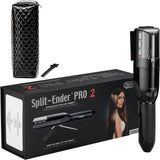
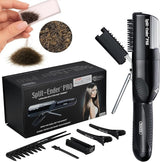
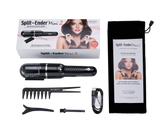
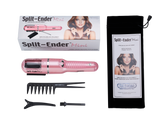
Split Ender tools are designed for cosmetic hair-tip trimming of some visibly split or damaged ends while helping preserve the appearance of overall length. They do not stimulate hair growth, repair follicles, or restore damaged fibers, and they should not be assumed suitable for use directly over installed extension attachments. Follow the instructions for the specific device.
Split Ender PRO
Explore the salon-professional cordless split end hair trimmer.
DISCOVER SPLIT ENDER PRO →Split Ender products are cosmetic trimming tools. They do not treat hair loss or medically repair damaged hair.
THE BEAUTY SCIENCE DESK
Frequently Asked Questions
Do celebrities always wear hair extensions?
No. Some use extensions for specific appearances, while others style their natural hair. A photograph alone cannot reliably establish whether extensions are present. Professional color, styling, lighting, and photography all shape how full and polished hair looks on camera.
Can extensions damage natural hair or cause hair loss?
They can contribute to damage when excessive tension, weight, friction, or improper installation and removal are involved. Repeated or excessive pulling can contribute to traction alopecia. Outcomes depend on the method, hair condition, and maintenance, and persistent pain, irritation, or thinning deserves prompt professional attention.
What is expensive brunette hair?
It is a beauty term describing rich, dimensional brunette color with a polished appearance. It is not one standardized salon formula. Glossing products may improve its shine, feel, or tone, depending on their formulation, but should not be assumed to permanently reverse structural damage.
Are tape-in extensions better than keratin bonds?
Neither method is universally best. Suitability depends on natural hair condition, desired result, installation technique, and maintenance requirements. Whatever the method, extensions add cosmetic length or fullness but do not directly increase follicle growth or make natural hair grow faster.
Can Split Ender be used on hair extensions?
Do not assume compatibility with installed extensions or their attachment points. Follow the specific device instructions and consult a qualified professional before using a trimming device when extensions are present. For natural lengths, gentle detangling, sensible heat habits, and trimming when needed help maintain long hair.
RESEARCH & FURTHER READING
Behind the Beauty: The Science
Hair Cosmetics: An Overview — Scientific Review
PubMed — Traction Alopecia and Hair Extensions
PubMed — Hair Fiber Friction and Mechanical Damage
PubMed — Hair Bleaching and Cuticle Damage
American Academy of Dermatology — Haircare Guidance
Research links are provided for educational exploration. Several lead to literature searches rather than individual studies, and they do not establish specific product-performance claims.
Editorial disclaimer: This article is intended for general cosmetic education and is not medical advice. Hair extension methods, color services, and styling practices involve different risks depending on individual circumstances. Seek professional guidance for scalp pain, irritation, significant breakage, or hair loss. Split Ender devices are cosmetic hair-tip trimming tools and do not treat scalp conditions, stimulate follicle growth, or medically repair damaged hair.