

THE COLOR CHRONICLES · VOLUME 01
A Luxury Beauty & Hair Science Editorial
THE
REDHEAD EFFECT
The Science of Copper Hair: How to Protect Its Color, Shine & Texture
From natural ginger and strawberry blonde to vibrant salon copper and deep auburn—discover what makes red hair remarkable, why color changes, and how to care for every beautiful strand.
THE BEAUTY OF BEING RED
Some hair colors whisper. Copper makes an entrance. From soft strawberry-blonde reflections to fiery ginger and deep auburn, red hair captures light beautifully, and behind that glow is a combination of pigment biology, fiber structure, chemistry, and everyday care.
Protecting it starts with knowing your hair's story: a natural redhead, a fresh salon copper, and hair lightened before being dyed auburn may need very different care, even when the shades look similar. Red hair is not automatically more damaged because it is red. Suitable cleansing, conditioning, thoughtful heat, sun protection, and attention to the ends help preserve color, shine, and texture.
THE COPPER BEAUTY BRIEF
Four Things Worth Knowing
Natural red shades are associated with the relative contributions of pheomelanin and eumelanin.
Dyed copper can change with washing, sunlight, chemistry, and fiber condition.
Straight, wavy, curly, and coily hair can require different handling and styling approaches.
Color care and fiber maintenance work together to support a polished appearance.
CHAPTER 01
Born to Be Copper
Hair color is influenced by the amount, type, and distribution of melanin within the hair fiber, particularly in the cortex. Two major classes of melanin are especially relevant:
Pheomelanin
Associated with reddish and yellowish pigment contributions. Its relative presence helps influence the appearance of naturally red hair.
Eumelanin
Associated with brown and black pigment contributions. Its amount and distribution also influence the final shade.
Genetic variation, including variants involving the MC1R gene, plays an important role in many cases of natural red hair. However, hair pigmentation is complex, and no single gene explains every person's shade.

Strawberry blonde, ginger, copper and auburn are descriptive beauty terms, not precise scientific pigment categories.
CHAPTER 02
Why Red Color Fades
A fresh salon copper can look spectacular, but dyed hair may change over time. The reasons are more complicated than the popular claim that red dye always has the smallest molecules or always fades faster than every other color. Durability depends on the specific dye chemistry, formulation, starting hair condition, application process, washing habits, ultraviolet exposure, and other environmental factors.
The Four Color-Changing Forces
01 / Washing and cleansing
Repeated washing can contribute to the gradual loss or alteration of some cosmetic colorants.
02 / Sunlight
UV exposure can affect both hair proteins and pigments.
03 / Heat and processing
High-temperature styling and chemical services may affect fiber condition and, depending on the product, color stability.
04 / Previous damage
Porous or highly processed sections may absorb and release color differently, sometimes producing uneven fading.
Natural vs. dyed: natural red does not undergo the same washout process as a recently applied cosmetic dye, although sunlight, aging, and weathering may alter it. Semi-permanent, demi-permanent, and permanent dyes behave differently, and previously lightened copper may need extra attention to breakage and porosity.
CHAPTER 03
One Color, Many Textures
Being a redhead tells you something about color. It does not tell you whether the hair is straight, wavy, curly, or coily, fine or coarse. An effective copper-care routine begins with the actual fiber, not just the shade.

Straight Copper
Fine, straight hair may prefer lightweight formulas to preserve movement.
Wavy Auburn
Focus on gentle detangling and flexible styling products that define natural bends without buildup.
Curly Ginger
Conditioning, slip, and careful handling can support curl definition and reduce mechanical stress.
Coily Red
Prioritize manageable sections, suitable conditioning, and low-tension styling that respects shrinkage.
CHAPTER 04
Beneath the Copper Shine
Beautiful shine is partly an optical effect. The smoothness, orientation, curvature, and condition of the fibers help determine how light is reflected and scattered, so gloss isn't simply about the pigment.

The cuticle's overlapping outer cells help protect the internal structure. Friction, chemical processing, UV exposure, and repeated grooming can weather that surface, so hair may feel rougher, tangle more easily, and look less polished.
A Crucial Scientific Distinction
Red hair is not automatically more damaged because it is red. Damage risk is influenced by many factors, especially previous chemical services, physical handling, heat, and environmental exposure.
Does porosity affect color? Structural changes can influence how products interact with the fiber, but porosity alone does not determine how long every dye will last, and an at-home float test cannot reliably diagnose your hair.
CHAPTER 05
The Copper Protection Ritual
The most useful routine is one you can follow consistently, matched to your scalp, texture, and chemical history.

For dyed hair, consider a cleanser formulated for color-treated hair. Avoid assuming that washing as rarely as possible is always healthier.
Choose a conditioner that provides enough slip for your texture to make detangling easier and reduce friction.
Use appropriate temperatures and avoid repeated high-heat exposure. A heat protectant may help, but cannot make excessive heat harmless.
A hat or other physical protection can help reduce direct sunlight exposure.
Color-depositing products or salon gloss services may help maintain a desired shade. Follow instructions and seek professional guidance when chemical processing is involved.
Beautiful Color, Beautiful Ends
Hair near the tips is usually older and has accumulated more wear. Some cosmetic treatments temporarily improve how worn hair looks and feels, but when a fiber physically splits at the tip, the split does not biologically fuse itself back together. Inspect for roughness, visible splits, and tangling rather than relying on an inflexible trimming calendar.
“Color creates the impression. Beautifully maintained ends complete the look.”
Thoughtful trimming can remove visibly split or damaged portions, while conditioning and gentle handling help manage the remaining lengths.
THE COPPER MAINTENANCE EDIT
Protect the Look. Care for the Ends.
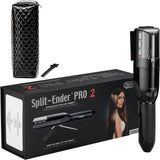
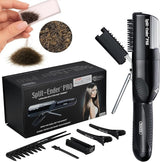
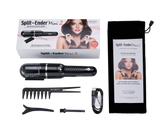
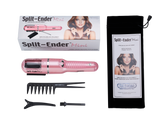
Split Ender hair-trimming tools are designed to trim hair tips, including some split or damaged ends, while aiming to preserve the appearance of overall length. They do not restore the internal structure of chemically damaged hair or replace an appropriate haircare routine.
THE PROFESSIONAL EDIT
Split Ender PRO
Explore the professional-oriented trimming model.
DISCOVER PRO →Check the instructions and compatibility of the specific model before use, particularly on tightly curled, highly textured, fragile, or chemically processed hair.
THE COPPER BEAUTY DESK
The Redhead FAQ
Does red hair dye always fade faster?
Not necessarily. Fading depends on dye formulation, color history, fiber condition, washing, and environmental exposure. Different red coloring systems can have different durability.
Is natural red hair more fragile?
Hair color alone does not establish how damaged or fragile a person's hair is. Strand thickness, texture, chemical history, grooming, and environmental exposure all matter.
Can sunlight change red hair color?
Sun exposure can influence hair pigments and proteins. The visible effect depends on whether the hair is naturally pigmented, dyed, previously lightened, or otherwise processed.
Will conditioner permanently repair split ends?
No. Conditioner can improve softness, lubrication, and appearance, but a physically split hair tip does not biologically fuse back together. Trimming removes the split portion.
BEHIND THE BEAUTY
The Science Behind This Edition
This article draws on established principles of hair pigmentation, hair-fiber anatomy, cosmetic color chemistry, and hair weathering.
Further reading:
- MedlinePlus Genetics — Is hair color determined by genetics?
- PubMed — Research on human hair cuticle weathering
- PubMed — Research on hair dye fading and photodegradation
- PubMed — Research on eumelanin and pheomelanin in hair
Scientific illustrations in this article are conceptual educational visualizations, not microscope photographs or quantitative representations of pigment distribution.
Editorial note: This educational article discusses general hair science and cosmetic care. Individual results depend on hair texture, chemical history, scalp condition, and product formulation. Natural red hair is not inherently damaged. Cosmetic conditioning effects should not be confused with permanent biological repair of the hair shaft. Follow product directions and seek qualified professional advice for chemical coloring services.