

THE WET
HAIR TRAP
Is Your Hair Most Vulnerable When It's Wet?
THE SCIENCE OF WATER, HAIR SWELLING, CUTICLE STRESS, BREAKAGE & THE TRUTH ABOUT WET-HAIR CARE
Wet hair is not simply "weaker," but it does behave differently: it stretches more easily.
When hair gets wet, it absorbs water and swells slightly, so it responds differently to pulling, rubbing and heat. Water changes the physical behavior of hair. It does not automatically destroy it.
The real risks come from what happens next: forceful detangling, vigorous towel-rubbing, tight wet styles and too much heat. How much any of these matter depends on your hair texture, previous damage and technique.
Welcome to THE WET HAIR TRAP, an investigation into the science behind our most familiar hair-care rituals.
THE WATER SWELLING EFFECT
What Really Happens Inside a Hair Fiber When It Gets Wet

Hair is not a waterproof thread. Its main structural component is keratin: the outer cuticle protects the inner cortex, which gives the strand much of its mechanical strength.
Why does wet hair stretch more?
Wet hair absorbs water, which can cause swelling. Water acts as a plasticizer in keratin fibers, so hydrated hair generally extends more readily under tension than dry hair. Water also disrupts some temporary hydrogen bonds, which is why wet-setting can reshape a style. It does not destroy hair's permanent structural bonds.
Does swelling always equal damage?
No. Swelling is a normal response to hydration. Repeated wetting and drying can contribute to mechanical fatigue in vulnerable fibers, but that effect should not be exaggerated.
Hydration, swelling, stiffness, extensibility and breakage resistance are related but distinct concepts. "Wet hair is weak" is too simple.
THE WET BRUSHING DILEMMA
Are You Breaking Your Hair Every Time You Detangle?

"Never brush your hair when it's wet" sounds simple. But when a comb or brush meets a knot, force is transferred to the fibers, and too much force can stretch or break hair whether it is wet or dry.
Should you detangle wet or dry?
It depends on texture. Some people with straight hair find that letting it partly dry first reduces snagging. For many curly and coily textures, dry detangling creates more friction, and damp, conditioned hair gives more slip. The goal is the least pulling for your hair type.
How do you detangle with less breakage?
- Apply a suitable conditioner or detangling product.
- Divide the hair into manageable sections.
- Support each section with one hand to reduce tension on the scalp.
- Begin gently near the ends and work upward as knots release.
- Stop rather than forcing a tool through a resistant tangle.
Wet detangling is not universally harmful. Force, lubrication, technique, texture and existing damage matter more than a blanket rule.
THE TOWEL DAMAGE SECRET
Cotton, Microfiber & the Hidden Cost of Friction

Twisting, rubbing or pulling wet hair against a textured towel creates friction. Repeated abrasion can contribute to cuticle weathering, particularly in hair that is already damaged or tangles easily.
Is a microfiber towel better than cotton?
Not automatically. Microfiber can help remove water without vigorous rubbing, and a soft cotton towel or smooth T-shirt used gently can work too. Material alone does not determine the outcome. Technique does.
- Gently squeeze excess water from the lengths.
- Blot or press instead of rubbing.
- Avoid an excessively tight towel wrap.
- Handle fragile or chemically processed lengths with extra care.
THE SLEEPING WITH WET HAIR MYTH
Can Going to Bed With Damp Hair Really Damage It?

There is no sound basis for claiming that one night with damp hair causes permanent hair loss, which has many medical, hormonal and genetic causes. What deserves attention is friction: your head moves against the pillow all night, and damp, tangled or fragile hair takes more of that contact.
Is sleeping with wet hair bad for your scalp?
Some people find a scalp that stays moist for long periods uncomfortable, but it is inaccurate to claim that damp hair automatically causes fungal infections. Persistent itching, scaling, redness or pain should be evaluated by a qualified healthcare professional.
- Remove excess water gently before bed.
- Avoid tight, wet hairstyles.
- Choose a loose arrangement that minimizes tangling.
- Keep pillowcases clean. Silk or satin may feel smoother, but no pillowcase guarantees zero tangles.
THE WET-TO-DRY DAMAGE CYCLE
How Repeated Washing, Drying & Styling Affect Hair Over Time

Hair condition usually reflects months of washing, drying, brushing and styling, not a single event. There is no universal ideal washing frequency: scalp oiliness, activity, texture and products all change what you need.
Is air-drying always safer than blow-drying?
Not necessarily. Air-drying avoids direct heat, but prolonged wetness and repeated swelling have also been investigated as contributors to fiber changes. A study in Annals of Dermatology observed different damage patterns depending on the drying method and suggested that controlled blow-drying at a suitable distance may be preferable to some other conditions for certain outcomes. It does not establish one best method for every hair type.
If you use a dryer, keep it moving, use appropriate settings and avoid overheating individual sections.
Drying methods involve trade-offs between heat intensity, drying time, handling and existing damage. Controlled experiments should not be turned into absolute rules.
THE WET HAIR SURVIVAL RITUAL
A Science-Informed Routine for Beautiful, Better-Protected Lengths

- Cleanse according to your needs, without aggressive scrubbing of the lengths.
- Condition strategically to improve slip, especially if your hair knots easily.
- Detangle with intention, using the approach that causes the least pulling for your texture.
- Remove water gently by squeezing or blotting, not rubbing.
- Choose a sensible drying method: air-drying or controlled, moving heat.
- Maintain damaged ends thoughtfully.
Can gentle wet-hair care fix split ends?
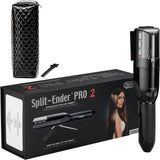
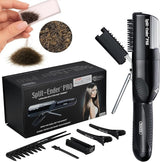
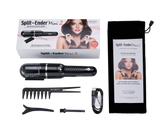
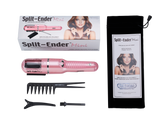
No. Gentle handling reduces avoidable stress, but if a hair tip has physically split, ordinary conditioners do not permanently reconnect the separated fiber. Trimming removes the damaged portion. Split Ender tools are designed for split end trimming as part of hair maintenance; they do not biologically repair damaged hair or accelerate growth at the follicle.
Beautiful Hair Begins with Better Care
Explore Split Ender PRO as part of a thoughtful routine for maintaining damaged ends.
Explore Split Ender PROFrequently Asked Questions
1. Is wet hair weaker than dry hair?
Water changes the mechanical properties of hair, including stiffness and extensibility. Whether wet hair is more vulnerable depends on the type of force, the fiber's condition and how it is handled.
2. Is it bad to brush wet hair?
Not always. Technique, lubrication, hair texture and the amount of force matter. Some curly and coily textures may benefit from gentle damp detangling with conditioner.
3. Is sleeping with wet hair dangerous?
A single night with damp hair does not automatically cause hair loss or damage. Friction, tension, comfort and individual scalp conditions are the relevant considerations.
4. Is air-drying always healthier?
No drying method is universally optimal. Avoiding excessive heat is useful, but drying time, technique and hair condition also matter.
5. Can Split Ender repair hair damaged by wet brushing?
Split Ender tools are designed to trim split ends, not to biologically repair the hair shaft. They cannot reverse every type of damage or stimulate hair growth.
Science & Further Reading
- Robbins, C. R. (2012). Chemical and Physical Behavior of Human Hair. Fifth Edition, Springer. Foundational scientific reference on hair structure, hydration, mechanical behavior, and weathering.
- Dias, M. F. R. G. (2015). Hair Cosmetics: An Overview. International Journal of Trichology, 7(1), 2–15. A review of hair structure, cleansing, conditioning, and cosmetic care. Read the review.
- Lee, Y., et al. (2011). Hair Shaft Damage from Heat and Drying Time of Hair Dryer. Annals of Dermatology, 23(4), 455–462. Experimental investigation of different drying conditions. Read the study.
- American Academy of Dermatology. Tips for Healthy Hair. Dermatologist guidance on cleansing, conditioning, and gentle hair care. Read the guidance.
- American Academy of Dermatology. Hair Styling Without Damage. Practical recommendations for reducing avoidable damage from styling and grooming. Read the guidance.
Editorial disclaimer: This article provides general educational information and does not constitute medical advice or individualized hair assessment. Hair-fiber responses to hydration, brushing, drying, and styling vary with texture, condition, technique, and exposure. Split Ender products are trimming tools; they do not biologically repair hair fibers, treat scalp conditions, or accelerate follicular hair growth. Seek professional evaluation for persistent scalp symptoms or concerning changes in hair loss.