

TOO YOUNG
TO SMOOTH?
From First Keratin to Pregnancy: What Every Woman Should Know Before Straightening
Keratin. Brazilian Blowout. Hair Botox. Nanoplasty. Hair Surgery?!
So many names. So many promises. But what is actually happening to your hair?
Decode the Treatments → Pregnancy & Safety →
Wait... How Many Names Does Straight Hair Need?
Once upon a salon appointment, someone asked a simple question: "Can my daughter get keratin?"
Another client wanted Brazilian Blowout. Someone else requested Hair Botox.
Then came nanoplasty, taninoplasty, cysteine, and something called "hair surgery."
Meanwhile, an expectant mother wondered whether she should postpone her smoothing appointment.
Suddenly, one salon conversation had turned into a chemistry class.
Let's separate the marketing language from the science.
How Young Is Too Young for Keratin?
Can a 10-year-old get keratin?
What about 12? Fifteen? Eighteen?
There is no single scientifically established age at which every chemical smoothing treatment becomes safe.
The risk depends on the specific formula, its ingredients, application method, temperature, exposure conditions, and individual circumstances.
Under 12
A cautious approach is to avoid elective chemical straightening. Explore gentle, temporary styling instead. A product should not be assumed safe for children without appropriate evidence.
Ages 12–15
Parental permission alone does not establish chemical safety. Review the product, exposure, and manufacturer guidance. When uncertain, postpone the procedure.
Ages 16–17
A teenager may understand the process better, but age does not eliminate chemical or heat-related risks. Avoid products with poorly understood ingredients or hazardous emissions.
18 and Older
Adulthood does not make every smoothing formula safe. Adults should still review ingredients, ask about ventilation, and understand possible adverse effects.
These age groups are discussion categories, not official FDA-approved minimum ages or universal medical clearance.
The Smoothing Name Game

Here's the secret: salon treatment names are not always standardized chemical categories.
Two salons may offer treatments with similar names but use formulas containing different active ingredients.
The opposite is also possible: very different marketing names may describe broadly similar smoothing approaches.
| Salon Name | What It Usually Means | What to Ask |
|---|---|---|
| Keratin Treatment | A broad label for smoothing services; the active chemistry varies by product. | What ingredients create the effect, and what happens when heated? |
| Brazilian Blowout | A smoothing-service term also associated with specific branded products. | Which exact product is used? Does it release formaldehyde? |
| Hair Botox | Usually a marketing term for conditioning or smoothing. It does not ordinarily mean injectable botulinum toxin. | Is it conditioning, chemical smoothing, or both? |
| Nanoplasty | A nonstandardized marketing category for certain smoothing and straightening services. | Which acids or other active ingredients are present? |
| Taninoplasty | A term associated with tannin-themed smoothing systems; formulas differ. | What is the complete formula and heat protocol? |
| Cysteine Treatment | A smoothing category marketed around cysteine or related ingredients. | Is the service temporary smoothing or chemical restructuring? |
| Japanese Straightening | Typically a permanent chemical straightening process involving alteration of hair bonds. | Which reducing and neutralizing agents are used? |
| Chemical Relaxer | A chemical process that alters hair structure to reduce curl. | Is it hydroxide-based or another system? What are the scalp and breakage risks? |
| Hair Surgery | Often a dramatic salon marketing term—not actual surgery. | What procedure and ingredients does the name actually describe? |
Pregnant & Thinking About Keratin?

Pregnancy comes with enough decisions already.
So when a smoothing appointment appears on the calendar, it is reasonable to ask:
"Could this expose me to chemicals I should avoid?"
The FDA warns that some hair-smoothing products release formaldehyde gas when heated.
Inhaled formaldehyde can irritate the eyes, nose, throat, and respiratory system. Formaldehyde is also classified as a human carcinogen.
Research is not sufficient to declare every salon smoothing formula safe during pregnancy.
What About the First Trimester?
There is no universal trimester in which all chemical straightening products suddenly become safe.
Waiting until the second or third trimester does not remove the hazards of a product that releases harmful vapors.
What About Breastfeeding?
The considerations differ from pregnancy, and evidence varies by chemical.
Do not assume that every treatment is unsafe—or automatically safe—while breastfeeding. Review the specific product with a qualified healthcare professional.
Read the FDA Safety Information →The Label Detective: What's Really in That Bottle?

"Organic." "Natural." "Clean." "Formaldehyde-free."
Those words may sound reassuring, but they do not independently establish the safety of a chemical straightening process.
FDA and OSHA have documented concerns involving certain hair-smoothing products that contain or release formaldehyde, including products marketed as formaldehyde-free.
Three Ingredient Names Worth Recognizing
Formaldehyde
A hazardous chemical that may be present in certain smoothing products or released during use.
Formalin
A name used for aqueous formaldehyde solutions.
Methylene Glycol
A hydrated form of formaldehyde associated with formaldehyde release in some heated smoothing products.
Other Ingredients
Other compounds may also present hazards. Their risks must be assessed individually, not automatically equated with formaldehyde.
Five Questions to Ask Before the Appointment
01. What is the exact product name and manufacturer?
02. Can I see the ingredient list?
03. Can I review the Safety Data Sheet (SDS), if applicable?
04. Does the product contain or release formaldehyde or other hazardous substances during heating?
05. What training, ventilation, and precautions are required?
The illustrated bottle labels are artistic examples, not verified ingredient disclosures for actual products.
Explore OSHA's Ingredient Guidance →Smooth Today, Damaged Tomorrow?

A smooth, glossy finish can be beautiful.
But appearance alone cannot reveal every change inside the hair fiber.
Some chemical straightening methods alter hair bonds. Others rely on coating, conditioning, heat, or combinations of processes.
Excessive heat and aggressive chemical processing can contribute to dryness, fragility, breakage, and split ends.
Hair Damage vs. Chemical Exposure
Cosmetic Damage
Roughness, breakage, reduced strength, tangling, and split ends may result from accumulated stress.
Exposure Concerns
Depending on the chemicals involved, potential effects may include irritation, respiratory symptoms, or other health risks.
The 450°F temperature shown in the illustration is a visual warning about high heat, not a recommended styling temperature.
Aftercare: What Happens After the Salon Chair?

Whether you choose a salon smoothing service or decide to keep your natural texture, everyday care matters.
Condition Thoughtfully
Choose conditioners and leave-ins appropriate for your hair's needs and texture.
Manage Heat
Avoid unnecessary repeated high-heat styling. Follow professional instructions for the actual treatment.
Reduce Friction
Detangle gently, avoid harsh towel rubbing, and consider smooth sleep fabrics.
Watch Your Ends
Monitor splitting, breakage, and thinning ends. Conditioning cannot permanently reconnect a physically split strand.
Post-treatment washing schedules and maintenance instructions differ by formula.
There is no single universal waiting period or shampoo routine that applies to every smoothing treatment.
Smoother Hair. Smarter End Maintenance.
Here's where the conversation shifts from chemical smoothing to hair-end care.
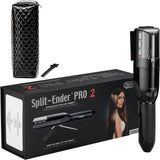
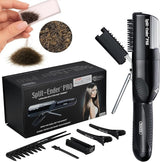
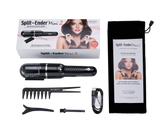
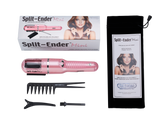
Split Ender tools are designed to trim protruding hair ends while preserving much of the overall length.
They do not neutralize chemical exposure, reverse internal structural damage, or make a hazardous smoothing procedure safe.
And they do not replace every traditional haircut.
Always follow the manufacturer's instructions and check suitability for your hair's current condition.
The Salon Decision Guide
Is My Child Ready?
Consider age, chemical exposure, product suitability, and gentle alternatives. Avoid treating marketing claims as safety evidence.
Do I Really Want It?
Understand the maintenance, potential damage, and reversibility before changing your natural texture.
Can It Wait?
Avoid treatments that release formaldehyde. Discuss other chemical procedures with your prenatal healthcare professional.
What's in the Bottle?
Identify the exact product, understand its ingredients, review safety information, and ask about ventilation.
Straight Answers About Straightening
Is there a safe minimum age for every keratin treatment?
No. There is no universal age that establishes safety for every chemical smoothing formula. Specific ingredients, procedures, exposure, and individual factors matter.
Is Hair Botox the same as Botox injections?
Usually not. Hair Botox is commonly a marketing term for conditioning or smoothing services. Ask for the exact product and ingredients.
Is nanoplasty automatically formaldehyde-free?
No. The term does not guarantee a standardized formula or absence of hazardous emissions. Verify the specific product.
Is Brazilian Blowout the same as keratin?
The names can overlap in everyday salon conversation, but formulas and procedures vary. Identify the exact branded product being used.
Can I get keratin while pregnant?
Avoid treatments containing or releasing formaldehyde. For other formulas, discuss the exact product with your prenatal healthcare professional because safety evidence varies.
Does "organic" mean a treatment is safe?
No. Organic or natural marketing does not establish safety under high-heat salon conditions.
Can Split Ender repair chemical damage?
No. Split Ender tools are designed to trim protruding ends, not reverse chemical changes inside the hair fiber.
Official Safety Sources
U.S. Food and Drug Administration (FDA)
Hair Smoothing Products That Release Formaldehyde When Heated
Formaldehyde in Hair Smoothing Products: What You Should Know
Occupational Safety and Health Administration (OSHA)
Hair Salons: Facts About Formaldehyde in Hair Products
Educational content only. This article does not establish that any specific salon formula is safe for children, pregnant individuals, or people with underlying conditions. Product formulations and safety guidance may change.