

Shampoo, Mask, Leave-In, Oil, Serum… Help! What Order Should Hair Products Actually Go In?
Shampoo, conditioner, mask, leave-in, heat protectant, cream, gel, serum, oil—and now the shampoo sandwich. Your shower suddenly needs a project manager.
A mask may replace conditioner on some wash days, an oil may be a pre-wash treatment or a finish, and the viral “shampoo sandwich” deliberately flips the usual sequence. Your hair routine is not a product collection. It is a sequence of jobs.
So What Order Should Hair Products Actually Go In?
Haircare categories have multiplied around increasingly specific jobs, but the existence of a category is not evidence that you personally need it. For a conventional wash-and-style routine, the broad sequence is surprisingly simple:

The nine-bottle problem: which jobs does your routine actually need?
But that is a map, not a commandment. Your leave-in may already claim heat protection, you may air-dry and skip thermal protection entirely, and your styling routine may need one gel and nothing else.
| Product | Typical Place |
|---|---|
| Pre-shampoo / pre-oil | Before cleansing |
| Shampoo | Wash phase, scalp-focused |
| Conditioner / mask | Usually after shampoo |
| Leave-in conditioner | After rinse-out phase |
| Heat protectant | Before heat, per directions |
| Cream / mousse / gel | Styling phase |
| Serum / oil | Often late, but not always |
Does Shampoo Go on Your Scalp or All Over Your Hair?
For routine cleansing, dermatology guidance commonly recommends concentrating shampoo on the scalp rather than rubbing it through the full length. The scalp is where sebum, sweat and residues accumulate. Rinsing still carries cleanser through the lengths, which is different from scrubbing older ends as though they personally offended you.
Should conditioner or a hair mask come next?
In a standard routine, conditioning follows cleansing. Conditioners improve lubrication, reduce friction and make fibers easier to comb. A mask, however, is not automatically “conditioner but more.” Some replace regular conditioner for that wash; others have their own sequence. The label matters, and fine hair may look flatter under rich layers.
Plot Twist: Conditioner Goes First?Wait—What the Hell Is the Shampoo Sandwich Method?
Just when everybody remembered shampoo then conditioner, the internet put conditioner first. The shampoo sandwich conditions the lengths, shampoos (often focusing on the scalp), then conditions again.

The shampoo sandwich places conditioning around the cleansing step.
It appeals to people with dry, processed or highly textured lengths because the first step changes what is on those fibers before shampooing. But it is a technique, not a biological requirement, and not a promotion to a mandatory three-course wash day.
Does Leave-In Conditioner Go After Rinse-Out Conditioner?
Usually, yes. A true leave-in belongs after the rinse-out step because, as the name is desperately trying to tell us, it stays in the hair. The American Academy of Dermatology distinguishes the two categories and cautions against using a rinse-out conditioner as a leave-in.
Does heat protectant go before or after leave-in?
Use a separate heat protectant as its manufacturer directs; some leave-ins carry heat-protection claims themselves. The rule is not “heat protectant is always bottle number five.” It is: if you are heat styling, thermal protection needs to be used correctly before that heat exposure.
Cream, Mousse, Foam or Gel—Which Styling Product Goes First?
First ask a more useful question: what result are you trying to create?
Volume
Foam or mousse for lift and body.
Definition
Cream or gel, depending on texture and formula.
Hold
A gel or hold-focused styler, without four products underneath it.
Smoothing
A smoothing product, but amount and formula strongly affect weight.
The popular “lightest to heaviest” rule can be a useful experiment, but it is not a universal law of hair chemistry.
Should hair oil or serum always go last?
Often, because many are finishing products for shine or flyaways. But “oil” is a category, not one behavior. Research on hair oils has shown differences in how they penetrate the fiber, so a pre-shampoo oil does not sit where a drop of finishing oil does. Follow the bottle's instructions, not “serum seven, oil eight, manifest good hair nine.”
The Layering ProblemCan Too Many Hair Products Make Hair Look Worse?
They can make it look or feel different from what you intended. Layered conditioning and styling materials change weight, slip, volume and stiffness, and more product does not mean more protection: a styling cream is not automatically a heat protectant.

More layers create more variables. Sometimes the best fix is removing one.
If hair feels heavy, coated or flat, simplify and reintroduce products one at a time, rather than buying a treatment to fix the treatment you bought to fix the treatment. The most sophisticated hair routine may be the one where you know what to leave out. Our guide to heat, chemical, mechanical damage and split ends explains why different problems require different thinking.
Different Job, Different ToolWhere Does Split Ender Fit Into a Product-Layering Routine?
A split end is a structural separation in an already-formed fiber. Products may make it look smoother for a while, but the shaft has no living tissue to grow the branches back together. Read The Science of Split Ends: What’s Happening Inside the Hair Shaft? and Can You Repair Split Ends Without Cutting Them?.
Split Ender Isn't Bottle Number Ten
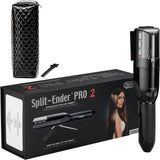
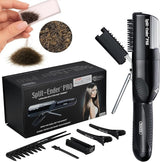
Split Ender does not replace shampoo, conditioner, heat protectant or styling products, and it does not biologically repair the hair fiber. Its role is narrower: trimming split and damaged ends while helping preserve the appearance of overall length.
Use it as its own maintenance step.
Wash, fully dry and detangle, then work in thin sections. See the official Split Ender hair-treatment guide or our How to Use Split Ender Correctly guide before treatment.
Explore Split Ender Pro2 →Hair Product Order: FAQs
1. What order should you use hair products in?
In a conventional routine, the broad order is pre-wash treatment if desired, shampoo, rinse-out conditioner or treatment, leave-in products, appropriate heat protection before heat styling, styling products and optional finishing products. You do not need every category, and product-specific directions can change the sequence.
2. Should a hair mask go before or after conditioner?
It depends on the mask. Many masks are used during the rinse-out phase and may replace regular conditioner for that wash, while other formulas have specific instructions. Follow the manufacturer's directions instead of assuming every mask must be layered with conditioner.
3. What is the shampoo sandwich method?
The shampoo sandwich is a conditioning-shampoo-conditioning approach. A conditioning product is applied to the lengths before cleansing, shampoo is used, often with emphasis on the scalp, and the lengths are conditioned again afterward. It is an optional technique rather than a required way to wash hair.
4. Does leave-in conditioner go before heat protectant?
Often a leave-in is applied before a separate heat-protection step, but there is no universal sequence for every formula. Some leave-ins already provide labeled heat protection. Follow product directions and ensure appropriate thermal protection is in place before heat styling.
Scientific Sources & Further Reading
- American Academy of Dermatology: Tips for Healthy Hair — shampoo placement, conditioning and general hair-care guidance.
- American Academy of Dermatology: Leave-In Conditioner Tips — differences between leave-in and rinse-out conditioners and application guidance.
- Human Hair Friction Review — current review of hair friction and the effects of conditioning, mechanical, thermal and chemical factors.
- Hair Cosmetics: An Overview — review of shampoos, conditioners and cosmetic hair-care mechanisms.
- Physicochemical Aspects of Human Hair — hair structure, surface properties and cosmetic treatment.
- Hair Weathering Review — cumulative physical, chemical and environmental changes to the hair shaft.
- Research on Oil Penetration Into Human Hair — evidence that oils differ in their interactions with and penetration into hair fibers.
Your Routine Doesn't Need More Bottles. It Needs Better Job Descriptions.
Shampoo cleans. Conditioner conditions. Finishing products are optional. Split end trimming is another category entirely.
If bottle number nine cannot explain itself… security will escort it from the shower. 💙💜😂