

Why Does Bleached Hair Feel Stretchy When Wet? The Science Behind the Warning Sign
When wet hair stretches, what is normal elasticity—and what deserves a closer look?
A science-led guide to flexibility, strength, and smarter care after lightening.
You've just lightened your hair. The color looks beautiful. Then wash day arrives, and something feels different: the strands seem softer, more flexible, perhaps even a little too stretchy.
How can hair feel more stretchy and less strong at the same time?
It's a fair question—and no, we're not going to ask you to pull on wet hair until something snaps. That's not a science experiment. That's a very unfortunate Tuesday.

Why Hair Behaves Differently When It's Wet
Hair is not a rigid thread. Its response to bending and pulling changes with its environment, including how much water it contains.
Water acts as a plasticizer within hair fibers: it affects interactions between structural components and can make the fiber more compliant. In everyday language, wet hair can bend and extend differently from dry hair. That change is part of normal hair physics, not a sign that water has repaired damage.
Think about how your hair behaves during ordinary washing and detangling. A modest change in flexibility is expected. A sudden, pronounced change after chemical lightening—especially with breakage—is more meaningful than the fact that wet hair stretches at all.
What Happens Inside Hair When You Lighten It?
Lightening is a chemical process. The goal is to oxidize the natural pigments that give hair its color. But pigment is not the only material exposed to the chemistry.
Bleaching can also affect hair proteins, sulfur-containing bonds, and the cuticle surface. The degree of change varies with the formulation, processing conditions, previous treatments, and the condition of the hair before bleaching. Two heads of equally blonde hair can have very different histories—and different levels of fragility.

Color alone cannot tell you how strong a fiber is. Watch for changes in detangling, snapping, roughness, or overall manageability, particularly if hair has been lightened repeatedly.
How Can Hair Stretch More but Be Less Strong?
Because how far something stretches and how much force it withstands are not the same measurement. Hair scientists describe several different mechanical properties.
| Property | What It Describes |
|---|---|
| Stiffness | How much a fiber resists deformation. |
| Extensibility | How far it can lengthen under a given condition. |
| Tensile strength | The stress a fiber can withstand before failure. |
| Elastic recovery | How well it returns toward its original length after a load is removed. |
A fiber can become easier to extend without becoming better at resisting breakage. Water content and chemical processing influence these properties in different ways, which is why the simple advice to “check if your hair stretches” misses important context.
Resist the urge to conduct a dramatic at-home pull test. Stretching a fragile wet strand until it breaks tells you very little about the full condition of your hair—and may simply damage it further.
More stretch does not necessarily mean more strength.
What Do People Actually Mean by “Gummy Hair”?
“Gummy hair” is a popular descriptive phrase—not a standardized clinical diagnosis or a precise laboratory measurement. People often use it when processed hair feels unusually soft, pliable, or difficult to manage while wet.
The sensation can reflect changes in the fiber's mechanical behavior, but the word gummy alone cannot identify which bonds or structures have changed. The same description may be used for hair with very different processing histories.
More useful clues include new breakage during gentle detangling, severe tangling, a dramatic shift immediately after lightening, or a persistent feeling of fragility. If a chemical service also caused scalp burns or significant irritation, seek appropriate medical advice.
Can You Make Overprocessed Hair Strong Again?
Hair care can make a meaningful difference to how processed hair feels, looks, and behaves. But it's important to separate improved cosmetic performance from complete reversal of chemical changes.
Conditioners can improve lubrication, reduce friction, and help hair feel smoother and easier to detangle. Some specialized treatments may improve certain performance characteristics. None of that proves every oxidized bond or altered structure has been restored to its original state. The visible hair shaft is nonliving material.

Pause additional lightening if your hair seems unusually fragile. Use a conditioner that helps with slip, detangle gently, minimize high heat and unnecessary friction, and ask an experienced stylist to assess whether further processing is sensible.
The No-Stretch Hair Check
You don't need to sacrifice strands to learn something useful about your hair.
- Remember your baseline. How did your hair normally feel when wet before the latest lightening session?
- Notice ordinary handling. Pay attention during gentle washing and detangling; do not pull deliberately to test its limits.
- Look for a pattern. Repeated snapping, unusual tangling, and a sudden change are more informative than one isolated sensation.
- Choose caution over testing. If your hair feels markedly fragile, postpone more bleach and consult a qualified professional.
Observe what happens during normal care. Don't manufacture a breaking point.
What About Porosity?
Does Stretchy Bleached Hair Automatically Mean High Porosity?
No. Porosity concerns how a fiber interacts with and takes up water or other substances; mechanical extensibility concerns how it changes length under force. Bleaching can influence both, but one sensation does not measure the other. Neither a single stretch nor a simple drying-time observation provides a definitive diagnosis of hair porosity.
And What About Split Ends?
A split end is a physically separated section of the hair shaft. Conditioning can temporarily improve its feel or appearance, but it cannot permanently fuse that split back together. Trimming removes the damaged end.
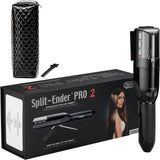
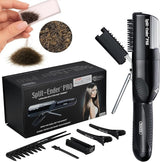
For routine end maintenance, the Split Ender PRO2 is designed to trim hair ends. It should be used only as directed, on completely dry, detangled hair. It is not a treatment for internal bond damage, severe bleach-related fragility, or hair loss.
If your hair is snapping easily or seems severely compromised, seek a professional assessment before using additional styling or trimming devices.
Frequently Asked Questions
Is it normal for bleached hair to stretch when wet?
Some increased flexibility in wet hair is normal. A marked new change after bleaching, especially with breakage, can be a reason to handle it more gently and seek professional advice.
Does stretchy hair always mean severe bleach damage?
No. Stretch alone cannot establish damage severity. Water content, processing history, and other mechanical properties matter.
Why does bleached hair sometimes feel gummy?
“Gummy” describes a soft, unusually pliable wet-hair sensation. It is not a standardized diagnosis, and it does not identify one specific chemical change.
Should I do a wet-hair elasticity test at home?
Avoid pulling wet hair to its breaking point. Instead, notice how it behaves during ordinary gentle care and consult a professional if breakage or fragility is concerning.
Can conditioner fix gummy hair?
Conditioner can improve slip, softness, and manageability. It cannot be assumed to reverse every structural change caused by bleaching.
Should I bleach my hair again if it feels stretchy?
If the change is pronounced or your hair is breaking, postpone further lightening until a qualified stylist has evaluated its condition.
Scientific Sources & Further Reading
- The Physical and Chemical Disruption of Human Hair After Bleaching.
- Effect of Equilibrium pH on Bleach-Damaged Human Hair Fibers.
- Comparing Hair Tensile Testing in the Wet and Dry State.
- Porosity and Resistance of Textured Hair.
- Effects of Excessive Bleaching on Hair.
Educational content only. Hair-fiber research informs these explanations; individual hair conditions require individual assessment.