

Why Does Your Hair Get Static in Winter? 7 Ways to Control Flyaways
Hair gets static in winter because friction transfers electrical charge between your hair and materials such as hats, scarves, and brushes, while dry air allows that charge to linger. Strands carrying similar charges repel one another, producing the familiar halo of flyaways. To control winter hair static, condition the hair surface, reduce unnecessary rubbing, detangle gently, and address excessively dry indoor air. Static is usually temporary: it is not, by itself, proof that your hair is damaged. The best approach is not to flatten every strand with layers of product, but to interrupt the conditions that make static noticeable. Here is what the science says—and seven realistic ways to get your hair to cooperate before you leave the house.
Why does hair get static in winter?
Static electricity builds when two surfaces touch and separate. This process, called triboelectric charging, can happen when hair rubs against a wool hat, sweater, brush, or even neighboring strands. Depending on the materials involved, electrons transfer and the surfaces acquire electrical charge. Hair strands with like charges repel each other; suddenly, your hairstyle has its own weather system.
Winter makes this effect easier to notice. Indoor heating often lowers relative humidity, and drier conditions can allow charges to persist rather than dissipate quickly. This does not mean cold air magically electrifies hair; the important combination is contact, separation, and environmental conditions. Researchers have shown that triboelectric behavior depends on surface chemistry and surrounding moisture, rather than on one material alone [1].

For the broader effects of temperature and moisture, see our guide to how weather affects hair. Static is one specific effect—not a catch-all explanation for every winter hair complaint.
Is static hair the same as frizz or hair damage?
No. Static describes electrical repulsion that makes strands stand apart. Frizz is a visible pattern of strands that do not align smoothly; humidity, styling history, texture, and damage can all influence it. Breakage means the hair fiber has physically fractured. A split end is a structural separation at the tip, not an electrical charge.
| What you see | Likely explanation | Best first response |
|---|---|---|
| Flyaways after removing a hat | Temporary static charge | Reduce friction; lightly condition |
| Uneven texture in humid or dry weather | Frizz from several possible causes | Adjust routine for texture and conditions |
| Short snapped strands or visibly split tips | Mechanical or chemical damage | Reduce damage sources; trim damaged ends |
Hair can experience more than one problem at once. For example, repeated aggressive brushing to tame flyaways can add friction to an already weathered cuticle. The American Academy of Dermatology recommends gentle hair care and minimizing practices that contribute to breakage [2].

If ends keep catching on one another, our explanation of why hair ends tangle explores another issue that static alone cannot explain.
Which products and materials help control static?
Conditioners can help by coating and lubricating the hair surface, improving slip and reducing friction during grooming. Many conditioning formulas contain positively charged ingredients that interact with the hair surface. Their performance depends on the formula, amount used, and hair condition—not on a single miracle ingredient. A review of hair-conditioning science discusses how deposited conditioning materials influence combing and fiber interactions [3].
A leave-in conditioner is a practical option when flyaways are persistent. The American Academy of Dermatology notes that leave-in conditioner can help with static and flyaway hair [4]. Apply sparingly to lengths and ends, following the label. Fine hair may prefer a lightweight spray; dense or coily hair may benefit from a richer texture. More product is not automatically more control.
Fabric and brush choices also matter. Smooth linings may reduce snagging, while some fabric-hair combinations create more noticeable charge than others. There is no universally “static-proof” brush: technique, material pairing, and humidity all influence the result. A brush marketed as anti-static cannot compensate for forceful detangling.
How can you prevent static hair in seven practical steps?
Use this simple routine to address the most common triggers without turning your bathroom into a chemistry laboratory.
- Condition after shampooing. Focus on lengths and ends as appropriate for your hair type, then rinse as directed.
- Add a little leave-in conditioner. Start small, spread evenly, and add more only if needed. Keep heavy formulas away from roots that flatten easily.
- Detangle gently. Work from the ends upward, using an appropriate comb or brush and avoiding repeated hard strokes.
- Reduce fabric friction. Try a smoother hat lining or tuck hair away from rough coat collars and scarves.
- Be thoughtful about indoor humidity. If your home is unusually dry, a properly maintained humidifier may help. Avoid excessive humidity and follow the device's cleaning instructions.
- Limit unnecessary heat. Use the lowest effective styling temperature and avoid repeated passes that can contribute to wear.
- Use a light finishing touch. Smooth a small amount of suitable product over persistent flyaways instead of repeatedly brushing them into submission.

For context on protecting the outer hair surface, explore our hair cuticle guide. Consistent gentle handling generally matters more than any single last-minute fix.
When do flyaways signal actual breakage or split ends?
Look at the strands, not just the silhouette. Static flyaways may settle when humidity or conditioning changes. Broken strands remain shorter; split ends show visible branching or fraying at the tips. A strand can be static-prone and damaged, but treating one does not automatically solve the other.
Conditioning products can temporarily improve the look and feel of rough ends, yet they do not permanently rejoin a physically split fiber. If you see persistent splitting, trimming the affected tips is a different task from managing electrical flyaways. Learn more about whether split ends can be repaired without cutting.
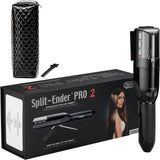
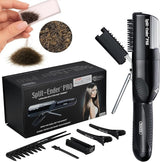
For people maintaining longer styles, tools such as the Split Ender Pro2 or Split Ender Mini2 are designed for trimming hair ends—not removing static charge. Keeping that distinction clear prevents an everyday winter annoyance from becoming an excuse for unnecessary treatments.
The bottom line: winter static is a charge-and-friction problem. Start with conditioning, gentler contact, and sensible indoor conditions; reserve trimming for genuinely damaged ends. Your hair does not need to win a battle against your sweater every morning.
Frequently Asked Questions
Can static electricity permanently damage your hair?
Static electricity itself does not necessarily cause permanent hair damage. However, the brushing, friction, and repeated handling associated with static-prone hair can contribute to mechanical wear. Persistent split ends or broken strands require different care from temporary static flyaways.
Does leave-in conditioner help with static hair?
Yes. A leave-in conditioner can help reduce static by conditioning the hair surface and improving manageability. Apply a small amount according to the product instructions, concentrating on areas prone to flyaways. Fine hair may need a lighter formula or less product to avoid buildup.
Can a humidifier help reduce winter hair static?
A humidifier may help when indoor air is unusually dry because moisture in the environment can reduce the persistence of electrical charges. It is not a guaranteed fix for every hair type. Maintain indoor humidity at a comfortable, appropriate level and clean the humidifier regularly.
Are plastic brushes worse for static hair?
Some plastic brushes can contribute to static through friction, although results depend on the brush material, hair condition, and surrounding humidity. Gentle detangling and an appropriate conditioning routine often matter more than replacing every brush. Avoid aggressive brushing simply to flatten flyaways.
Why does my hair get static when I remove a winter hat?
Removing a winter hat creates contact and separation between the fabric and your hair, which can transfer electrical charge. In dry winter air, that charge can persist and make strands repel each other. A smoother lining, gentler removal, and properly conditioned hair may help reduce the effect.