



A Split Ender Pro Hair Science Editorial
Why Does Hair Tie Itself Into Tiny Knots? The Surprising Science of Fairy Knots
One strand. One tiny knot. Discover how hair geometry, movement, and friction can create a surprisingly stubborn little mystery.
Your Hair Has No Fingers. So Who Tied the Knot?
Your hair has no fingers. No hands. No tiny knot-tying equipment.
So how on earth does one strand manage to tie itself into a knot?
You might discover one while running your fingers through your hair: a tiny bump near the end of a strand, something that catches between your fingertips, something so small you can barely see it.
And then comes the question: Is that an actual knot? On one single hair?
Surprisingly, yes.
These miniature knots are commonly called fairy knots or single-strand knots. In dermatology, the phenomenon is known as trichonodosis.
Despite the magical nickname, there is no fairy involved. The explanation is much more interesting: hair geometry, movement, friction, and the mechanical behavior of an individual fiber.
Yes. A single hair strand can form a loop and become knotted without involving another strand. Curvature and movement may create opportunities for the strand to cross itself, while friction can help a knot resist loosening. Fairy knots are not automatically split ends, and one knot does not automatically mean unhealthy hair.
What Exactly Is a Fairy Knot?
Imagine taking one piece of thread, forming a small loop, and passing part of that same thread through it. Now imagine that thread is a human hair.
A fairy knot is a tiny knot formed along a single hair shaft. It can appear near the end of a strand, although its exact position varies.
Unlike an ordinary tangle, which usually involves multiple hairs becoming intertwined, a single-strand knot involves one fiber folding or looping around itself.

A hair fiber is flexible enough to bend and curve, but its movement is influenced by its shape, surface properties, and environment. A loop alone is not necessarily a knot; the fiber must cross and become mechanically trapped in a configuration that resists simply straightening out.
A fairy knot may feel like a tiny bead or bump along one strand. Sometimes the loop is visible; other times, you notice it only when your fingers catch. Not every bump is a knot—residue and other hair-shaft irregularities can feel different or similar.
THE TAKEAWAY: A fairy knot is a real knot in one strand, not merely a miniature multi-strand tangle.
Why Are Fairy Knots Often Associated With Curly and Coily Hair?
Here is where things become beautifully mathematical.
Some hair fibers are relatively straight. Others form waves, spirals, or tight coils. Those shapes influence how individual strands move and interact with themselves.

A tightly curved fiber naturally contains more bends and loops than a relatively straight fiber of comparable length. That geometry can create opportunities for one section of a strand to cross another section of the same strand. Everyday movement may bring those sections together.
This helps explain why single-strand knots are often discussed in connection with tightly curled and coily hair. However, a plausible mechanical explanation does not prove that every knot forms through one identical sequence. Hair curvature, length, handling, and fiber properties may all play a role.
Knots may be more noticeable where hair coils back on itself or where ends experience repeated movement. That does not mean the texture is defective. Curvature is a normal structural characteristic of hair.
THE TAKEAWAY: Hair shape can create opportunities for knots, but curly hair is not inherently damaged hair.
How Does a Tiny Loop Become a Stubborn Knot?
Forming a loop is one thing. Keeping that loop in place is another.
Enter friction: the force that resists sliding when surfaces move against each other.
As a strand bends and crosses itself, sections of its surface may touch. Friction can resist movement at those contact points. If the strand is pulled or manipulated, some knot configurations may tighten rather than release.
Researchers have even investigated hair-on-hair friction using an experimental method involving a knot tied in an individual hair fiber. This is an ingenious way to study friction—not direct proof of how every natural fairy knot forms.
Yes, scientists have actually used knots to study hair friction. Somewhere, knot-tying became part of the laboratory job description.
Repeated rubbing, aggressive brushing, or rough handling may increase mechanical stress. Friction itself is a normal physical property; the concern is repeated force that contributes to snagging or breakage.
THE TAKEAWAY: Friction helps explain why a tiny knot may resist sliding apart, particularly when tension is applied.
Are Fairy Knots a Sign That Your Hair Is Breaking?
Not necessarily. A knot can exist on an otherwise intact strand. However, a tightly formed knot may become a location where mechanical stress concentrates.
Hair fibers respond to pulling, bending, rubbing, and repeated manipulation. A knot changes the geometry of the fiber. If a brush or comb catches on it, force may concentrate in a small area.
Clinical descriptions of trichonodosis have included breakage associated with knotted regions. That does not establish that every fairy knot will eventually break.
Pay attention if knots repeatedly catch during detangling, if you notice broken strands in the same areas, or if hair becomes increasingly difficult to manage. Avoid testing the knot by pulling on it. Your hair is not applying for a job as a climbing rope.
THE TAKEAWAY: A knot is not automatically damage, but forceful handling of a knotted strand can increase breakage risk.
Can You Prevent Fairy Knots or Make Them Disappear?
No scientifically established routine guarantees that fairy knots will never form. And no conditioner can promise to magically untie every knot already present.
But reducing unnecessary friction and mechanical stress is a sensible approach to caring for hair that snags easily.

Conditioning products can improve lubrication, manageability, and the way hair fibers slide against each other. This may make gentle detangling easier. Improving slip, however, is different from reversing a physical knot or repairing a broken fiber.
A Practical Approach
- Detangle gently, using an approach appropriate for your texture and working in manageable sections.
- Use a suitable conditioner or detangling product to improve slip.
- Avoid repeatedly pulling at a stubborn single-strand knot.
- Reduce unnecessary friction from rough handling.
- Seek professional guidance if knots are persistent, accompanied by substantial breakage, or difficult to distinguish from other hair-shaft changes.
A very tight knot may sometimes require careful removal of the affected portion rather than forceful untangling.
THE TAKEAWAY: The goal is not perfect, knot-free hair. It is to reduce avoidable stress and preserve the hair you have.
How to Investigate a Tiny Hair Knot Without Damaging It
Notice the Location
Is the bump near the end of one strand, or does it seem to involve several hairs?
Look Without Pulling
Observe whether the strand appears to form a small loop or knot. Do not stretch it aggressively.
Consider the Pattern
Is it occasional, or do you notice repeated knots together with snagging and breakage?
Choose Gentle Handling
Avoid yanking or dragging a comb repeatedly through the same resistant spot.
Observe the knot. Don't turn the investigation into the cause of the damage.
Do Fairy Knots Mean Your Hair Is Too Dry?
Not automatically. Dryness, friction, and manageability can influence how hair behaves during handling, but a fairy knot is a physical configuration of a strand. Its presence alone does not measure moisture, porosity, or overall hair health.
The useful question is whether knots are contributing to snagging, discomfort during grooming, or breakage.
Fairy Knots vs. Split Ends: Different Problems, Different Solutions
These findings can all occur in hair, but they are not interchangeable.
| Hair Finding | What It Means | Why It Matters |
|---|---|---|
| Fairy knot | One strand forms a knot along its length. | May catch or tighten during grooming. |
| Ordinary tangle | Two or more strands become intertwined. | Can create resistance during detangling. |
| Split end | The end of a fiber has divided or frayed. | Physical splitting cannot be permanently fused by conditioner. |
| Hair breakage | A hair fiber fractures or snaps. | May reflect mechanical or chemical stress, among other factors. |
Conditioning may improve the appearance and manageability of damaged hair, but it cannot permanently rejoin a physically split end.
End Maintenance Is Not Knot Removal
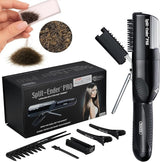
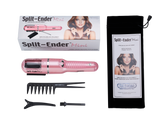
The Split Ender PRO2 is designed for trimming protruding damaged ends as part of a hair-length maintenance routine. It should not be described as a device that automatically unties fairy knots or repairs internal hair-fiber damage.
Follow the manufacturer's instructions, including using it only on fully dry, detangled hair. Managing single-strand knots and maintaining damaged ends are related concerns, but they are not the same task.
Six Questions Worth Asking
1. Are fairy knots real?
Yes. Single-strand knots are recognized in dermatology as trichonodosis. They involve a hair fiber forming a knot along its own length.
2. Are fairy knots only found in type 4 hair?
No. They are frequently discussed in connection with tightly curled and coily hair, but they are not exclusive to one texture.
3. Can a fairy knot cause breakage?
A knot can become a vulnerable point if it catches during grooming or experiences excessive tension. Not every knot results in breakage.
4. Should I pull a fairy knot apart?
Avoid forceful pulling. Gentle handling is preferable; a tight knot may need careful assessment rather than repeated tugging.
5. Does conditioner remove fairy knots?
Conditioner may improve slip and make hair easier to handle, but it does not guarantee that an existing tight knot will untie.
6. Are fairy knots the same as split ends?
No. A fairy knot is a knotted strand. A split end is a fiber whose end has physically divided.
Scientific Sources & Further Reading
The clinical literature includes case reports and observational descriptions, not definitive large-scale evidence for every proposed knot-formation mechanism. The friction studies below help explain relevant mechanics but do not directly reproduce every naturally occurring fairy knot.
- Trichonodosis: A Case Report and Literature Review — Clinical discussion of single-strand hair knots.
- Trichonodosis — Dermatological description of knotted hair shafts.
- Hair-on-hair static friction coefficient can be determined by tying a knot — Experimental hair-fiber friction study.
- The Biomechanics of Splitting Hairs — Mechanical behavior of splitting hair fibers.
- Understanding and Controlling the Friction of Human Hair — Hair friction and fiber interactions.