

Hair science · Natural texture · Humidity
Why Does Humidity Make Wavy Hair Frizzy? The Science of Your Natural Waves
Humidity makes wavy hair frizzy because hair absorbs water vapor from the air, changing temporary hydrogen-bond interactions that help maintain its shape. As individual strands respond differently, natural waves can expand, separate, or lose definition.
If your soft, 70s-inspired waves look effortless indoors but develop a personality of their own outside, your hair isn't necessarily damaged. It's responding to the environment. Understanding how moisture affects the hair fiber—and how to encourage strands to stay grouped—can help you preserve definition without sacrificing natural movement.
1. Why Does Humidity Change the Shape of Wavy Hair?
Hair contains keratin proteins held together by several kinds of chemical interactions. Hydrogen bonds contribute to the temporary shapes hair takes after washing, drying, or styling. Unlike the stronger disulfide bonds involved in longer-lasting aspects of hair structure, these interactions respond readily to water.
When humidity rises, hair takes up moisture from the surrounding air. That moisture changes interactions within the fiber, allowing temporary styling patterns to relax or shift. A 2024 review in the International Journal of Cosmetic Science discusses an estimated ratio of approximately nine hydrogen bonds per disulfide bond in keratin fibers, illustrating the importance of water-sensitive interactions. Read the review.

Imagine setting loose boho waves indoors. Outside, atmospheric moisture may alter individual strands' curvature and alignment. Some waves become more pronounced; others separate or fall flatter. Research on weak hydrogen bonds and temporary shape changes in curly hair supports the underlying mechanism, although responses vary among people and hair types. See the research.
Humidity does not automatically mean permanent damage. It changes how your hair behaves under current conditions, not your genetically influenced hair type.
2. Why Does Some Wavy Hair Frizz More Than Others?
Two people can walk into the same humid afternoon and get entirely different results. Hair structure, chemical treatment, accumulated wear, density, and styling history all matter.
Porosity and treatment history
Porosity describes how readily hair takes up and releases moisture, but a single porosity label cannot predict every frizz outcome. Bleaching, chemical treatments, and weathering can alter the fiber's moisture response. A 2022 study of hair moisture sorption and hysteresis examined differences associated with cosmetic processing. Read the study.
Wave pattern and strand alignment
Natural waves rarely bend identically from root to tip. When individual fibers respond differently to moisture, neighboring strands may stop moving together. That separation makes frizz more noticeable. Fine hair may be weighed down by rich formulas; denser hair may benefit from more conditioning or hold.
Mechanical wear
Rough towel drying, forceful detangling, and repeated brushing can contribute to wear. The American Academy of Dermatology recommends gentle handling and conditioning to limit unnecessary damage. For technique-specific guidance, see how to prevent hair breakage while brushing.
3. How Do Humidity, Dry Air, and Hair Damage Compare?
Frizz is an appearance, not a diagnosis. A wave that expands outdoors is not the same as a physically split hair fiber. The distinction helps you choose a response that fits the problem.
| Condition | What happens | What you notice | Helpful response |
|---|---|---|---|
| High humidity | Hair absorbs atmospheric moisture | Expanded waves, flyaways, less definition | Light conditioning and flexible hold |
| Dry air | Hair exchanges moisture with drier surroundings | Static, rough feel, flyaways | Conditioning and gentle handling |
| Physical damage | Surface or fiber structure becomes worn | Snagging, broken strands, split ends | Prevent further wear; trim damaged ends |

A laboratory study in the Journal of Cosmetic Science reported that hair water uptake increased approximately linearly as relative humidity rose from 40% to 85% under its test conditions; elasticity also changed over part of that range. View the study. This helps explain why weather affects styling without proving that humid days themselves cause lasting damage.
For actual fiber deterioration, explore the science of split ends.
4. How Can You Protect Natural Waves in Humid Weather?
A humidity-friendly routine encourages strands to stay grouped while preserving the relaxed movement of boho waves. Try these six steps:
- Cleanse for your scalp. Shampoo gently, concentrating on the scalp rather than scrubbing the lengths. Adjust frequency to oiliness and buildup.
- Condition the lengths. Focus on dry or tangle-prone areas, then detangle gently.
- Use a lightweight leave-in. Apply a little to damp mid-lengths and ends. The American Academy of Dermatology notes that leave-in conditioner can help reduce frizz and improve manageability.
- Add flexible hold. A light mousse or gel can help wave groups stay together. Start sparingly, especially on fine hair.
- Scrunch without rough rubbing. Encourage the wave pattern with your hands. Blot excess water using a soft T-shirt or microfiber towel.
- Dry gently. Air-dry when practical, or diffuse with low heat and airflow. Avoid repeatedly separating waves as they dry.

Some styling formulas use conditioning or film-forming ingredients to limit moisture-related changes, but results depend on formulation, application, hair type, and weather. No product guarantees completely frizz-free hair. For tailored care, see our routine by hair type.
5. Can You Reduce Frizz Without Losing Your Natural Wave Pattern?
Yes—but aim for manageable frizz, not perfectly identical strands. Soft, 70s-inspired waves are supposed to move. Refresh flattened sections with lightly damp hands and a little leave-in conditioner; avoid repeatedly brushing dry waves into separated strands. A loose half-up style can keep face-framing pieces comfortable on sticky days.
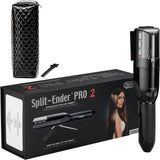
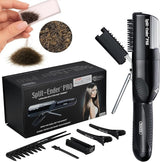
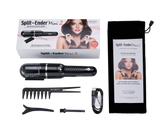
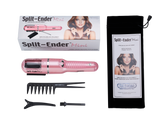
Frizz and split ends need different solutions. Products may temporarily smooth rough-looking ends, but they cannot permanently reconnect a physically split fiber. The Split Ender Pro2 or Split Ender Mini2 can be considered as part of an appropriate trimming routine—not as humidity treatments or ways to change natural wave patterns.
For more on everyday practices, explore can healthy hair habits cause damage? The best boho waves are the ones you can maintain comfortably, even when the weather has other plans.
Frequently Asked Questions
Does humidity make naturally wavy hair curlier?
Sometimes. Moisture can change temporary bonds and alter the shape of individual strands, making certain sections appear curlier or more pronounced. Other sections may lose definition instead. The result depends on your natural wave pattern, styling method, fiber condition, and how your hair responds to atmospheric moisture.
Is frizzy hair a sign of damage?
Not necessarily. Frizz can occur in healthy hair when humidity, static, or strand alignment changes. However, persistent roughness, snagging, broken strands, and visibly split ends may indicate physical wear. Look for those signs separately rather than assuming every flyaway requires a repair treatment.
Can hair oil stop humidity-related frizz?
Hair oil may temporarily improve smoothness and reduce the appearance of flyaways, but it cannot make hair completely resistant to atmospheric moisture. Some hair types become weighed down easily. Start with a small amount on the mid-lengths or ends and evaluate the result before applying more.
Should you brush wavy hair when it's dry?
Dry brushing can separate established wave groups and make hair appear fluffier. If that isn't the finish you want, detangle gently while the hair is conditioned and appropriately damp. The best approach depends on your texture, tangling, and hair condition. Avoid forceful brushing in any state.
Does trimming split ends make wavy hair less frizzy?
Trimming damaged ends can improve the appearance and manageability of affected lengths, but it won't stop humidity from changing the behavior of healthy strands. Split ends are a structural issue, while humidity-related frizz primarily involves styling and moisture response. They require different approaches.
References
- Chemical bonds and hair behaviour—A review. International Journal of Cosmetic Science (2024).
- Weak Hydrogen Bonds in Temporary Shape Changes of Curly Human Hair Fibers. Research indexed in PubMed.
- Learning from hair moisture sorption and hysteresis. International Journal of Cosmetic Science (2022).
- Evaluation of hair humidity resistance/moisturization from hair elasticity. Journal of Cosmetic Science.
- Tips for healthy hair. American Academy of Dermatology.
- Leave-in conditioner tips. American Academy of Dermatology.