

Why Is There So Much Hair in My Brush? 7 Clues Worth Noticing
You cleaned your hairbrush yesterday. So why does it look full again?
There it is: a little collection of hair wrapped around the bristles. Maybe it's a few strands. Maybe it's noticeably more than you're used to seeing. Suddenly, an ordinary morning feels like a hair investigation.
Is your hair breaking? Are you shedding more than usual? Has something changed? Before blaming your brush—or ordering every hair-growth product on the internet—consider what the evidence can and cannot tell you.
Your hairbrush can reveal useful clues. It cannot diagnose the cause of hair loss. Here are seven observations worth making, without panic or guesswork.
Why is there so much hair in my brush?
Finding hair in your brush is often part of the normal hair cycle. The American Academy of Dermatology (AAD) says shedding roughly 50–100 hairs a day is common. Some detached hairs remain among neighboring strands until brushing, combing or washing releases them.
What you see may also reflect your grooming schedule, hair texture, breakage or a genuine change in shedding. The more useful question is: “Is this different from my usual pattern—and am I noticing anything else?”

When Did You Last Brush Your Hair?
One day of brushing and three days without brushing can look very different.
Imagine two mornings. On Monday, you brush after brushing the night before. On Thursday, you brush after wearing your hair up for several days. Thursday's brush may collect more strands even if your underlying shedding rate has not changed.
Hair follicles move through growth and resting phases. Hairs ready to detach can remain caught among other strands, especially depending on hair texture, length and styling habits. A single brushful is therefore not a reliable measurement of daily shedding or a diagnostic test.
What to notice: Did you skip brushing sessions, wear your hair up or delay wash day? Consider the timing before reacting to the amount.
Is This More Hair Than You Usually See?
Your baseline matters more than one dramatic-looking brushful.
Everyone has a different grooming routine. A one-time increase in visible strands may mean very little. A noticeable, persistent change from your own usual pattern deserves more attention, particularly if your hair looks thinner.
The AAD distinguishes ordinary shedding from excessive shedding and hair loss. Increased shedding can have multiple causes, and the number of strands in a brush cannot reveal which one is responsible.
What to notice: Has the change persisted over several weeks? Are you also seeing changes in your hair's appearance? Note the timeline without compulsively counting every strand.
Are You Finding Full-Length Hairs or Short Pieces?
Not everything caught in a hairbrush has the same story.
Hair shedding happens when a hair is released from its follicle. Hair breakage happens when the shaft fractures along its length. The two processes are different—and they can occur together.
Repeated friction, chemical processing and heat can weaken hair fibers and contribute to breakage. Short fragments may be consistent with breakage, but naturally short hairs can shed too. Neither length nor the appearance of an end proves a diagnosis.

What to notice: Are there many uneven fragments? Do the lengths feel rough or fragile? Have you recently changed your heat styling, color processing or detangling routine?
What Happened Two or Three Months Ago?
Sometimes the most useful clue isn't in the bathroom. It's on your calendar.
Major illness, high fever, surgery, childbirth, significant weight loss or intense stress can precede a period of increased shedding in some people. The change may not appear until months later, making the connection easy to overlook.
One possible explanation is telogen effluvium, a form of excessive shedding that can emerge around two to three months after a triggering event. Not every increase in shedding is telogen effluvium, and a trigger alone cannot confirm it.
What to notice: Think back over recent months and share relevant illnesses, procedures or major changes with a dermatologist if shedding is concerning.
Does Your Hair Actually Look Thinner?
The brush is one observation. The appearance of your scalp is another.
A widening part, reduced ponytail fullness, a changing hairline or areas of reduced coverage may deserve evaluation. Some hair-loss conditions progress gradually, even without an unusually dramatic brushful.
Shedding and hair loss are not mutually exclusive. Different conditions can affect hair density, and more than one process may be present at once. A clinician evaluates the pattern and other findings rather than relying on a count of shed hairs.

What to notice: Has your part widened over time? Does your scalp appear more visible than before? If so, arrange a dermatological assessment.
Is Your Scalp Sending Other Signals?
Don't focus so much on the brush that you overlook the scalp.
Persistent itching, pain, burning, redness, pronounced scaling or sores may accompany scalp conditions. Some of those conditions can be associated with hair loss.
Different scalp conditions can cause overlapping symptoms. A new product or recent chemical service may be relevant to the history, but symptoms alone cannot establish the cause. Examination may be needed.
What to notice: If shedding or thinning occurs with discomfort, inflammation or rapidly changing scalp symptoms, seek medical advice promptly.
When Should You See a Dermatologist?
Some questions need more than another internet search.
Consider professional evaluation for persistent increased shedding, a widening part, progressive thinning, new bald patches, rapid changes in hair coverage or hair loss accompanied by scalp symptoms.
Dermatologists can review your history, examine your hair and scalp, and order tests when appropriate. They can help distinguish excessive shedding, hair-shaft breakage and different causes of hair loss. Some conditions benefit from timely assessment.
What to notice: Bring a simple timeline: when the change started, recent illnesses or major stressors, relevant medications, hair treatments and scalp symptoms.
The Hairbrush Clue File
| What you notice | What it might suggest | What to do next |
|---|---|---|
| More strands after days without brushing | Previously detached hairs may have accumulated | Consider your grooming schedule |
| More hair than your usual pattern | A possible change in shedding | Notice whether the change persists |
| Many short, uneven fragments | Possible shaft breakage | Review heat, chemicals and friction |
| Shedding months after illness or major stress | A possible delayed shedding response | Discuss the timeline with a clinician |
| Widening part or reduced density | Possible hair loss | Arrange dermatological evaluation |
| Scalp pain, redness or marked scaling | A possible scalp condition | Seek medical assessment |
| Rapid or unexplained changes | Several potential causes | Get professional guidance |
These observations are not diagnostic tests. Different causes can overlap.
50–100 Hairs a Day: What Does That Number Really Mean?
The AAD describes shedding roughly 50–100 hairs per day as typical. But that doesn't mean you should find exactly 50 hairs in your brush—or that finding 101 means you have a medical condition.
What you see in one session depends partly on when and how you groom your hair. Your own pattern and accompanying changes are more informative than treating a single number as a diagnosis.
What About Split Ends and Breakage?
There is a difference between maintaining damaged hair ends and addressing hair loss. Split ends involve fraying or separation of the hair shaft. Conditioning can improve feel and reduce friction, but it cannot permanently fuse an already split fiber back into its original structure.
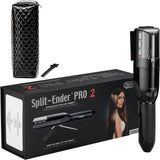
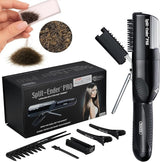
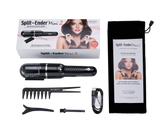
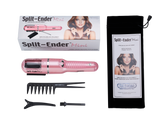
Trimming removes damaged ends; it doesn't biologically repair them. For targeted end maintenance, the Split Ender PRO2 is designed to trim hair ends when used according to its instructions. It does not treat follicle-related hair loss, stop excessive shedding or stimulate new hair growth.
Hair-shaft maintenance and medical hair-loss care are different conversations.
Five Questions About Hair in Your Brush
1. Is it normal to find hair in my brush every day?
Yes. Daily shedding is expected. The amount collected depends partly on your grooming schedule and how detached hairs are released.
2. Do short hairs mean my hair is breaking?
Not necessarily. Short fragments may reflect breakage, but naturally short hairs can shed too. Length alone cannot determine the cause.
3. Can stress cause more hair to appear in my brush?
Significant physical or emotional stress can contribute to excessive shedding in some people, sometimes months after the event. Other causes are possible.
4. Should I stop brushing if I'm losing hair?
Avoiding all brushing is generally unnecessary. Use gentle grooming methods suited to your hair texture. If shedding or thinning concerns you, seek professional advice.
5. When should I see a dermatologist?
Seek evaluation for persistent increased shedding, visible thinning, bald patches, rapid changes or accompanying scalp symptoms.
Science & Dermatology Sources
- American Academy of Dermatology. Do You Have Hair Loss or Hair Shedding? — Normal shedding, excessive shedding and potential triggers.
- American Academy of Dermatology. Hair Loss: Signs and Symptoms. — Visible signs and changes that deserve attention.
- American Academy of Dermatology. How to Stop Damaging Your Hair. — Avoidable hair-shaft damage.
- American Academy of Dermatology. Hair Styling Without Damage. — Styling and mechanical stress.
- NCBI Bookshelf. Telogen Effluvium. — Triggers, typical timing and clinical assessment.
Educational content only. This article is not a substitute for professional medical diagnosis or treatment. Consult a qualified healthcare professional for concerning shedding, thinning or scalp symptoms.