

Wet Hair Is Back on the Runway—But Is Hair Actually More Fragile When It’s Wet?
Wet-look hair is having a high-fashion moment again. But what actually changes inside a hair fiber when water enters it, and when brushing, friction and tension join in?
The internet loves dramatic rules: never brush wet hair, never sleep with wet hair, air-drying is always healthier. Hair science is more interested in mechanics.
What Happens to Hair When It Gets Wet?
Hair is not an impermeable plastic thread. Water enters the fiber, the strand swells, and interactions within its keratin-rich structure shift. That is not automatically damage; wetting is a normal part of washing. The key distinction is between a temporary wet state and permanent structural deterioration.
At Calvin Klein’s Fall 2026 show, sleek styling with visible rake marks helped popularize what beauty coverage called “Everything Shower” hair. But runway hair that looks wet often relies on styling products.

Does hair actually swell?
Yes, measurably, though not like a microscopic pool noodle. The change is restrained and happens mostly across the fiber’s diameter rather than as lengthening.

Why does wet hair feel softer and stretchier?
Water acts as a plasticizing influence, so wet hair becomes softer, less stiff and more extensible under force. It does not “break all the hydrogen bonds in your hair”; moisture changes the contribution of reversible molecular interactions. The strand is simply behaving differently.
Is Wet Hair Actually Weaker Than Dry Hair?
“Weaker” hides several properties in one word. Researchers measure stiffness, elastic modulus, extension, stress, strain and eventual failure, and a wet fiber can be less rigid and more extensible without every measurement changing the same way. The useful answer: wet hair responds differently to mechanical loading.
Stretching is neither good nor bad by itself. Some deformation is recoverable, but excessive loading can push a fiber toward irreversible change or failure, especially from a chemically compromised start. Stretching your hair as far as possible is not a useful home test. Your strand does not need an audition.
What Happens When You Add Brushing or Combing?
A comb moving through aligned fibers is one event; a comb meeting a resistant knot is another, transferring extra force into localized areas. Wet-combing research shows why a universal never brush wet hair rule is too crude: hair condition, bleaching history, conditioning, resistance and grooming forces all change the result.

Why does conditioner matter so much?
Hydration and lubrication are not the same thing. Experimental work on wet combing has shown that conditioning can reduce problematic grooming loads under specific test conditions. That does not make hair unbreakable, and it is a different job from “rebuilding” damaged structures, as we explain in Can Damaged Hair Really Be Rebuilt?
It is also why some people detangle curly hair wet on purpose: coily fibers can wrap and shrink in ways that make dry detangling impractical. The goal is controlling resistance and unnecessary force.
Is Wet Hair More Vulnerable If It’s Already Bleached or Weathered?
Not every strand enters the shower with the same history. Bleaching can alter the fiber, and weathering builds up through heat, friction, washing, UV and grooming, so processed or old sections start from a different surface and mechanical condition. See 4 Types of Hair Damage: Heat, Chemical, Mechanical & Split Ends .
| Hair condition | What water changes | What mechanical handling adds |
|---|---|---|
| Relatively unprocessed hair | Temporary swelling and altered wet-state mechanics | Stretching, friction, bending and grooming loads |
| Bleached or chemically treated hair | The wet-state change occurs on a fiber with a different processing history | Additional loading acts on that existing structural condition |
| Older, weathered ends | Water changes the mechanics of the oldest section of the strand | Repeated grooming becomes another event in years of accumulated wear |
A damaged end should not be blamed on the last shampoo alone: your roots are newer material, while your ends have a much longer résumé. See Hair Aging vs. Hair Damage: What’s the Difference? for the full distinction.
How Can You Handle Wet Hair More Gently?
Is air-drying always healthier than blow-drying?
No drying method deserves an automatic halo. In one repeated-drying laboratory study, surface damage increased with dryer temperature, yet only the naturally dried group showed damage to the cell membrane complex, and a moving dryer at 15 cm produced less observed overall damage than natural drying under the study conditions. Fascinating, but not proof that blow-drying is healthier.
Can sleeping with wet hair cause breakage?
It does not guarantee breakage, though sleep adds hours of movement and friction to a wet fiber. Avoid unnecessary roughness; do not fear one damp bedtime.
Where Does Split Ender Fit Into Wet-Hair Maintenance?
Not inside the water-swelling story. Split Ender does not prevent wet-state swelling, make aggressive brushing safe, reverse bleach history or biologically rebuild a weathered fiber.
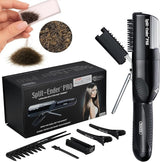
Conditioner can make a weathered end feel better, but a physically split portion has to be removed to remove the split (more in Can You Repair Split Ends Without Cutting Them? ). That is where Split Ender comes in: split or damaged ends that require physical trimming.
Conditioning helps manage lubrication and combability.
Gentler grooming helps reduce unnecessary mechanical stress.
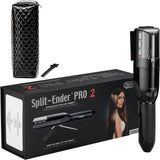
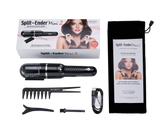
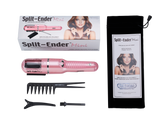
Split Ender is designed for targeted split and damaged end maintenance.
View Pro2 →
View Mini2 →
View Mini →
What Does the Research Actually Support?
The strongest parts of this story are measurable: water changes hair-fiber dimensions and mechanical behavior; grooming introduces forces; chemical history changes the starting material; and conditioning can influence combability and friction.
Practical claims about towel technique and sleeping with wet hair require more restraint. They make mechanical sense as sources of friction, movement or loading, but they should not be turned into guarantees that one particular behavior will inevitably cause breakage.
Selected research & reading
PubMed — Cytomechanics and swelling behavior of human hair PubMed — Structure and mechanical behavior of human hair PubMed — Hair combing loads under dry, wet, bleached and conditioned conditions PubMed — Hair breakage during wet and dry combing PMC — Hair shaft damage from heat and hair-dryer drying conditions PMC — The biomechanics of splitting hairs ELLE — Calvin Klein Fall 2026 “Everything Shower” wet-hair trendFrequently Asked Questions
Is wet hair weaker than dry hair?
Wet hair behaves differently from dry hair rather than simply becoming “damaged” when water enters it. Water absorption changes the fiber’s mechanical properties, including stiffness and extensibility. That changes how the strand responds to pulling, friction and grooming.
Is it bad to brush hair when it’s wet?
Not automatically. Resistance, friction, applied force, conditioning and the hair’s existing condition all matter. Wet detangling with adequate slip can fit some routines, while forcing a brush or comb through resistant tangles can increase mechanical stress.
Is air-drying always healthier than blow-drying?
No. Air-drying avoids direct heat but keeps the fiber wet longer. Blow-drying adds heat and airflow, with effects influenced by temperature, distance, duration and technique. Neither method is automatically best under every condition.
Can sleeping with wet hair cause breakage?
Sleeping with wet hair does not guarantee breakage. It can combine the altered mechanical state of a wet fiber with hours of movement, friction, compression and twisting, so the hair’s condition and handling still matter.
Wet hair isn't waiting to break.
It's simply playing by different mechanical rules.